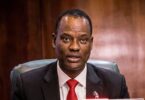
Nigeria’s fiscal future cannot continue to hinge on borrowing, the Minister of Finance and Coordinating Minister of the Economy, Taiwo Oyedele, declared on Tuesday, warning that the country must urgently pivot toward a more sustainable revenue model.
Speaking at the 28th Annual Tax Conference of the Chartered Institute of Taxation of Nigeria in Abuja, Oyedele said mounting debt levels have made it increasingly difficult for government to meet development priorities without deep structural reforms.
“Nigeria cannot continue to finance development primarily through borrowing,” he said. “We must build a fiscal system capable of sustainably supporting critical infrastructure, quality education, affordable healthcare, security, and social protection.”
His remarks come amid heightened scrutiny of Nigeria’s debt profile and growing concerns over fiscal sustainability, particularly as debt servicing continues to consume a significant share of government revenue.
The minister stressed that the challenge is not only about raising revenue but also about ensuring that the fiscal system supports inclusive economic growth.
“Sustainability is not just about more revenue,” Oyedele said. “It is about promoting growth, reducing inequality, protecting the vulnerable, and encouraging productivity across the economy.”
At the centre of the government’s strategy is a comprehensive reform of the tax system, which Oyedele described as long overdue.
He identified structural weaknesses such as multiple taxation, fragmented administration, weak compliance, and overdependence on a narrow tax base as major impediments to effective revenue mobilisation.
“Businesses faced overlapping demands, unpredictable enforcement, and rising compliance costs,” he said. “At the same time, many citizens perceived the system as unfair because the burden was unevenly distributed.”
According to him, these distortions have discouraged investment and eroded public trust, making reform unavoidable.
“Our approach is guided by a simple principle,” he said. “A good tax system should raise revenue efficiently, support economic growth, protect the vulnerable, and strengthen trust between government and citizens.”
As part of the reforms, Oyedele disclosed that minimum wage earners have been exempted from personal income tax, while relief measures have been introduced to ease the burden on low- and middle-income households.
“We have taken deliberate steps to ensure that those at the bottom of the income ladder are not overburdened,” he said. “The objective is fairness and inclusiveness.”
On the corporate front, the government is proposing adjustments to companies’ income tax rates to enhance Nigeria’s competitiveness.
“We want Nigeria to be an attractive investment destination,” Oyedele noted. “Lowering the cost of doing business is central to that objective.”
He also highlighted ongoing efforts to modernise the Value Added Tax framework.
“We are expanding input VAT credits and clarifying exemptions for essential goods and services,” he said. “This reduces cost build-up within the economy and improves efficiency across the value chain. It also helps to moderate inflation.”
Addressing the issue of multiple taxation, Oyedele said the Federal Government is working closely with states to harmonise tax systems and reduce duplication.
“So far, about 15 states have enacted tax harmonisation laws,” he disclosed. “We encourage others to follow, because a fragmented system ultimately hurts both businesses and government.”
The minister underscored the importance of technology in transforming tax administration.
“We are prioritising data integration, automation, digital filing systems, and a technology-driven compliance framework,” he said. “This will improve efficiency, block leakages, and enhance transparency.”
However, he acknowledged that challenges persist.
“We still face issues of weak institutional capacity, informal sector integration, and public trust,” Oyedele admitted. “Addressing these will require sustained effort and collaboration.”
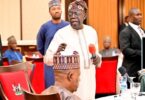
Also speaking at the event, Vice-President Kashim Shettima expressed strong support for the reform agenda, describing it as essential for economic transformation.
Represented by his Special Adviser on Economic Affairs, Tope Fasua, Shettima said the administration of President Bola Tinubu is committed to building an inclusive and competitive economy.
“Our vision is to create an economy where every Nigerian, regardless of background, has the opportunity to prosper,” he said.
He added that the reforms are designed to reposition Nigeria globally.
“We are working towards making Nigerian products globally competitive and transforming our tax system into a benchmark for Africa,” he stated.
Acknowledging public scepticism, the Vice-President said more needs to be done to build trust.
“Many Nigerians simply cannot believe it because it has never happened before,” he said. “But this administration is not anti-business or anti-people; it is focused on creating an enabling environment for all.”
He emphasised the need for greater public engagement.
“Tax reform is not just a fiscal exercise,” Shettima said. “It is an act of patriotism that lays the foundation for national prosperity.”
In his remarks, the President of the Chartered Institute of Taxation of Nigeria, Innocent Ohagwa, described the reform programme as unprecedented in scope.
“This is arguably the most comprehensive overhaul of Nigeria’s tax system in over three decades,” he said.