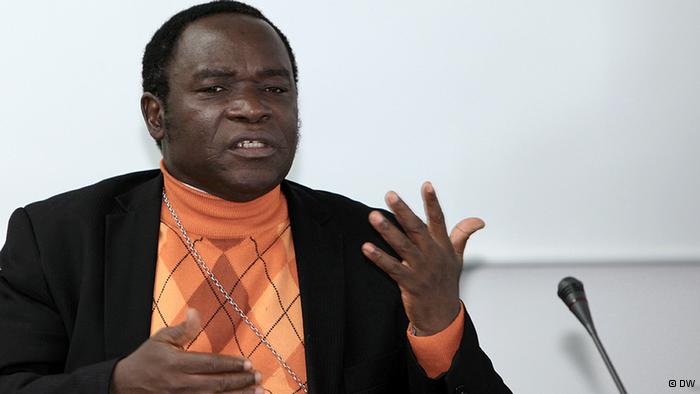
Bishop Hassan Kukah of the Sokoto Diocese has urged governments and other stakeholders to prioritise investment in education as a panacea for tackling poverty, insecurity and underdevelopment in the country.
Mr Kukah made the remarks during the unveiling of an educational project and inception launch on Wednesday in Sokoto.
The project is being supported by the European Union, EU, and anchored by the Jesuit Refugee Service, JRS, in collaboration with the Christian Blind Mission, CBM, and the Hikima Community Mobilisation and Development Initiative, HCOMDI.
The project is tagged “Enhancing Access to Safe, Inclusive and Integrated Quality Education Services for Crisis-Affected Children in Sokoto State, Northern Nigeria” and is being implemented in Kware, Isa and Sabon Birni Local Government Areas affected by banditry in Sokoto State.
Mr Kukah attributed the growing number of out-of-school children in Northern Nigeria to poverty, ignorance and years of poor investment in education, insisting that religion should not be blamed for the crisis.
“Nigeria’s worsening security challenges are a consequence of neglecting education over several decades.
“The people making us afraid in Nigeria today are largely those who never had the opportunity to go to school.
“Every Nigerian now lives under the threat of insecurity because too many children have been denied access to the right education,” Mr Kukah emphasised.
He dismissed the notion that religion discourages western education, stressing that both Islam and Christianity place high value on knowledge.
“Nobody should use religion as an excuse. The Holy Prophet encouraged Muslims to seek knowledge even if it meant travelling to China. Ignorance, not religion, is our greatest enemy,” he said.
The Bishop narrated lessons from Costa Rica, which abolished its military and invested heavily in education.
Kukah urged Nigerian leaders to place education at the centre of national development in order to overcome the security and other challenges bedeviling the nation.
“Education transformed my life. I will continue to fight for it because every child deserves the opportunity to realise his or her potential. Among these children are tomorrow’s leaders, innovators and nation builders,” he added.
Speaking at the launch, the Commissioner for Water Resources, Alhaji Abdullahi Iya, described the project as timely and relevant, and assured maximum state government support to achieve the desired results.
Earlier, the Country Director of JRS Nigeria, Fr Temple Anuforo, said the organisation had supported over 25,806 children across the three targeted local government areas through previous humanitarian interventions, with girls accounting for about 60 per cent of the beneficiaries.
Mr Anuforo said the present project seeks to reintegrate more than 9,012 out-of-school children, rehabilitate 20 classrooms and upgrade 10 WASH facilities in schools to enhance formal education, while strengthening schools to provide safe, inclusive and quality learning.
According to him, the intervention will train 473 teachers, strengthen School-Based Management Committees, and provide psychosocial support and child protection services.
“Education is more than getting children into classrooms. We must strengthen schools, equip teachers, support communities and address the factors preventing children from learning.
“The holistic approach of this project is focused in the right direction,” Anuforo said.
He explained that the programme also includes livelihood support for vulnerable parents, noting that poverty remains one of the biggest reasons many children are kept out of school.
Also speaking, CBM International Country Humanitarian Coordinator, Ewangshak Guar, said the organisation would lead the disability inclusion and WASH components of the intervention to ensure no child is excluded because of disability.