Nigeria and several other African countries could face severe economic disruption, worsening food insecurity and mass displacement as the anticipated “super” El Niño weather phenomenon threatens to inflict between $10bn and $20bn in economic losses across the continent, according to the African Development Bank (AfDB).
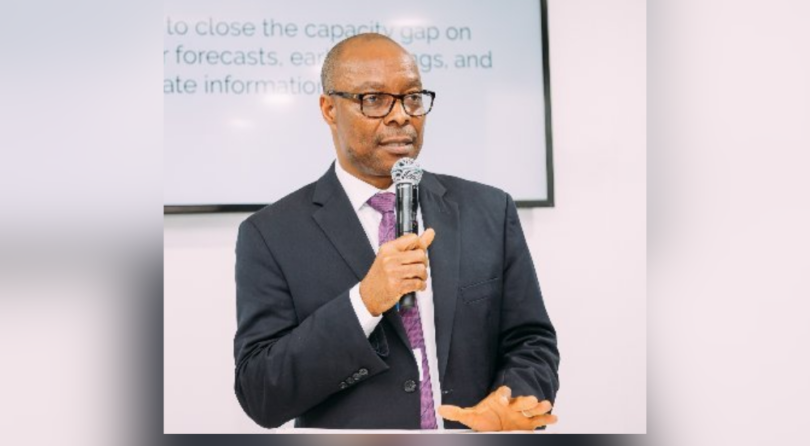
The warning was issued by the AfDB’s Director for Climate Change and Green Growth, Anthony Nyong, who said the extreme weather event could reduce the gross domestic product (GDP) of heavily affected African countries by 1 per cent to 2 per cent on average, while placing additional pressure on government finances, banking systems and already fragile economies.
Nigeria was identified among the countries expected to experience particularly severe impacts alongside Sudan, South Sudan, the Democratic Republic of Congo, Somalia, Mali and Burundi, as climate-related disasters intensify humanitarian and economic challenges across the region.
Nyong said the anticipated weather event could become one of the strongest El Niño episodes ever recorded if current Pacific Ocean warming trends continue, with devastating consequences for agriculture, infrastructure and livelihoods across Africa.
“This event is going to reduce heavily affected countries’ GDP by 1 per cent to 2 per cent on average, which is about $10bn to $20bn across the continent,” he said.
The AfDB warned that Nigeria and other vulnerable countries could witness prolonged droughts, destructive floods and severe storms capable of disrupting agricultural production, damaging critical infrastructure and forcing millions of people to relocate.
Nyong cautioned that the humanitarian consequences could be significant, warning that widespread migration would likely accompany worsening food shortages and declining living conditions.
“When this El Niño comes there is going to be mass migration. You are not going to stay put; you are going to move,” he said.
He added that shrinking water resources and increasing competition for grazing land could further aggravate insecurity and conflict in already fragile regions.
Agriculture is expected to be among the sectors hardest hit by the projected weather event.
The AfDB estimates that African farmers are already facing nearly $330m in lost income this year, while fisheries productivity could decline by 1 per cent to 4 per cent because of rising sea temperatures and stronger storms.
Nyong also warned that the price of maize, a staple food consumed across many African countries, could double if the projected super El Niño develops, worsening food inflation and deepening food insecurity across the continent.
The warning follows the widespread devastation caused by the 2023–2024 El Niño, which triggered severe drought across Southern Africa and heavy rainfall and flooding in East Africa.
Those extreme weather conditions resulted in crop failures, soaring food prices, damaged infrastructure and record sea-level rises along Africa’s coastlines.
Beyond agriculture, the AfDB said governments could face mounting fiscal pressures as they struggle to finance disaster response while maintaining spending on healthcare, education and infrastructure.
Nyong described the situation as a “climate finance trap,” where countries lacking sufficient financial resources are forced to divert funds from critical development projects to respond to climate-related emergencies.
He added that damage to infrastructure could also weaken banking sectors by increasing loan defaults and making it more difficult for financially constrained governments to service debts.
The bank said Africa’s climate adaptation financing needs are expected to rise sharply if the projected super El Niño materialises.
According to Nyong, the continent could require as much as $100bn over the next year to strengthen resilience and manage the expected impacts.
He explained that Africa’s annual climate adaptation requirement had already been estimated at about $50bn, but the anticipated weather event could add another $30bn to $50bn , substantially widening the continent’s financing gap.
The warning comes as the United Nations estimates that developing countries will collectively require about $365bn annually by 2035 to address climate change, while international public adaptation finance stood at only $26bn in 2023.
To help member countries prepare, the AfDB said it will convene a bank-wide seminar in September to assess the potential impact of the projected El Niño on its existing and planned investments.
The bank also said it is prepared to restructure projects where necessary and support countries in accessing additional climate financing from institutions such as the Green Climate Fund, the Adaptation Fund, Climate Investment Funds and emerging loss-and-damage financing mechanisms.
Although the AfDB projected in May that Africa’s economy would grow by 4.2 per cent in 2026 and 4.4 per cent in 2027, those forecasts were made before scientists warned that current Pacific Ocean warming trends could produce one of the strongest El Niño events on record.
Nyong stressed that investing in climate resilience before disasters occur remains far more cost-effective than responding after widespread destruction has taken place.
“It is cheaper to build a fence around a precipice than to pay for expensive ambulances to wait at the bottom for people to fall,” he said, urging African governments to accelerate climate adaptation efforts before the anticipated super El Niño strikes.