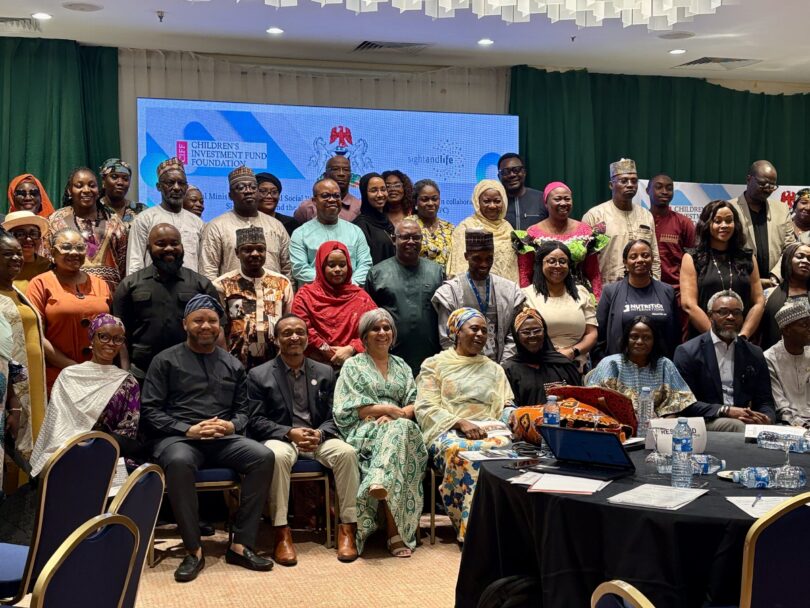
According to Ms Adegbite, local manufacturing would improve the availability of supplements, reduce dependence on imports, and protect supply chains from global disruptions.
Nigeria is intensifying efforts to expand access to Multiple Micronutrient Supplements (MMS) for pregnant women, with health authorities pushing for increased local production and sustainable financing to reduce dependence on donor support.
Speaking at the event, Olufunmilola Adegbite, Director and Head of the Nutrition Department at the Federal Ministry of Health and Social Welfare, said strengthening domestic manufacturing would be crucial to achieving the country’s maternal health targets.
“Local production will be critical in achieving the country’s ambition for reaching pregnant women with MMS and ensuring long-term sustainability,” she said.
According to Ms Adegbite, local manufacturing would improve the availability of supplements, reduce dependence on imports, and protect supply chains from global disruptions.
The 2025 market landscape analysis covered Lagos, Kano, Bauchi, Imo, Niger and Bayelsa, selected to reflect Nigeria’s diverse geographical zones and market segments.
Commissioned by the Federal Ministry of Health and Social Welfare in collaboration with Sight and Life and the development Research and Projects Centre (dRPC), the study examined financing systems and broader implementation requirements needed to support nationwide MMS scale-up.
Researchers assessed existing health financing mechanisms alongside key implementation enablers, including supply chains, regulatory frameworks and stakeholder engagement.
MMS are daily antenatal supplements containing iron, folic acid and other essential vitamins and minerals needed to support maternal nutrition and healthier birth outcomes.
Unlike conventional iron-folic acid supplements, MMS provide a broader range of micronutrients.
Evidence suggests the intervention can further reduce the risks of low birth weight, preterm delivery and other adverse pregnancy outcomes.
Ms Adegbite said Nigeria has made significant progress in aligning with global maternal nutrition standards.
According to her, MMS was approved for use in 2021, incorporated into the National Essential Medicines List and integrated into national guidelines on micronutrient deficiency control and antenatal care management.
“These achievements demonstrate Nigeria’s commitment to improving maternal and newborn nutritional outcomes,” she said.
Despite these policy gains, Ms Adegbite said considerable work remains to ensure effective implementation and wider access.
She identified sustainable financing as a major requirement for expansion, noting that mechanisms such as the National Health Insurance Authority (NHIA), the Basic Healthcare Provision Fund (BHCPF) and dedicated federal and state budget allocations could help support broader coverage.
She added that findings from the market analysis would provide evidence to guide policy decisions, investment priorities and implementation strategies.
Although progress has been made in institutionalising MMS, she said challenges persist in supply systems, regulation, financing and stakeholder coordination.
In her remarks, the Country Manager of Sight and Life, Zainab Abubakar, said the study sought to identify sustainable pathways for financing MMS within Nigeria’s health system.
Ms Abubakar noted that inadequate funding, limited insurance coverage and heavy reliance on out-of-pocket spending continue to restrict access to maternal nutrition services.
“The research assessed the health financing landscape in Nigeria to identify viable pathways for sustainable domestic financing,” she said.
“It explored opportunities for resource mobilisation, evaluated potential funding mechanisms, highlighted implementation bottlenecks and developed context-specific recommendations.”
Also speaking, the Special Adviser to the President on Health and dRPC board member, Salma Anas, called for stronger political commitment to maternal nutrition programmes.
Ms Anas said anaemia in pregnancy remains a major public health challenge and urged leaders to prioritise investments that benefit women and children.
According to her, programmes targeting women and children often struggle to attract adequate funding because they are incorrectly viewed as issues affecting only women.
“Every woman’s issue is a man’s business,” she said.
“Let us do away with the woman’s issue. Let’s budget it. Let’s release it and let it be used for the intended purpose.”
Nigeria adopted MMS following global recommendations and growing evidence that the intervention provides greater nutritional benefits than traditional iron-folic acid supplements.
According to UNICEF, MMS contains 15 essential vitamins and minerals and has become the global reference standard for maternal micronutrient supplementation.
PREMIUM TIMES reported in 2024 that the federal government distributed about 1.3 million bottles of MMS to pregnant women across 12 states during the early phase of implementation.