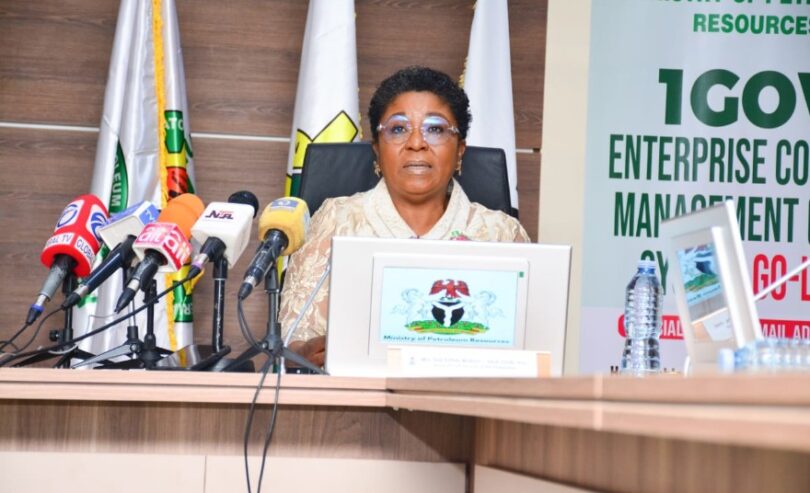
The government approved a 100 per cent DTA for federal workers attending approved training programmes, regardless of location, and introduced a new exit benefit scheme for retiring civil servants under the Contributory Pension Scheme.
The federal government has approved an increase in Duty Tour Allowance (DTA), estacode, and book allowances for its workers.
The Head of the Civil Service of the Federation, Didi Walson-Jack, announced the decisions at a press briefing in Abuja on Friday.
Mrs Walson-Jack said the new scheme provides that retiring civil servants will receive 100 per cent of their total annual emoluments as an exit package, in addition to their pension.
She explained that the revised allowances will apply to workers under both the Consolidated Public Service Salary Structure (CONPSS) and the Consolidated Research and Allied Institutions Salary Structure (CONRAISS).
She added that the review covers all cadres within the federal civil service.
Duty tour allowance, estacode and book allowance are important components of welfare and operational support for Nigerian civil servants.
DTA refers to the allowance paid to public officials when they embark on official assignments within Nigeria, particularly outside their duty stations. It is meant to cover accommodation, feeding, and other incidental expenses during such trips.
Estacode, on the other hand, is the foreign equivalent of DTA, paid in foreign currency to officials travelling abroad on government assignments to cater for hotel accommodation, meals, transportation, and other costs.
Book allowance is a periodic stipend granted mainly to officers in research, academic and allied institutions to enable them acquire books, journals and other professional materials necessary for their work and career development.
These allowances are considered essential because they ensure that public servants are not personally burdened with the cost of carrying out official duties, while also supporting capacity building, training and efficiency within the civil service.
Over time, however, their value has been significantly eroded by inflation, exchange rate volatility and rising cost of living, prompting persistent calls for an upward review.
Before the latest adjustment, many civil servants had complained that DTA and estacode rates were outdated and no longer reflected prevailing market realities, particularly for hotel accommodation and international travel.
In some cases, officials reportedly had to augment official trips with personal funds. Similarly, book allowances were often criticised as insufficient to meet the rising cost of professional and academic materials.