He said Nigeria had completed the difficult phase of stabilising the economy and was now focused on translating that stability into investment, higher productivity and improved living standards.
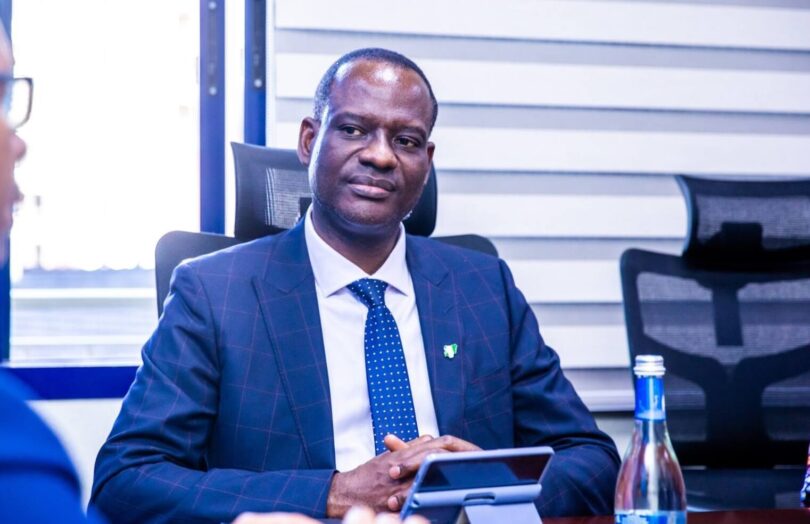
The Minister of Finance and Coordinating Minister of the Economy, Taiwo Oyedele, has reaffirmed that the federal government’s ambition to grow Nigeria into a $1 trillion economy by 2030 is achievable.
Speaking on Thursday at the 7th African Emerging Markets Forum in Abuja, themed “Building Resilience Amidst Geo-Economic Uncertainties,” Mr Oyedele said the administration’s economic reforms were designed to position the country for long-term growth.
The coordinating minister of the economy stated that the goals will be achieved by restoring macroeconomic stability, improving competitiveness and attracting investment.
He said Nigeria had completed the difficult phase of stabilising the economy and was now focused on translating that stability into investment, higher productivity and improved living standards.
“A trillion US dollar Nigerian economy by 2030 is not a slogan. It’s a target. We plan to trace reform by reform against the work still ahead of us.
“Building resilience amidst geoeconomic uncertainty was never about waiting for the storm to pass. It’s about building an economy and a continent sturdy enough that the reform and the storm become our opportunity to seize.”
Mr Oyedele said President Tinubu’s administration deliberately chose long-term economic fundamentals over short-term political convenience when it embarked on a series of reforms shortly after assuming office.
According to him, the government inherited an economy burdened by years of structural distortions that discouraged investment, weakened productivity and reduced competitiveness.
“The administration inherited an economy weighed down by years of accumulated distortions. Distortions that discouraged investment, weakened productivity and limited our competitiveness. Postponing reform would have cost us more than confronting it.
“So over the past three years, we have pursued one of the most comprehensive reforms in Nigeria’s modern history. From foreign exchange unification, where we eliminated multiple exchange-rate windows, restoring transparency and predictability to trade, finance and cross-border transactions, to fiscal consolidation, where we removed unsustainable subsidies that drained national resources,” the minister said.
He added that the government had also implemented tax reforms aimed at simplifying Nigeria’s fiscal system by eliminating multiple nuisance taxes, providing relief for small businesses and protecting low-income earners.
Mr Oyedele said the impact of the reforms could already be seen in key economic indicators.
He pointed to the real GDP growth, which stood at 3.89 per cent in the first quarter of 2026, while the economy grew 11.2 per cent in dollar terms in 2025.
The non-oil sector grew by 3.94 per cent in the first quarter of 2025, proving the economy is diversifying, not just riding on oil, Mr Oyedele noted.
He also pointed to Nigeria’s gross reserves crossing $50 billion, while noting that inflation is down meaningfully from its 2024 peak.
“This is evidence, not a promise. I would not ask you to take my word for any of this. Capital has no passports, no tribe, no patriotic loyalty. It responds to evidence, not rhetoric.
“So here is the evidence. Capital inflows have increased significantly, whether it is FPI or FDI. The capital market is the best-performing in the world for 2026 year-to-date.
The minister also cited the successful recapitalisation of Nigeria’s banking sector and the country’s removal from the Financial Action Task Force (FATF) grey list as additional evidence that the reforms were improving investor confidence.
Despite the improvements in macroeconomic indicators, Mr Oyedele acknowledged that stability alone would not be enough if ordinary Nigerians did not experience better living conditions.
The finance minister said the government’s task now is converting that stability into investment, investment into productivity, productivity into decent jobs, decent jobs into incomes that Nigerian families can actually feel tangibly.
According to him, a reform that shows up on national statistics but not on the household dining table hasn’t finished its job.
“We are mindful that stability is not the finish line. A stable economy can still be a stagnant one if growth is weak. A steady currency can still co-exist with low purchasing power if productivity doesn’t improve.
“Every real economic transformation follows a three-phase journey: stabilisation, growth and shared prosperity. We have done the gruelling foundational work of the first phase,” he said.
He said the government had complemented the reforms with social intervention programmes, including expanded cash transfers to vulnerable households and investments in healthcare, education and displaced communities.
Mr Oyedele urged investors to take advantage of opportunities arising from Nigeria’s ongoing economic transformation rather than wait for ideal conditions, arguing that the greatest investment opportunities often emerge during periods of structural change.
He added that Africa must move beyond merely reacting to global economic shocks by building strong institutions and implementing policies that enable the continent to shape, rather than simply adapt to, the evolving global economic order.
“We are working to simplify our regulatory environment, protect your capital and remove the friction that costs you time and money. In return, we ask you to match our reforms with your investment and your belief in what this continent is building.”