A nation that cannot protect the people who protect its citizens has a decision to make. It can summon the urgency this crisis deserves, or it can keep counting the dead and calling it an outbreak
Amidst funding cuts, the 79th World Health Assembly opened last week in Geneva under a shadow of two major infectious disease outbreaks – Ebola and Hantavirus. In the Democratic Republic of Congo (DRC), as of 19 May 2026, 575 suspected cases, 51 confirmed cases, and 148 suspected deaths have been reported of this highly transmissible disease. Several weeks before, on 2 May 2026, a cluster of passengers with severe respiratory illness aboard a cruise ship with a history of 181 passengers and crew was reported to the World Health Organization (WHO). As of 8 May, a total of eight cases, including three deaths (case fatality ratio 38%), had been reported. Six of those cases were laboratory-confirmed as Hantavirus infections, with all identified as the Andes virus (ANDV) strain.
Now, as of last month, 167people have already been confirmed dead by NCDC at an alarming 25.2% case fatality rate, with over 663 confirmed cases, including 38 healthcare workers. Cases have consistently spread across several local government areas in 22 of the country’s 36 states and the federal capital. The trajectory is not improving. It is worsening.
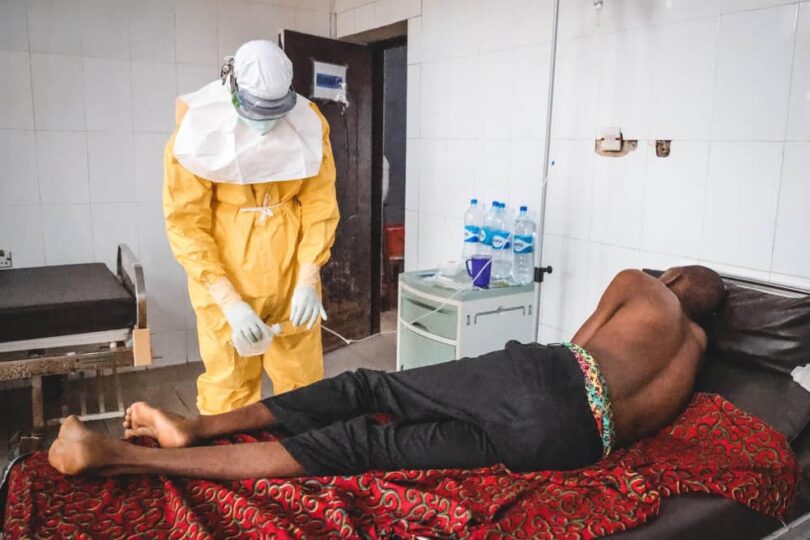
Throughout this outbreak, healthcare workers have consistently accounted for a significant share of infections and deaths, a statistic that should stop every policymaker in their tracks. Why is a preventable disease being allowed to devour the health workers that Nigeria cannot afford to lose? Health workers, the very people standing between this disease and the wider population, are being infected, falling ill and dying at an alarming rate.
This is not Nigeria’s first encounter with Lassa fever, and that is precisely what makes the current toll so inexcusable. The disease has been known and documented in this country since 1969. Its seasonal patterns are predictable, its high-risk states are identified, and the conditions that allow it to spread are well understood. Yet, the same communities record outbreaks year after year, spreading to include even new communities, while the same gaps in protection keep claiming lives.
Lassa fever is not a mystery disease. We know how it spreads, and we know how to prevent it. What we lack, however, is the sustained political will which is demonstrated and underpinned by the requisite national and most importantly sub-national investment to stop it in its tracks.
When those who treat the sick become sick themselves, the entire healthcare chain fractures. Health workers treat highly infectious patients in ill-equipped rooms, using PPE that arrives late, runs out quickly, or never comes at all. Nigeria already faces an acute health workforce crisis, with thousands of doctors and nurses emigrating annually.
When those who remain are felled by a disease their workplaces failed to protect them from, the consequences extend far beyond Lassa fever itself. Surgeries are postponed. Newborn deliveries go unattended, and maternal deaths escalate. Every health worker lost to Lassa fever is a loss multiplied across every patient that worker would have treated or cared for.
The most urgent priority is protecting the frontline health workers still standing. Many primary healthcare facilities in endemic states have no isolation capacity whatsoever. Governments must fund dedicated isolation wards, ensure consistent stockpiles of personal protective equipment, and establish rapid-response protocols for suspected cases.
Alongside this, Ribavirin, the antiviral drug shown to reduce Lassa fever mortality when administered early, must be pre-positioned in endemic areas before the outbreak season peaks, not requisitioned mid-surge when supply chains are already under pressure. Health workers should never have to improvise protection in the face of a haemorrhagic fever.
Protection without knowledge is incomplete. Frontline workers in endemic states must receive mandatory, regular training onproper PPE use, triage protocols for suspected cases, and safe sample handling. When a nurse contracts Lassa fever from a patient, the instinct is to call it tragedy. The more accurate word is negligence, because the training and tools that would have prevented it could have been made available and were simply not provided. Infection prevention is not a speciality skill. It is the baseline.
In early 2024, before the state’s last reported outbreak of Lassa fever, as cases started to be reported across the country, Rivers State through its Public Health Emergency Operations Centre (PHEOC) at the state’s Ministry of Health began pre-positioning medicines, PPE, and consumables critical to a swift response in the state’s public health facilities.
Community mobilization and risk communication activities also commenced. Additionally, infection prevention and control (IPC) trainings followed, isolation facilities were renovated, and both manpower and patient care equipment at the state’s major isolation facilities were enhanced. By the time the ministry’s attention was drawn to a signal on four suspected cases, frontline workers were somewhat prepared.
Addressing Lassa fever only at the clinical level is treating a symptom, and not the disease. The multimammate rat, which is the primary reservoir of the virus, thrives in overcrowded homes, open food storage, and environments where waste is poorly managed. Community rodent control, improved food storage, and public education campaigns conducted in local languages are low-cost interventions that can break the chain of transmission before it even reaches any hospital. These efforts are consistently underfunded, ensuring the virus’ return withferocity every season.
Finally, health workers treating Lassa fever patients carry a burden that goes beyond the physical. The fear of self-infection, the trauma of watching colleagues die, and the grief of losing patients in a system stacked against them all take a measurable toll. The implementation of hazard allowances for frontline workers should be augmented with structured mental health support for these teams.
Burnout and moral injury are accelerating the very emigration that is already hollowing out the workforce. A health system that does not take care of its workers physically, emotionally, and psychologically, cannot and should not then be surprised when those workers leave and the domino effects continue to pile up.
Every health worker who dies of Lassa fever did not die of the virus alone. They died of inadequate PPE, poorly designed facilities, and training that was promised and never delivered. A nation that cannot protect the people who protect its citizens has a decision to make. It can summon the urgency this crisis deserves, or it can keep counting the dead and calling it an outbreak. The difference in outcomes between those two choices is entirely within our hands.
*Professor Adaeze Oreh is a Kofi Annan Global Health Leadership Fellow, Senior Fellow Aspen Global Innovators, Consultant family physician, public health expert and advocate for affordable universal healthcare for all Nigerians. She was the 27th Honourable Commissioner for Health in Rivers State, Nigeria.