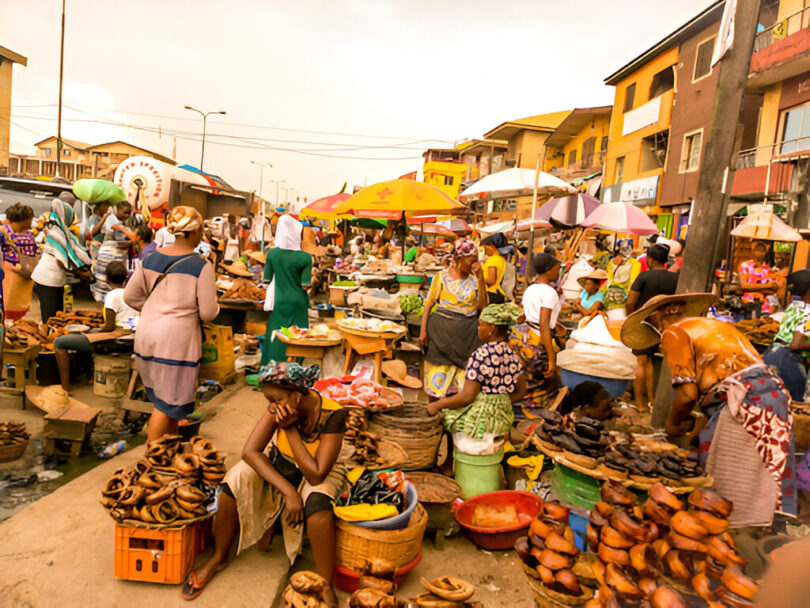
Food price growth slowed compared to last year, but continued monthly increases show households are still under pressure.
The National Bureau of Statistics (NBS) latest data released on Wednesday indicates that food inflation slowed to 14.31 per cent in March 2026, reflecting a notable decline from levels recorded a year earlier, even as prices continued to rise on a monthly basis.
However, despite this improvement, short-term trends indicate that price increases remain a concern.
On a month-on-month basis, food inflation stood at 4.17 per cent in March, slightly lower than the 4.69 per cent recorded in February.
Although the pace of increase has slowed marginally, the figure shows that food prices are still rising at a noticeable rate.
The contrast between the yearly decline and ongoing monthly increases highlights the uneven nature of price relief.
The food index also reflects a wider pattern seen across the economy, where inflation is slowing on a year-on-year basis but remains volatile in the short term.
This indicates that although the economy may be stabilising gradually, consumer-level impacts are taking longer to adjust.
For many Nigerians, food remains the most immediate measure of economic pressure. As a result, continued monthly increases, even at a slower pace, mean that household budgets remain under strain.
The latest data suggest that while the worst of food inflation may be easing, price stability has yet to set in fully.