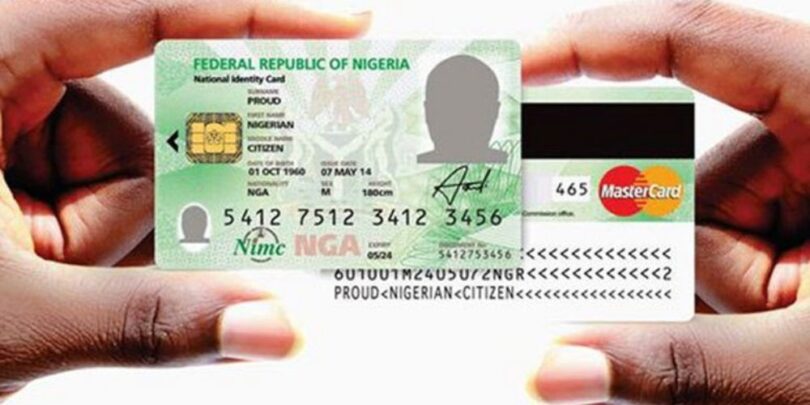
Nigeria’s National Identification Number (NIN) database has reached 136 million registered individuals, reflecting continued expansion of the country’s digital identity programme as the Federal Government intensifies efforts to establish a unified and secure national identity system.
The latest figure, announced by the National Identity Management Commission (NIMC), represents an increase of more than 12 million new enrolments from the 123.9 million registrations recorded in October 2025, underscoring sustained progress in expanding identity coverage across the country.
The milestone was disclosed by the Director-General of NIMC, Engr. Abisoye Coker-Odusote, during a courtesy visit by officials of the Commission to the Federal Ministry of Budget and Economic Planning as part of ongoing engagements with Ministries, Departments and Agencies (MDAs) on the implementation of the newly enacted NIMC Act 2026.
The announcement comes as the Federal Government seeks to deepen the adoption of digital identity across public institutions, improve service delivery and strengthen the integration of the National Identification Number into governance, economic planning and public administration.
Speaking during the visit, Coker-Odusote said the newly enacted NIMC Act replaces the National Identity Management Commission Act of 2007, providing a more robust legal and institutional framework for Nigeria’s digital identity ecosystem.
According to her, the legislation establishes the National Identification Number as the country’s foundational identity credential under the Federal Government’s “one person, one identity” policy, aimed at creating a single, verifiable identity for every Nigerian and legal resident.
She explained that the new law also designates NIMC as the root certificate authority for Nigeria’s national digital identity infrastructure, while introducing stronger provisions on data protection, cybersecurity, digital credentials and identity verification.
Coker-Odusote reaffirmed the Commission’s commitment to ensuring that all Nigerians and legal residents are enrolled and issued NINs as quickly as possible, noting that broader enrolment would enhance access to government services, social interventions and digital transactions.
She also expressed NIMC’s readiness to collaborate with the Ministry of Budget and Economic Planning to leverage identity data in improving national planning, evidence-based policymaking and socio-economic development.
Responding, the Minister of Budget and Economic Planning, Senator Abubakar Atiku Bagudu, described the NIMC Act 2026 as a landmark reform that would strengthen Nigeria’s digital identity architecture and support more effective national planning.
Bagudu commended the Commission for facilitating the passage of the legislation, saying it provides a stronger legal foundation for building a secure, trusted and inclusive identity management system capable of supporting governance and economic development.
The minister, however, stressed that the success of the legislation would depend largely on effective implementation and the ability of government institutions to translate its provisions into measurable benefits for citizens.
He also advocated stronger collaboration among the federal, state and local governments to eliminate the proliferation of multiple identity databases maintained by different public institutions.
According to Bagudu, adopting the National Identification Number as Nigeria’s single, universally accepted identity standard would improve coordination across government agencies, enhance public confidence in the identity management system and promote more efficient service delivery.
The Federal Government has increasingly positioned the NIN as a critical component of its digital transformation agenda, integrating it with key public services, financial systems and social intervention programmes as it works toward achieving universal digital identity coverage across the country.