*Says EFCC Dismissed Over 40 Staff For Corruption, More Than Five Facing Prosecution
The Economic and Financial Crimes Commission has recovered more than ₦1.23 trillion and $684.48 million in proceeds of economic and financial crimes, secured 10,872 convictions and dismissed more than 40 of its personnel for alleged corruption and financial malpractice under the leadership of its Executive Chairman, Ola Olukoyede.
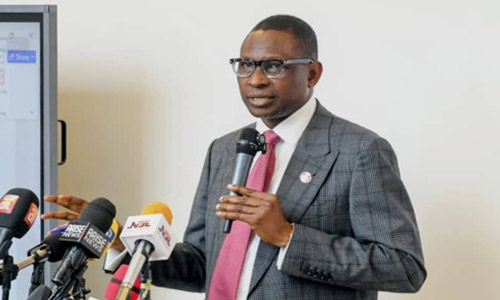
Olukoyede disclosed the figures on Monday, August 31, 2026, while presenting the Commission’s stewardship report to media executives and journalists at the EFCC headquarters in Abuja, detailing enforcement activities, asset recoveries, prosecutions, restitution, international cooperation and internal reforms undertaken since October 2023.
According to him, between October 1, 2023 and June 30, 2026, the Commission recovered ₦1,233,612,040,411.11, $684,478,457.32, £373,905.78 and €9,343,803.66, apart from recoveries made in other currencies.
He explained that about ₦397.26 billion, representing 33 per cent of the total naira recovery, constituted direct recoveries for the Federal Government, while ₦836.34 billion, representing 67 per cent, was recovered on behalf of ministries, departments and agencies, state revenue services, companies, individuals and foreign victims.
Olukoyede said the breakdown showed that roughly two out of every three naira recovered by the Commission during the period were recovered for beneficiaries other than the Federal Government.
The EFCC chairman said asset recovery remained a central pillar of the Commission’s anti-corruption mandate, but stressed that the real value of recovery lay in returning assets and funds to legitimate beneficiaries and converting criminal proceeds into public value.
He disclosed that ₦661.32 billion and $492.37 million had been released to beneficiaries during the period under review.
Of the naira amount, approximately ₦325.35 billion was released directly to individuals and corporate bodies, while about ₦335.97 billion was returned to ministries, departments and agencies, the Nigerian Revenue Service, state internal revenue services, other public institutions, companies and individuals.
Olukoyede also disclosed that EFCC enforcement activities resulted in approximately ₦288.1 billion in federal and state tax recoveries.
According to him, about ₦173.2 billion represented federal tax recoveries, while ₦114.9 billion was attributed to state internal revenue services.
He stressed that the amounts represented enforcement of existing tax obligations rather than the introduction of new taxes.
The Commission also recorded about ₦257.2 billion in recoveries for federal ministries, departments and agencies, which Olukoyede said demonstrated how anti-corruption enforcement could strengthen public revenue without imposing additional taxes on citizens.
Giving a broader breakdown of the EFCC’s enforcement record between October 2023 and July 2026, Olukoyede said the Commission received 49,673 petitions, investigated 39,615 cases, filed 14,476 cases in court and secured 10,872 convictions.
The figures represented a conviction-to-filing ratio of about 75.1 per cent.
In the first half of 2026 alone, he said the Commission secured 1,370 convictions from 1,889 cases filed in court.
Olukoyede said the statistics reflected a prosecutorial approach built around investigation, evidence gathering and securing sustainable courtroom outcomes rather than merely announcing arrests.
According to him, analysis of petitions and cases handled by the Commission also revealed changes in Nigeria’s financial crime landscape.
Between 2024 and 2026 year-to-date, the EFCC recorded 46,288 offences across nine major crime categories, with advance fee fraud and cybercrime accounting for nearly two-thirds of the total.
He said recorded offences increased by 24.1 per cent between 2024 and 2025, with significant increases in procurement fraud, bank fraud, cybercrime and economic-governance-related offences.
Olukoyede said the trend showed that the EFCC’s responsibilities extended beyond politically exposed persons and major public corruption cases to protecting ordinary Nigerians, businesses and institutions against fraud and cyber-enabled financial crimes.
The chairman also reaffirmed what he described as the Commission’s “no sacred cows” approach to high-profile investigations.
He said the EFCC’s portfolio included investigations and prosecutions involving former governors, ministers, public office holders, heads of government agencies, financial-sector operators and corporate executives.
He cited the convictions of Saleh Mamman, Robert Orya and Chukwunyere Nwabuoku as examples of cases pursued by the Commission, stressing that public office, political influence or social status should not place anyone beyond the reach of the law.
Olukoyede maintained that the EFCC’s role was to investigate professionally, prosecute on the strength of evidence and allow the courts to determine guilt or innocence.
In specialised financial crime enforcement, he said the Commission recorded 920 cases involving areas such as money laundering, unlicensed bureaux de change operations, illegal mining, virtual assets and terrorist financing, resulting in 212 convictions while several other investigations and prosecutions remained ongoing.
Money laundering and unlicensed bureaux de change operations, he said, made up the largest proportion of the specialised enforcement portfolio, while the Commission was also responding to emerging risks involving virtual assets and illicit financial flows from the extractive sector.
On intervention in the foreign exchange market, Olukoyede disclosed that the Commission recorded 234 cases involving bureaux de change and secured 73 convictions.
He said enforcement against unlicensed operators complemented regulatory measures by the Central Bank of Nigeria and was aimed at promoting a more formal, transparent and compliant retail foreign exchange market while closing channels susceptible to illicit finance, round-tripping and speculation.
Beyond cash recoveries, the EFCC secured forfeiture orders covering 10,053 tangible assets between October 2023 and July 2026.
The forfeited assets included 8,198 electronic items, 1,177 real estate properties, 370 vehicles and 251 plots of land.
Other assets forfeited through court processes included schools, factories, hotels, shops, oil rigs, barges, machinery and aircraft, as well as 102 tonnes of solid minerals.
Olukoyede said approximately ₦12.07 billion realised from the disposal of assets under final forfeiture orders was paid into the coffers of the Federal Government.
He also pointed to the conversion of the forfeited NOK University in Kachia, Kaduna State, into the Federal University of Applied Sciences, Kachia, as an example of transforming recovered assets into productive public resources.
According to him, 1,909 students matriculated at the institution in December 2025, while the university was expected to create educational opportunities and economic activity in Southern Kaduna.