Security chiefs from the seven states in Nigeria’s North-West have moved to strengthen intelligence sharing and joint operations as the region continues to bear a disproportionate share of the country’s kidnapping and banditry crisis.
The security directors of Katsina, Kano, Kaduna, Sokoto, Zamfara, Jigawa and Kebbi states met in Katsina at the Northwest Conference of State Directors of Security, organised by the Department of State Services (DSS) under the theme, “Unite Against Terror.”
The meeting comes against the backdrop of data showing that 2,938 people were kidnapped across the North-West between July 2024 and June 2025, representing more than 60 per cent of reported kidnapping incidents nationwide, according to research by geopolitical intelligence firm SBM Intelligence.
Zamfara recorded the highest number of victims in the region with 1,203 kidnappings, followed by Kaduna with 629, Katsina with 566 and Sokoto with 358.
The figures underscore the scale of a security crisis that has increasingly spread across state boundaries, making isolated responses by individual state governments and security agencies more difficult.
Speaking at the conference, the Katsina State Director of Security, Alhaji Alhassan Iliyasu, said the meeting provided an opportunity for intelligence agencies across the zone to compare information, identify operational gaps and develop a common strategy against terrorism and banditry.
He stressed the need for greater cooperation among security agencies, arguing that criminal groups were taking advantage of gaps in intelligence sharing and coordination.
Iliyasu called for real-time intelligence exchange, joint training and stronger operational collaboration among security agencies in the region.
The urgency of the call is underscored by the continued violence recorded in the region in 2026.
A tally cited by the Africa Defense Forum showed that 1,258 people were killed in violent attacks across Nigeria between January 1 and February 10, 2026. During the period, an attack on Woro reportedly left more than 100 people dead, while 176 others were abducted.
By April, at least 60 people were reportedly killed in attacks across Niger and Kebbi states, with armed groups burning homes, places of worship, livestock and food stores and forcing residents to flee their communities.
Katsina’s security statistics also highlight the intensity of the challenge facing the state. Police said they arrested 344 suspects in April alone, investigated 151 major cases and charged 128 suspects to court.
In May, another 225 suspects were arrested and 17 kidnapped victims rescued.
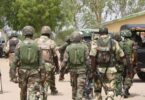
Joint military and police operations also killed five suspected bandits and rescued 32 kidnap victims across Matazu, Musawa, Kankia and Charanchi local government areas.
In June, troops of the 17 Brigade rescued six captives, including four women and two children, during a patrol in Faskari.
Across the wider North-West, military operations in 2025 reportedly rescued 1,023 kidnapped victims, recovered 189 rifles, neutralised 305 bandits and seized 305 motorcycles.
Despite these operations, the continued occurrence of mass kidnappings and attacks suggests that criminal networks retain significant operational capacity.
Security analysts have linked much of the North-West’s banditry to economic motives, including ransom-taking, cattle rustling and extortion. However, growing cooperation between some bandit networks and Islamist extremist groups has raised concerns about the increasing sophistication and reach of the threat.
At the conference, Iliyasu said security agencies must close the gaps being exploited by criminal groups by improving cooperation and ensuring that intelligence is shared quickly enough to support coordinated operations.
Katsina State Governor Dikko Radda, represented by his deputy, Faruk Lawal-Jobe, highlighted the state’s combination of security operations and socio-economic interventions as part of its response to insecurity.
These measures include free medical treatment for victims of attacks and increased support for agricultural activities in affected communities.
The governor has also pursued dialogue with bandits, appealing to those willing to surrender to abandon criminal activities in exchange for support towards reintegration.
The conference is expected to produce a communiqué outlining measures for a coordinated security response across the seven North-West states.
The outcome will be closely watched as governments and security agencies seek to turn increased intelligence sharing and joint operations into a more effective response to a crisis that has continued to claim lives, drive displacement and fuel mass abductions across the region.