“I want to, on this podium, apologise to Abia State University as well. That strike was avoidable. The reality is that the work stops here. So, we failed. I failed. I failed them,” the governor said.
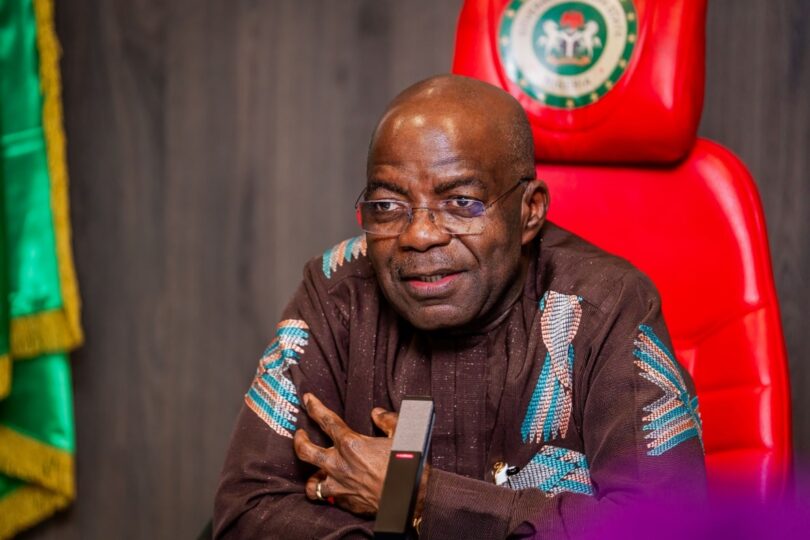
Governor Alex Otti of Abia State has apologised for the recent strike by the Academic Staff Union of Universities (ASUU) chapter at Abia State University (ABSU), describing the industrial action as avoidable.
The theme of the lecture was “The Rise of a New Abia”.
The governor said the strike occurred, despite his earlier approval of the union’s demands, blaming bureaucratic delays for the failure to implement the decisions promptly.
He said the requests presented by ASUU were legitimate and had been carefully considered before he approved them.
According to him, the financial implications of the demands were already captured in the memo presented to him, making further implementation delays unnecessary.
He said the development raised questions about why an implementation committee was required after the requests had already been assessed and approved.
Mr Otti expressed concern that bureaucratic processes could frustrate government decisions even after the necessary approvals had been obtained.
He said such administrative bottlenecks were partly responsible for the delay that eventually contributed to the university’s industrial action.
“I want to, on this podium, apologise to Abia State University as well. That strike was avoidable. The reality is that the work stops here. So, we failed. I failed. I failed them,” he said.
The governor said that the incident had reinforced the need for greater efficiency and accountability among government officials responsible for implementing approved policies.
He said it was unacceptable for workers’ welfare issues to remain unresolved after the government had approved the necessary measures.
Mr Otti also highlighted his administration’s investment in ABSU and the Abia State University Teaching Hospital, Aba, saying that significant resources had been committed to renovating existing facilities and constructing new ones.
He questioned why such infrastructure investments should not be complemented by adequate attention to the welfare of university workers.
He said, “The question to ask is, so if we have spent this much money, how much in terms of their welfare, how much will it cost?”
Mr Otti said that the government must be willing to acknowledge its failures rather than shifting responsibility to workers whenever administrative lapses affect them.
He warned that bureaucratic delays capable of frustrating approved government policies would no longer be tolerated.
The governor said that officials responsible for such lapses would face consequences if similar incidents occurred in future.
He reaffirmed his administration’s commitment to strengthening public institutions, improving infrastructure and prioritising human capital development and workers’ welfare.
The ABSU-ASUU chapter commenced an indefinite strike on 11 August, following the expiration of a 14-day ultimatum issued to the university’s Governing Council on 22 July.
The union had cited outstanding welfare and institutional demands, including the non-implementation of the 2025 Federal Government-ASUU agreement, irregular promotions, non-remittance of cooperative deductions and outstanding Earned Academic Allowances dating back to 2009.
The industrial action was subsequently resolved after the intervention of a committee led by the Secretary to the State Government, with the state government announcing on 24 August that the outstanding issues had been addressed.
(NAN)