KINGSLEY EBERE
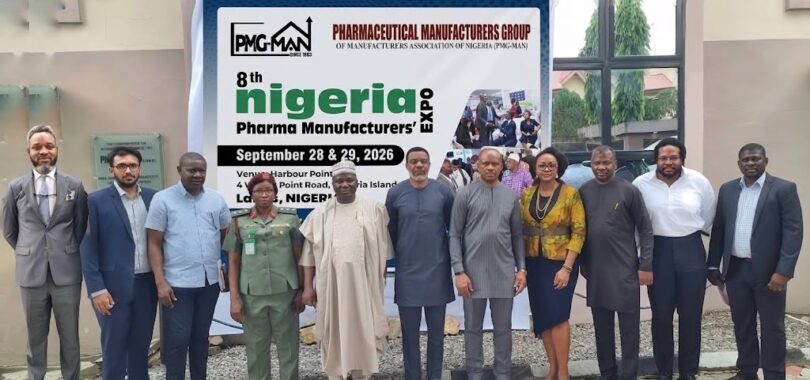
Nigeria’s push for health sovereignty will take center stage at the 8th Nigeria Pharma Manufacturers Expo, NPME 2026, with top government officials set to lead deliberations on expanding local drug production.
Coordinating Minister of Health and Social Welfare, Prof. Muhammad Ali Pate, and Minister of Industry, Trade and Investment, Dr. Jumoke Oduwole, will headline the two-day event. They will be joined by Minister of State for Industry, Senator John Owan Enoh; Minister of State for Health, Dr. Iziaq Adekunle Salako; NAFDAC Director-General, Prof. Moji Adeyeye; and PCN Registrar, Pharm. Ibrahim Ahmed.
Organized by the Pharmaceutical Manufacturers Group of MAN, PMG-MAN, in partnership with GPE Expo Pvt. Ltd., the expo holds September 28–29, 2026, at Harbour Point, Victoria Island, Lagos. It will run alongside the Nigeria Lab Expo under the theme: “Regional Manufacturing: Advancing Africa’s Pharma & Lifescience Sovereignty through Localization.”
PMG-MAN said the focus is to reduce import dependence and position Nigeria as a regional pharmaceutical hub. Chairman of the NPME Committee, Pharm. Patrick Ajah, said the sector is targeting 70 percent local production of medicines.
According to him, the expo will drive foreign direct investment, technical partnerships, local sourcing of raw materials, and capacity building for Nigerian manufacturers.
More than 200 companies are expected to exhibit, with nearly 10,000 healthcare professionals, regulators, and equipment providers projected to attend. Exhibitors from five continents will showcase machinery, cleanroom technology, and analytical instruments not yet produced locally.
PMG-MAN Executive Secretary, Pharm. Frank Muonemeh, said NAFDAC data shows imports of finished pharmaceutical products dropped from 4.03 billion units to 1.13 billion units as of 2025. This has shifted the ratio of imported to locally made essential medicines to about 50:50.
He attributed the progress to improved regulation, noting NAFDAC’s attainment of WHO Maturity Level 3 and progress toward Level 4. Some Nigerian firms have also secured WHO prequalification and contract manufacturing deals with global brands.
Muonemeh, however, warned that reliance on imports remains a risk to health security during global emergencies and supply chain disruptions. He listed high energy costs, limited financing, regulatory delays, manpower loss to migration, and inconsistent procurement as key challenges.
He said manufacturers spend over 40 percent of income on power, compared to less than 10 percent in China and India, and called for dedicated industrial energy tariffs.
Drugfield Pharma Executive Director, Pharm. Olusola Akande, urged expanded incentives for Active Pharmaceutical Ingredients and excipients. He noted that current policy covers only about 5 percent of API needs and asked the Federal Government to extend tax exemptions.
PMG-MAN also appealed to President Bola Tinubu to extend the Presidential Executive Order on pharmaceutical procurement from two to five years to encourage long-term investment.
The organizers said NPME 2026 will align with the Presidential Initiative for Unlocking the Healthcare Value Chain and the African Continental Free Trade Area to strengthen regional supply chains.