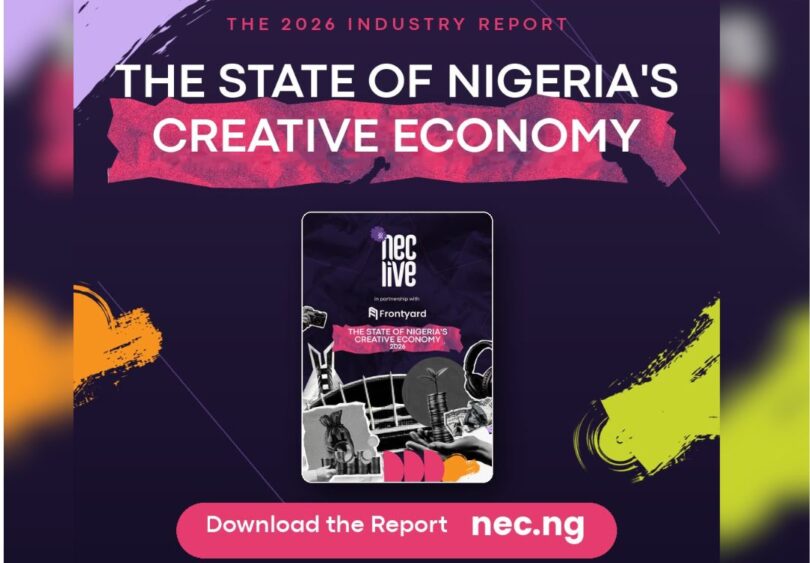
Tagged The State of Nigeria’s Creative Economy 2026 Report, it is based on responses from 377 creative professionals.
Nigeria’s creative industry is not being held back by a shortage of talent but by weak systems that continue to undermine its potential to become a globally competitive economic force.
The report, The State of Nigeria’s Creative Economy 2026, draws on the experiences of 377 creative professionals across eight industry sectors, offering a data-driven assessment of the structural challenges facing one of Nigeria’s fastest-growing economic sectors. Rather than celebrating the industry’s global achievements, the report examines the systems surrounding creative work and identifies the gaps that prevent businesses from scaling sustainably.
According to the report, while Nigeria’s creative sector continues to enjoy growing international recognition, the infrastructure supporting those industries has failed to keep pace. It argues that the country’s challenge is no longer one of creativity but of building the business environment needed to sustain and commercialise that creativity.
The report’s central finding is that Nigeria’s creative economy is facing a systems challenge rather than a talent deficit.
Respondents identified unreliable infrastructure, administrative bottlenecks, payment inefficiencies, financing constraints and gaps in professional training as the key obstacles limiting productivity and long-term growth.
Among its most striking findings, 83 per cent of respondents said they lose more than 10 per cent of their productive workweek to non-creative administrative tasks, including logistics, contract management, sourcing and chasing payments. More than half (53.6 per cent) reported losing at least a quarter of their working week to such activities, while 19.6 per cent said administrative work consumes more time than their actual creative output.
According to the report, this “administration tax” reflects the absence of efficient financial infrastructure and legal frameworks that allow creatives to focus on producing content rather than managing routine operational challenges. It argues that recovering even half of the time currently lost to administration could significantly increase productivity without requiring additional investment.
Power supply and internet connectivity also emerged as the industry’s biggest day-to-day challenge, ranking above funding delays, regulatory bottlenecks and intellectual property theft. The report says unreliable electricity and broadband continue to disrupt creative workflows and limit business expansion across the sector.
The report also highlights challenges affecting collaboration and commercial growth within the industry.
According to the survey, 52 per cent of respondents identified poor project briefing as a major source of friction in collaboration. In comparison, 51 per cent cited payment disputes, suggesting that weak business practices continue to undermine trust and efficiency across the creative ecosystem.
It further found that access to funding and distribution remains the industry’s biggest structural gap, ahead of infrastructure and intellectual property tools, underscoring the need for stronger commercial support systems to help creative businesses grow.
The report also points to challenges beyond Nigeria’s borders. It found that 57 per cent of export-related barriers stem from payment processing and foreign exchange issues, making financial infrastructure a bigger obstacle to international growth than the quality of Nigerian creative products. According to the report, many creatives struggle to receive payments from overseas clients despite increasing global demand for Nigerian content.
Speaking on the report, Head of Content at ID Africa, Tomiwo Ojo, said the findings shift the conversation from celebrating Nigeria’s cultural influence to addressing the structural weaknesses limiting its economic impact.
“We have never lacked influence. What we have lacked is evidence about the machinery beneath that influence and the honest conversation that evidence makes possible. A sector that can name its own constraints is a sector ready to be built. The talent has already done its part. It is time for the systems to catch up,” he said.
According to the organisers, the report is intended to provide government, investors and private-sector stakeholders with evidence-based insights into the reforms required to unlock the sector’s full economic potential.
Beyond identifying the industry’s challenges, the report proposes a series of reforms to strengthen Nigeria’s creative economy.
It calls for investments in reliable power and broadband infrastructure, improved cross-border payment systems, and easier access to affordable financing for creative enterprises. The report also recommends reducing administrative burdens through better business support services, expanding industry-focused training programmes, and strengthening collaboration among government, investors and private-sector stakeholders to address long-standing structural gaps.
According to the report, addressing these systemic challenges would enable creative professionals to spend more time on innovation and content creation while positioning Nigerian creative businesses to compete more effectively in international markets. Rather than focusing solely on discovering new talent, it argues that building efficient commercial systems will be critical to unlocking the sector’s long-term economic potential.