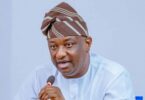
Former member of the House of Representatives, Dachung Bagos, has described the recent killings in Plateau State as a coordinated and premeditated attack, alleging that the assailants spoke Fulfulde (Fulani language) and operated with precision using motorbikes.
Bagos, who represented Jos South/Jos East Federal Constituency, disclosed on Channels Television’s Politics Today on Monday while reacting to the latest violence in Jos.
He said the attack occurred despite prior threats and arrests, raising concerns over possible lapses in intelligence gathering and response.
“I can tell you that what happened yesterday was a planned attack. The government had been proactive in apprehending those who said Plateau would not have peace after Ramadan, and some of them are now in custody,” he said.
“We were surprised that the same threat they gave took place again yesterday. So what went wrong? What intelligence was drawn from those people that were arrested after giving the threat?” he queried.
Bagos described the incident as particularly disturbing because it took place in a cosmopolitan area within Jos metropolis, close to the city centre, where residents were going about their normal activities.
“People came in on motorbikes, shooting sporadically, speaking Fulfulde and identifying routes they would follow. They had already mapped out their movement. These are trained militias that came on an assignment,” he said.
According to him, eyewitness accounts indicated that the attackers operated in a coordinated manner and appeared to have a clear understanding of their targets and escape routes.
He further alleged that attempts to trace the attackers were hindered, citing testimonies that suggested possible obstruction.
“There are reports that when people tried to trace where they were going, they were stopped. So a lot of questions are on the ground about what intelligence the security agencies were able to derive,” he added.
Bagos expressed deep concern over what he described as a widening gap of mistrust between the public and security agencies, blaming it on the lack of justice for victims of previous attacks.
“There is a very big gap of mistrust in the security agencies. At the same time, there is a lack of justice for people that have been killed. Justice, justice, justice,” he stressed.
He noted that Plateau leaders, including the state governor and traditional rulers, had to intervene swiftly to calm tensions and prevent retaliatory violence.
“I can tell you that what the governor and leaders on the Plateau were able to do to calm thousands of youths – if not, it could have been a different story,” he said.
Bagos dismissed suggestions that the attack was a farmer-herder clash, insisting that it was a deliberate attempt to provoke unrest in the state.
“If not for the proactiveness of the government and traditional rulers, that narrative would have been pushed. This attack was meant to provoke people into reprisals,” he said.
On the identity of the attackers, he said eyewitnesses reported that they spoke Fulfulde (Fulani language) and carried out the massacre in a commando-style operation.
“They came on motorbikes, shooting and speaking Fulfulde, directing themselves and moving strategically. They shot at targets as if they knew who they were after,” he stated.
The former lawmaker also decried the failure to prosecute perpetrators of past violence in Plateau, arguing that impunity has emboldened attackers.
“Nobody has been brought to book over the years. I stand to be corrected, but nobody is in jail today as a result of killings on the Plateau,” he said.
He criticised security agencies for what he described as a lack of operational transparency following the latest attack.
“Twenty-four hours after this attack, there is no operational statement from the security agencies. We don’t want political statements; we want to know the steps being taken to arrest these people,” Bagos said.
He called for the adoption of state policing as a long-term solution to insecurity, arguing that localised security structures would be more effective.
“We are clamouring for state police. Our people can take care of their environment. With state police, nobody can enter and leave without being traced,” he said.
Bagos also emphasised the need for justice and accountability, insisting that arrested suspects should be prosecuted transparently within the state.
“We no longer want a situation where people are arrested and transferred elsewhere. We want to follow the case to court, hear the evidence, and see justice done, including naming the sponsors,” he added.
He explained that the curfew imposed by the state government was necessary to prevent escalation and give security agencies the opportunity to act.
“The curfew is to control the situation, prevent reprisals, and allow security agencies to do their work,” he said.
On the broader pattern of violence, Bagos described the killings as largely economically driven, linked to land and resources rather than religion.
“What is happening on the Plateau is genocide. About 80 per cent of it is economic—about land, mineral resources, and the agrarian value of the state,” he said.
He, however, condemned all forms of violence, regardless of the victims’ identity, stressing that no grievance justifies taking lives.
“No matter who you are—Muslim, Christian, Fulani—you don’t have the right to take any life. The justice system must work for everyone,” Bagos said.