The presidency says a 2024 report claiming Abu-Bilal Al-Manuki, the ISIS second-in-command, had been killed was a case of mistaken identity, insisting that the latest operation targeting the insurgent leader was “100 percent certain”.
US President Donald Trump announced al-Minuki’s death in the early hours of Saturday, while President Bola Tinubu later confirmed the joint operation carried out by Nigerian and American troops.
Following the announcement, online claims resurfaced suggesting that the ISIS leader had already been declared dead by the Nigerian military in 2024.
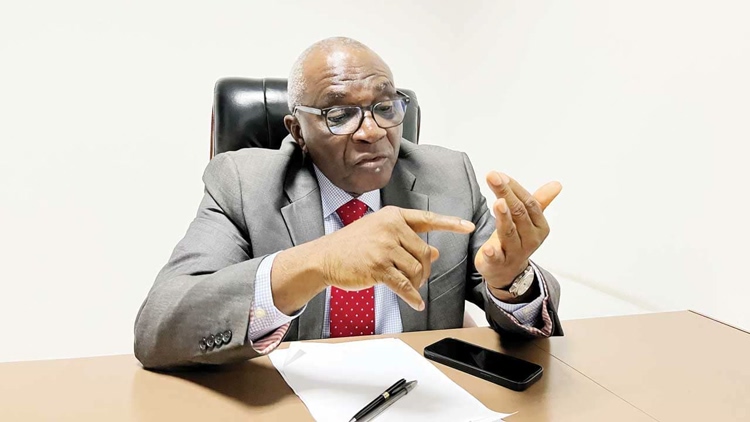
Reacting in a statement, Bayo Onanuga, special adviser to the president on information and strategy, said security officials had clarified that the earlier report linking al-Minuki to a 2024 military operation in Kaduna State was a “case of mistaken identity or misattribution”.
According to the statement, al-Minuki — also known as Abu-Mainok or Abu-Bilal Al-Minuki — had previously appeared on a list of suspected ISWAP commanders reportedly killed during operations around the Birnin Gwari forest axis in Kaduna State.
“It is acknowledged within military and intelligence circles that Al-Manuki’s name had appeared among lists of suspected ISWAP/Boko Haram commanders reportedly killed in 2024 during operations around the Birnin Gwari forest axis in Kaduna State,” the statement read.
“However, security officials now clarify that the earlier listing was a case of mistaken identity or misattribution in the fog of sustained counterinsurgency operations.”
Onanuga said intelligence gathered later showed that Birnin Gwari was never within al-Minuki’s operational territory, raising doubts about the earlier assessment.
He added that the latest operation followed months of intelligence gathering, surveillance, phone interceptions, and human intelligence tracking involving Nigerian and American security agencies.
The presidential spokesperson said monitoring of al-Minuki began in December 2025 and tracked his movements across several northern Nigerian locations, including Abuja and Maiduguri.
“Security officials said efforts were initially aimed at capturing him alive before the final operation was carried out,” he said.
“Unlike the previous report, security authorities insist that the latest strike was executed with a significantly higher degree of precision, target validation, and multi-source intelligence confirmation.”
Onanuga added that multiple layers of verification were conducted before approval of the final operation, making the latest mission different from previous incidents where battlefield assessments later proved inaccurate.
“In their assessment, ‘this time, there is no ambiguity,’” he said.
He also defended public announcements relating to counterterrorism operations, noting that mistaken reports of terrorist leaders’ deaths had occurred in previous global anti-terror campaigns involving figures such as Abubakar Shekau and former ISIS leader Abu Bakr al-Baghdadi.
“Such cases highlight not failure but rather the evolving, often imperfect nature of intelligence gathering in asymmetric warfare,” he added.
According to him, attempts to undermine joint counterterrorism operations involving Nigerian forces and international partners could weaken public confidence and affect operational morale.
“While public scrutiny remains an essential part of democratic accountability, security experts caution that premature dismissal of military claims can inadvertently undermine operational morale and strategic messaging,” the presidential spokesperson said.
“For now, military authorities remain firm in their position: The latest operation that targeted Abu-Bilal Al-Manuki represents a validated, intelligence-driven success against a senior figure of the Islamic State network. And in their words, this time, they are ‘100 per cent certain.’”