The lawmaker says reforms affecting such a strategic institution should only be undertaken after extensive consultations with relevant stakeholders to ensure that the scheme’s contributions to national integration and security are not compromised.
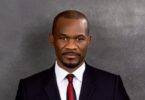
The deputy spokesperson of the House of Representatives, Philip Agbese, has appealed to President Bola Tinubu to suspend the implementation of the federal government’s proposed reforms to the National Youth Service Corps (NYSC), warning that some of the planned changes could weaken the scheme’s founding objectives and diminish its strategic role in national security.
The lawmaker argued that although reforms are necessary to keep the scheme relevant, they should not alter its fundamental purpose of promoting national unity, discipline and patriotism.
He called on the president to establish a broader review committee made up of lawmakers, security experts, former NYSC officials, youth organisations and other stakeholders to examine the proposals before they are implemented.
A member of the House Committees on Youth and Defence, Mr Agbese described the NYSC as one of Nigeria’s most enduring national institutions, stressing that any attempt to restructure it must preserve the ideals upon which it was founded.
His comments followed the unveiling of a comprehensive reform package by the federal government, described by the Minister of Youth Development, Ayodele Olawande, as the first major review of the scheme since it was established more than five decades ago.
The minister said the reforms are intended to modernise the NYSC and better align it with current economic and national development priorities.
However, Mr Agbese maintained that the proposed changes should not transform the scheme into what he described as merely a vocational training platform.
“Reducing NYSC to a skill acquisition training centre is not healthy for our national life,” he said.
According to him, the NYSC has consistently served broader national interests by deploying corps members to critical sectors during emergencies, including education, healthcare, elections, and other public service interventions.
He also opposed the proposal to replace the military leadership of the scheme with a civilian, arguing that the military tradition has played an important role in instilling discipline, patriotism, and a sense of national responsibility among participants.
“Instilling military training in citizens is an international practice that must be sustained,” the lawmaker said.
He insisted that reforms affecting such a strategic institution should only be undertaken after extensive consultations with relevant stakeholders to ensure that the scheme’s contributions to national integration and security are not compromised.
Established on 22 May 1973 by the administration of former Head of State Yakubu Gowon, the NYSC was introduced as part of Nigeria’s post-Civil War reconciliation efforts to foster national unity and encourage peaceful coexistence among citizens from different ethnic and cultural backgrounds.
For over 50 years, the programme has deployed graduates to states outside their places of origin, exposing young Nigerians to different cultures while providing manpower for schools, health facilities and other public institutions. Corps members have also participated in national assignments, including voter registration, elections, immunisation campaigns and disaster response operations.
The latest reform proposals have, however, sparked debate among stakeholders, with supporters describing them as long-overdue modernisation efforts and critics warning that they could undermine the original philosophy behind the scheme.
Among the key reforms recently announced by the federal government are the introduction of three separate orientation camp phases instead of a single programme, the creation of 11 specialised career streams from which prospective corps members will choose during registration, expansion of the Skills Acquisition and Entrepreneurship Development programme, replacement of the traditional khaki uniform with locally produced attire, and a proposal to appoint a civilian director-general to head the NYSC instead of the long-standing practice of selecting a military officer.