The proposals, which emerged from months of consultations and public hearings across the country, seek to address issues related to security, electoral processes, judicial administration, local government autonomy, the devolution of powers, and institutional reforms.
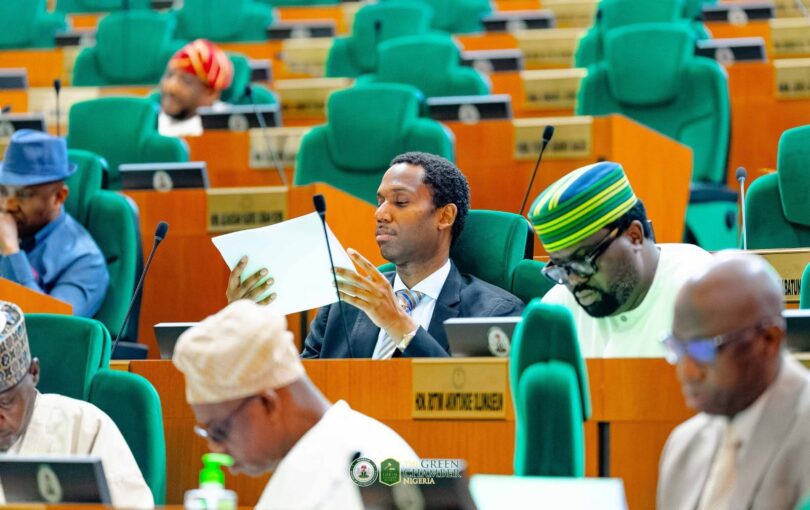
The House of Representatives has released the final print of the Constitution Alteration Bills ahead of a decisive plenary session on Thursday, during which lawmakers are expected to vote on a wide range of constitutional reforms, including the much-debated proposal to establish state police.
The development was announced in a statement issued late Wednesday by the House spokesperson, Akin Rotimi.
The move comes hours after the Deputy Speaker of the House and Chairman of the Constitution Review Committee, Benjamin Kalu, disclosed that lawmakers would consider and vote on a constitutional amendment seeking to create state and local police structures as part of efforts to address Nigeria’s worsening security challenges.
According to Mr Rotimi, the bills are the product of extensive legislative work carried out by the House Committee on Constitution Review following the submission of amendment proposals by lawmakers, government agencies, professional associations, civil society groups, traditional institutions and individual citizens.
He said the review process featured public hearings, stakeholder consultations, expert sessions and town hall meetings conducted across the country’s six geopolitical zones to ensure broad public participation.
“The review process involved extensive stakeholder engagement through zonal and national public hearings, consultative meetings, expert sessions, and town hall engagements held across the six geopolitical zones, ensuring broad-based citizen participation and input,” the statement read.
The proposed amendments, he said, cover several key areas of governance and national development.
These include electoral reforms, judicial reforms, security and policing, local government administration, inclusive governance and citizenship, legislative reforms, devolution of powers, human rights, fiscal reforms, institutional strengthening, traditional institutions, and the creation of states and local governments.
Among the proposed amendments, the bill seeking to establish a constitutional framework for state police has emerged as one of the most prominent and contentious issues.
The proposal has generated significant public debate in recent years, with supporters arguing that decentralised policing would improve security responses and allow states to tackle local threats more effectively, while critics have raised concerns about potential abuse by state governments.
According to the House, the bill seeks to strengthen Nigeria’s security architecture by introducing an additional policing layer alongside the Nigeria Police Force.
The proposal also contains provisions aimed at preventing abuse through constitutional safeguards, operational guidelines, oversight mechanisms and a clear delineation of powers between federal and state policing authorities.
The House said the amendment reflects growing national consensus on the need for innovative and community-based approaches to addressing terrorism, banditry, kidnapping and other security challenges confronting different parts of the country.
Commenting on the release of the final print, Mr Kalu described the development as a significant step in the House’s efforts to deliver constitutional reforms that respond to the needs and aspirations of Nigerians.
He said the proposed amendments were the result of extensive consultations, detailed scrutiny and bipartisan collaboration among lawmakers.
“The release of the final print of these Constitution Alteration Bills reflects the extensive consultations, careful scrutiny, and bipartisan collaboration that have characterised this reform process. These proposals embody the aspirations, concerns, and recommendations expressed by Nigerians from all walks of life,” he said.
Highlighting the importance of the state police proposal, the deputy speaker said the amendment responds to longstanding calls for a decentralised policing system capable of addressing emerging security threats more effectively.
“Of particular significance is the proposal on State Police, which responds to longstanding calls for a more effective and decentralised policing framework capable of addressing emerging security challenges across the federation.
“As the House prepares to vote, we remain guided by our constitutional responsibility to strengthen democratic governance, deepen federalism, promote inclusion, enhance security, and build institutions capable of meeting the demands of a modern and prosperous nation,” he added.
Thursday’s plenary is expected to be one of the most consequential sessions in the ongoing constitutional amendment process.
For any constitutional amendment bill to proceed, it must secure the support of not less than two-thirds of members of the House of Representatives before moving to the Senate and subsequently to state Houses of Assembly for concurrence.
The House, however, noted that voting on the bills would proceed only if the constitutionally required quorum was attained.
Should the required quorum not be met, consideration of the bills would be postponed to the next legislative day in accordance with constitutional provisions and the House Standing Orders.
If approved by the House, the Constitution Alteration Bills will advance to the next stage of the amendment process, requiring concurrence by the Senate. Thereafter, each amendment must be approved by at least 24 of the 36 state Houses of Assembly before being transmitted to the President for assent.
The House said it remains committed to ensuring that the constitution review process remains transparent, participatory and reflective of the diverse interests of Nigerians.
With the state police proposal attracting widespread attention, Thursday’s vote is expected to provide a clearer indication of lawmakers’ readiness to embrace one of the most far-reaching security reforms proposed since Nigeria’s return to democratic rule in 1999.