The scorching sun rises over Gusau, Zamfara State, casting golden rays of light on a city that once knew only bleak shadows. Construction cranes, heavy-duty lifting machines adorn the skyline like mechanical giraffes, their arms dangling gracefully as they lift heavy steel and pour concrete into place.
The rhythmic sound of hammers, rammers, and drilling machines, and the steady hum of generators fill the air; the unmistakable symphony of a state being reborn becomes all too visible.
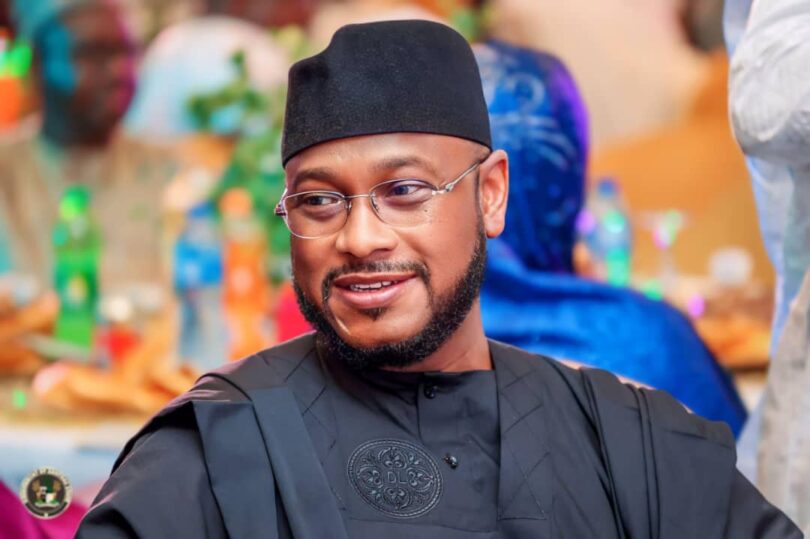
This is the vivid picture of the Zamfara of today made possible by the Chief Rescuer; Governor Dauda Lawal.
As Machiavelli said; “Whoever wishes to foresee the future must consult the past; for human events ever resemble those of preceding times.” But to understand where it is going, one must first understand where it has been.
Just over three years ago, Zamfara State was bleeding dry from every deep cut one can ever imagine.
Schools were roofless shells where children sat on bare floors, their dreams of education slowly suffocating under the weight of total neglect.
Hospitals were little more than abandoned buildings, their empty beds and peeling paint serving as grim monuments to a government that had abandoned its people.
Bandits roamed freely across the state, burning villages, kidnapping children and killing with sheer impunity. Civil servants hadn’t been paid in months and retirees from as far back as 2011 were still waiting for their hard-earned gratuities.
Clean portable water became a luxury. There was no ray of hope in the distance. Zamfara had become a byword for failure, poor, a cautionary tale whispered across Nigeria about what happens when governance collapses. Like the true messiah, God’s gift to the state Governor Dauda Lawal came into the picture to rewrite the story of the state.
When he took office on May 29, 2023, Governor Lawal inherited a state in ruins, people in despair and a system that had ceased to function.
But rather than tiptoe around the crisis by offering empty promises, he knew he couldn’t keep, he did something unprecedented. He declared states of emergency on all aspects of the nonfunctional state.
On November 14, 2023, he declared a State of Emergency in Education. On January 30, 2024, he declared a State of Emergency in Health. Some called it drastic. He called it the necessary action.
Across the length and breadth of Zamfara State, a revolution began. In the dusty villages of Bukkuyum, in the crowded neighbourhoods of Gusau, in the remote hamlets of Maru and Anka, the governor’s rescue mission began to take shape.
Over eight hundred schools have been rebuilt or renovated, their fresh paint and new roofs standing as defiant statements that education matters in Zamfara.
The Adolescent Girls Initiative for Learning and Empowerment project alone has renovated 174 schools in its first phase, with forty more already approved for intervention.
Solar-powered boreholes now provide clean water in 115 schools, liberating children from the burden of walking miles to fetch water before class.
Seven hundred and fifty new toilet units have been constructed, restoring dignity to students who once had no choice but to relieve themselves in the open.
Nearly ten thousand three-seater desks have been provided to children who once sat on cold, hard floors. When his administration discovered that WAEC results from 2018 to 2022 had been withheld because the government hadn’t paid examination fees, he authorised the immediate release of N1.4 billion to clear those debts. Results were released. Futures were restored. Young people who had given up on their dreams of higher education suddenly saw those dreams within reach again.
NECO fees were paid for every public-school candidate. Children who had been written off by a failed system were given a second chance.
No achievement has resonated more deeply with Zamfara’s people than the governor’s handling of security.
For years, bandits held the state hostage, their reign of terror so complete that entire communities were reduced to ghost towns. Villages burned. Children were abducted from their schools, farmers deserted their farmlands and traders couldn’t trade. The government seemed powerless, reduced to negotiating with terrorists and paying ransoms that only emboldened the criminals more until Governor Lawal took a different approach stating boldly that his administration would never enter into peace deals with terrorists.
“We will never negotiate with bandits. We will hunt them down. We will dismantle their networks and we will restore peace to Zamfara.”
He said in one of his briefings. Reiterating his commitment to securing the lives and properties of his people as the Chief Security Officer of the State.
In a series of coordinated operations that demonstrated both strategic brilliance and unwavering resolve, security forces neutralised some of the most notorious bandit kingpins in the state and by extension the region.
Habibu Sububu, the kingpin who terrorised the entire North West, was eliminated. Kachalla Ali Kawaje, who abducted students from Federal University Gusau, met his Waterloo. Kachalla Jafaru, Kachalla Barume, Yellow Sirajo, Isyaka Gwarnon Daji among others had their reign of terror ended by Governor Lawal’s administration.
The governor also invested heavily in security infrastructure, handing over 140 operational vehicles to security agencies and establishing the Community Protection Guards, a volunteer force of local hunters and vigilantes who were trained, equipped and integrated into the security architecture.
Weekly Security Council meetings ensured that intelligence was shared, strategies were coordinated and action was swift. For the first time in years, Zamfara’s farmers are returning to their farmland, markets are reopening and children are walking to school without fear of being attacked.
The health sector has undergone an unprecedented transformation.