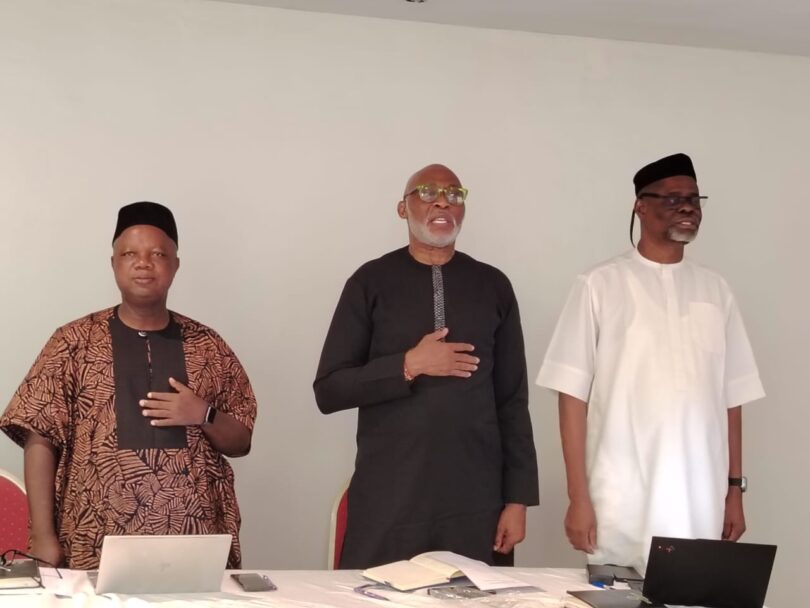
Veteran Nollywood actor and producer, Richard Mofe-Damijo, RMD, has been appointed as an ambassador of the Male Feminists Network (MFN) to champion the campaign against Gender-Based Violence, GBV, in Nigeria.
The actor was decorated on Friday in Abuja by the African Centre for Leadership, Strategy and Development (Centre LSD) alongside other ambassadors who will spearhead nationwide advocacy against violence targeting women and girls.
Speaking after his inauguration, the 65-year-old actor called for greater inclusion of women in governance, arguing that women have consistently demonstrated competence and efficiency in public service.
Drawing from his experience in the film industry, RMD said he deliberately worked with a predominantly female crew on one of his productions because of their commitment to delivering results.
“Personally, when I did a film two years ago, I had about 80 per cent women in the crew. I always tell people that if you want anything done in government, put a woman in charge and you can sleep with both your eyes closed,” he said.
The actor urged men to abandon harmful attitudes towards women, stressing that respect and dignity should define relationships rather than violence or domination.
“Just give respect to women and treat them like human beings. Treat them the way you would treat your daughter or your wife—with respect and dignity. Don’t objectify them and don’t perpetrate violence. Correcting someone does not mean hitting or beating them. It is easier to talk to people than to use your fists,” he said.
RMD said ending gender-based violence requires active participation by men, insisting that the struggle for women’s rights should not be left to women alone.
“There are institutionalised and systemic ways that women’s rights are trampled upon in Nigeria, and it is not something only women can fight. Men also have to lend their voices to organisations working for women’s rights and against gender-based violence,” he said.
He dismissed attempts to compare isolated cases of violence against men with the widespread abuse experienced by women, saying the scale and impact of the two situations are not the same.
According to him, changing societal attitudes begins at home through the example fathers and husbands set in the way they treat women.