Somewhere in Nigeria today, a market is open because an arms shipment was intercepted last week. A village is quieter because a bandit kingpin is in a courtroom. A child went to school this Monday morning in the South-East for the first time in years without fear. These things happened not by accident, but because of decisions made, intelligence gathered, and operations executed by an agency that most Nigerians rarely think about, until they have a reason to.
But invisibility comes at a cost. When Nigerians do not seem to see the results, they cannot evaluate it fairly. And when the only stories that surface are the controversies, the detentions, the political cases, the headlines that fuel suspicion, the full picture is lost. This piece is an attempt to restore that picture. Because over the past 18 months, the SSS has been executing a strategy that is quietly, systematically, and eventually making Nigeria safer. The evidence is there for anyone willing to see.
At the core of the SSS’ strategy is a clear logic: remove the commanders, and you collapse the hierarchy. Nowhere has this been more dramatically demonstrated than in the North, where a series of high-profile arrests have decapitated some of Nigeria’s most dangerous terror networks.
In August 2025, operatives captured Mahmud Muhammad Usman, the self-proclaimed Emir of Ansaru and one of Nigeria’s most wanted terror figures alongside Mahmud al-Nigeri, who served as his Chief of Staff.
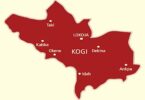
About the same time, SSS operatives arrested Abubakar Abba, leader of the Mahmuda group, a Boko Haram faction responsible for terrorising communities across Kwara and Kogi states and displacing thousands of residents. The Embassy of the United States described these operations as a major step in the fight against terrorism. Usman has since been sentenced to 15 years for just one of the many offences, with prosecution continuing on other counts. Three months later, Ansaru commander Abdulazeez Obadaki was recaptured after a 13-year manhunt, closing the book on a man accused of masterminding the 2012 massacre of worshippers at Deeper Life Bible Church, near Okene, Kogi State.
The secret police has also demonstrated creative, intelligence-led pursuits. In May 2025, two kidnapping kingpins responsible for violent attacks across the Sokoto-Zamfara axis were tracked and arrested at Abuja and Sokoto Hajj camps during pre-departure screening of pilgrims. In Kaduna State, joint SSS-Army operations across a single quarter recorded 34 successes, arrested 54 suspects, recovered weapons ranging from RPGs to heavy machine guns, and rescued 79 kidnapped victims. In the FCT, a joint operation in September 2025 neutralised bandit leader Abdullahi Umar, known as “Duna” whose gang had kidnapped a senior civil servant with a ₦150 million ransom demand. In Osun State, a 90-day undercover surveillance operation dismantled an ISWAP cell mid-training in the manufacture of explosives.
Two of the most painful massacres in recent Nigerian history; the Yelwata killings in Benue State and in Angwa Rukuba, Plateau State, tested the government’s promise to bring perpetrators of mass violence to face justice. In both cases, the SSS helped the government pass that test.
On 13 June, 2025, gunmen descended on Yelwata community in Guma LGA of Benue State, killing no less than 150 people and injuring 107 others in attacks that drew worldwide condemnation. President Bola Tinubu paid a personal condolence visit to Benue State where he tasked security agencies to fish out the perpetrators. The SSS moved with required urgency. Within 11 days, the Inspector-General of Police announced the arrest of 26 suspects. By August 2025, the SSS had filed six separate terrorism charges against nine suspects before the Federal High Court, Abuja. Two other suspects were charged for alleged reprisal attacks. The prosecution, led by the Director of Public Prosecution of the Federation, is ongoing, with courts actively hearing evidence and eight government witnesses lined up to testify.
The Angwa Rukuba case followed a similar pattern of Presidential commitment backed by SSS action. On 29 March, being Palm Sunday, gunmen killed more than 30 people, including children, in Jos North LGA of Plateau State. This triggered national and international outrage. President Tinubu visited Jos and personally assured residents that those behind the killings would be brought to book. On the heels of the President’s directive, the suspects were arrested between 3 April and 10 April, 2026. The Plateau State Government subsequently filed charges of criminal conspiracy to commit terrorism, culpable homicide, illegal possession of firearms, and unlawful dealing in arms and ammunition against five suspects arrested by the SSS. Courts have already ordered their remand in SSS custody as proceedings began.
The aforementioned twin cases carry a significance beyond the individual prosecutions. They demonstrate that when the President speaks, the SSS listens and moves. It means that communities that have suffered devastating losses, beyond consolation with mere words, are seeing their attackers face the law. For a country long accustomed to impunity around mass killings, this is a huge milestone in the Criminal Justice System.
On 5 June, 2022, gunmen attacked St. Francis Catholic Church in Owo, Ondo State, killing over 50 church worshippers and injuring many more. As I pen this, the SSS is prosecuting Idris Omeiza, Al Qasim Idris, Jamiu Abdulmalik, Abdulhaleem Idris, and Momoh Otuho Abubakar, in the Federal High Court, Abuja, for their alleged links to the attack.
For nearly four years, the sixth suspect, Sani Yusuf, eluded arrest, becoming one of the most wanted fugitives in Nigeria. In February, however, the SSS arrested him in Iguosa community, along Powerline in Ovia North LGA of Edo State.
Also before the Federal High Court in Abuja, the SSS is diligently prosecuting Khalid Al Barnawi and four others suspected to have carried out the 26 August, 2011 bombing of the United Nations building in Abuja.
Over 20 persons from different countries died in the attack with over 70 others injured. Al-Barnawi is believed to be a founding member of Jama’at Ahl as-Sunnah lid Da’wah Wa’l-Jihad, the Boko Haram Islamist terror group. Charged alongside Al-Barnawi are Mohammed Bashir Saleh; Umar Mohammed Bello, a.k.a Datti; Mohammed Salisu and Yakubu Nuhu, a.k.a Bello Maishayi.
What is more, to underscore the seriousness of the Service in the terrorism trial, the SSS, through its counsel, Alex Iziyon (SAN) moved a application for accelerated as the Service expressed its readiness for a timely conclusion of the trial.
To be sure, armed groups do not sustain themselves on ideology alone, they need weapons, ammunition, and supply networks. The DSS has been systematically targeting those pipelines, and recent arrests reveal how sophisticated those networks are.
In January, a notorious arms smuggler Abubakar Umar (Dangada) was intercepted in Zamfara with a large cache of weapons from Niger Republic. In May 2026, a joint operation on the Asaba-Onitsha expressway intercepted a truck carrying over 164,000 live cartridges allegedly bound for IPOB/ESN networks. These hauls, spanning motor parks, border routes, and highways, reveal a SSS that is reaching into every layer of the supply chain.
In April 2026, operatives apprehended 25-year-old Nafisa Usman at a motor park in Kano while she was allegedly transporting 200 rounds of ammunition from Lafia in Nasarawa State to Kankara in Katsina, a known bandit corridor. Security sources disclosed that she had facilitated deals worth over ₦5 million, using Unguwa Uku motor park as a transit hub for consignments headed for Kankara forest. She was intercepted before the delivery could reach its destination. In a parallel case that went all the way to court, Halima Haliru Umar pleaded guilty before a Federal High Court in Abuja to illegally possessing 302 rounds of live ammunition she had couriered to a bandit leader. A Chief Magistrate Court in Taraba subsequently sentenced three other arms traffickers arrested by the SSS to 10 years in prison without the option of fine.
Few cases in recent Nigerian history have generated as much controversy as the prosecution of Nnamdi Kanu, leader of the outlawed Indigenous Peoples of Biafra (IPOB). He was convicted of terrorism by the Federal High Court in Abuja in November 2025 and sentenced to life imprisonment. Several prominent Igbo leaders have been suing for a political solution.
It is worth noting that, since Kanu’s conviction, there has been a marked improvement in security in the Southeast states. The Monday sit-at-home orders violently enforced since 2021, shutting markets, schools, banks, and petrol stations every Monday, came to a permanent end in February. The directive came from Kanu himself, behind his prison walls in Sokoto.
Research by SBM Intelligence, Nigeria’s leading geopolitical research consultancy, calculated losses of over ₦7.6 trillion from those weekly closures between 2021 and early 2025. This wealth needlessly drained from one Nigeria’s historically most commercially-active region. Today, markets in Onitsha, Aba, Nnewi and other commercial major towns in the South-East are open every day of the week. Schools now run on Mondays. The Nigerian Army has officially credited the detention of both Kanu and Finland-convicted IPOB figure Simon Ekpa with bringing measurable security improvements, stating that criminal activities and operational capabilities of ESN-linked groups have significantly decreased.
A region that lost over ₦7 trillion in economic activity to enforced shutdowns is now on the path to a slow but steady economic recovery.
Dismantling terror networks requires more than just arresting the foot soldiers. It requires cutting off the financial oxygen that keeps them alive. In April 2026, the Federal Government, through the Nigeria Sanctions Committee chaired by the Attorney-General of the Federation, Lateef Fagbemi (SAN) published an updated list of 48 individuals and 12 corporate entities designated as terrorism financiers. He followed up with an immediate directive to freeze all associated accounts and assets.
The list spans the full breadth of Nigeria’s security challenge: ISWAP, Boko Haram, Ansaru, and IPOB-affiliated figures. The methods of financing revealed are striking, cryptocurrency and online fraud, ransom handling from the 2022 Abuja-Kaduna train attack, property purchases across multiple states, and fund transfers routed through businesses in the UAE. One suspect recorded account inflows of ₦61.4 billion before transferring tens of millions to convicted terrorists. Designating and freezing these networks attacks the problem at its root, cutting off the money before it ever reaches the field.
Piece by piece, the picture emerging from Nigeria’s security landscape over the past months is one of a country beginning to seriously sanction all those who choose violence. Terror kingpins once considered untouchables are now in courtrooms. Arms supply chains that once fed banditry with impunity are being intercepted. Financiers who bankrolled massacres from the shadows are having their accounts frozen. Communities that watched their loved ones buried without justice are now watching suspects face the law.
If this strategic momentum is sustained and deepened, and the SSS continues to build on its intelligence capacity, accelerate prosecutions, and tighten coordination with the military and sister security agencies, the judiciary, and international partners, the trajectory points toward something Nigerians have long desired, but hardly been served.
Nigeria spent decades managing insecurity. However, the current strategy of the SSS suggests that defeating insecurity is possible. That there is a future worth building on. Results of the past months under Oluwatosin Adeola Ajayi point to one thing: collectively, we can make Nigeria safe again!
Louis Achi, a former associate editor at ThisDay and LEADERSHIP on Sunday, is a public issues analyst.