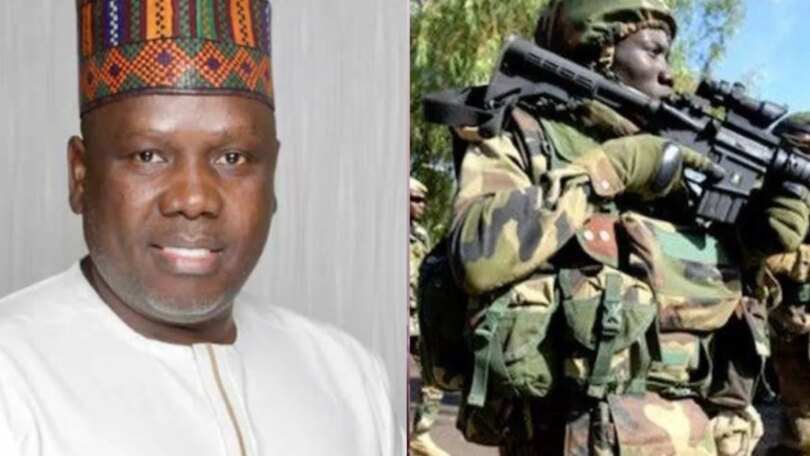
The Presidency has disclosed that Nigerian security forces have arrested foreign nationals suspected of having links to insecurity in parts of the country.
Daniel Bwala, Special Adviser to President Bola Tinubu on Media and Public Communications, made the revelation during an appearance on The Link Up Podcast, a panel programme hosted by EchoRoom.
According to him, some of those arrested were picked up during military operations in different parts of Nigeria.
The Presidential Aide, however, said the identities and nationalities of the suspects were not made public due to security and diplomatic considerations.
Bwala explained that the government considered the matter sensitive and chose to engage the countries involved through diplomatic channels rather than disclose details publicly.
He said the military intentionally withheld information about the suspects to avoid jeopardising ongoing discussions with the affected nations.
“If you remember, there was a decision the Federal Government of Nigeria made at that time, and immediately we started seeing people in Nigeria lifting Russian flags,” Bwala said while speaking on issues relating to foreign influence and national security.
He added, “Our soldiers have arrested foreign nationals in the middle of the country.”
The presidential aide said governments across the world often handle such situations discreetly, especially when they involve intelligence matters and international relations.
“For security reasons, the military refused to disclose their nationality, but the government of Nigeria related with those nationalities and countries.
“If you catch somebody like that, you keep them until that country has something also in it, so you do prisoner exchange,” he said.
Bwala further stated that countries considered friendly to Nigeria were approached privately and encouraged to address any concerns raised by the Nigerian government rather than being publicly named.
Speaking on allegations of foreign involvement in terrorism financing, he said he could not independently verify claims that the United States Central Intelligence Agency was linked to the funding of terrorist groups operating in Nigeria.
However, he recalled that such concerns had previously surfaced during proceedings in the United States Congress.
“I’m not saying he’s right or he’s wrong, but an event like that has occurred, and as a country we cannot hear that and say you are a liar,” he said.
On the security situation in the country, Bwala said terrorist groups such as Boko Haram and the Islamic State West Africa Province (ISWAP) had expanded their activities beyond the North-East.
According to him, the groups have established a presence in parts of the North-West and are attempting to move further into the North-Central region.
He said the Federal Government was taking steps to stop the spread of insurgent activities before they reached southern parts of the country.
The presidential spokesman also dismissed allegations that security agencies deliberately protect terrorists during military operations.
While acknowledging that criminal elements could infiltrate institutions through informants, he maintained that such incidents should not be interpreted as official government policy.
Bwala cited previous cases involving security personnel accused of collaborating with criminal networks, saying such occurrences were not unique to Nigeria.
He also criticised what he described as coordination challenges between the Nigerian Army and the Nigerian Air Force during the administration of former President Muhammadu Buhari.
According to him, those shortcomings have largely been addressed under President Tinubu’s government, leading to better cooperation among security agencies.
Assessing the performance of the current administration, Bwala expressed confidence in President Tinubu’s leadership, pointing to improvements in government revenue and foreign reserves.
He concluded by saying that Nigerians would ultimately decide whether the President had done enough to earn another term in office.