The 2027 presidential election may still be months away, but the political atmosphere is already witnessing moves by parties and politicians to position themselves for what could become one of the country’s most looked-after elections.
For the ruling All Progressives Congress (APC), the task appears straightforward on paper. President Bola Tinubu is widely expected to seek a second term, and history has shown that incumbents in Nigeria often enjoy strong advantages at the polls. The APC also remains the party with the widest political structure across the country, controlling a large number of states and maintaining a strong presence in the National Assembly.
The opposition, however, believes the next election presents a genuine opportunity to wrest power from the APC. Many point to the economic challenges in the country, the rising cost of living, insecurity and growing public dissatisfaction as factors that could reshape voting patterns in 2027.
But there is one question that continues to dominate political discussions: Can the opposition truly defeat the APC if it remains divided?
That question has become even more important following the emergence of two major opposition camps. Former Vice President Atiku Abubakar is leading the African Democratic Congress (ADC) into the election after securing the party’s presidential ticket, while Peter Obi is flying the flag of the Nigeria Democratic Congress (NDC).
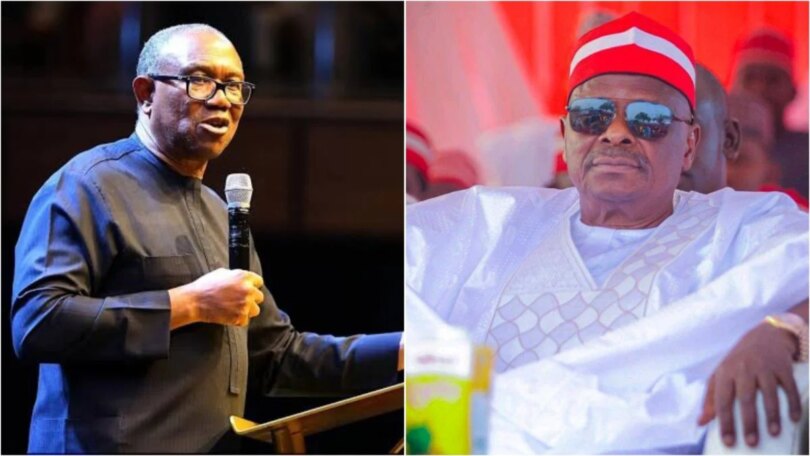
Despite now belonging to different political platforms and the deadline by the electoral umpire, the Independent National Electoral Commission (INEC) for switching parties due, conversations about an opposition alliance have refused to die down. Among the many ideas being discussed, none has attracted more attention than the possibility of Peter Obi who has teamed up with former Kano State Governor Rabiu Musa Kwankwaso securing a victory.
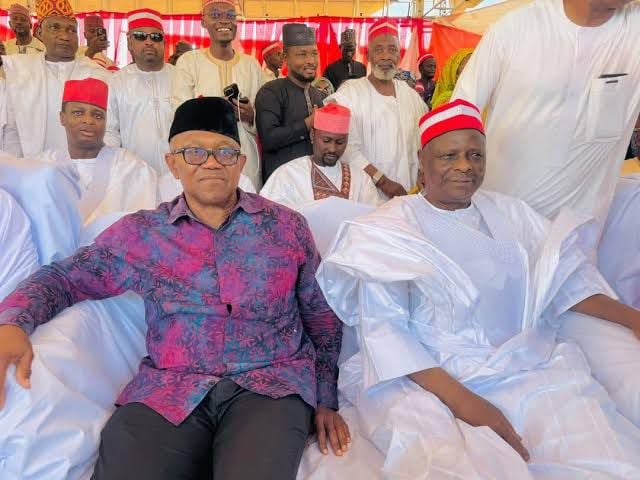
Obi’s and Kwankwaso’s supporters believe that the alliance will unite millions of votes from different parts of the country. Others insist that politics is far more complicated than combining figures from previous elections, arguing that regional interests, party loyalties, personalities and campaign dynamics will ultimately determine the outcome.
Whether such an alliance eventually happens or remains political speculation, the discussions have highlighted one important fact: the opposition recognises that defeating the APC will require more than popularity. It will require strategy, unity, broad national appeal and careful political calculations.
To understand why an Obi-Kwankwaso ticket has generated so much interest, it is necessary to first examine the outcome of the 2023 presidential election, the voting patterns across the country and the political developments that followed.
What Happened in 2023
The 2023 presidential election was one of the most competitive in Nigeria’s democratic history. Unlike previous elections, where the contest was largely between the ruling APC and the Peoples Democratic Party (PDP), the emergence of Obi as the Labour Party’s presidential candidate turned the race into a three-way battle, while Kwankwaso’s candidacy under the New Nigeria Peoples Party (NNPP) added a fourth major force to the contest.
When INEC announced the final results, APC candidate Tinubu was declared the winner with 8,794,726 votes. PDP candidate Atiku came second with 6,984,520 votes, while Obi polled 6,101,533 votes to finish third. Kwankwaso secured 1,496,687 votes, with the overwhelming majority of his support coming from Kano State and parts of the North-West.
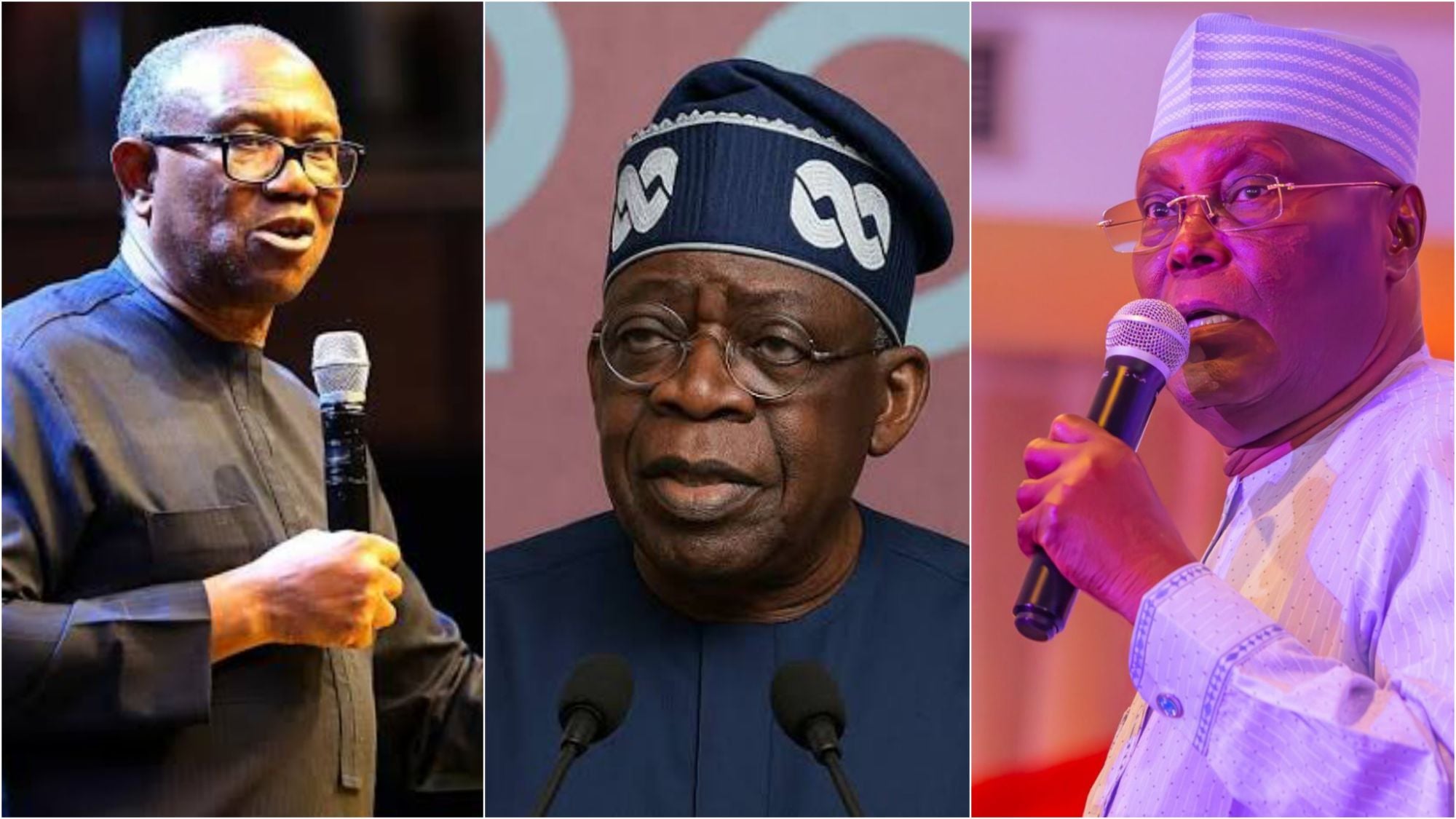
Although Tinubu won the election, the figures immediately led to debate among political observers. Many argued that the opposition’s inability to unite before the election worked in the APC’s favour. The combined votes of Atiku, Obi and Kwankwaso were significantly higher than Tinubu’s total, fuelling claims that a single opposition candidate might have produced a different outcome.
However, many analysts cautioned against simply adding the figures together. Elections are not won by arithmetic alone. A merger of candidates does not automatically translate into a merger of supporters, as voting behaviour is influenced by party loyalty, regional interests, religion, ethnicity, campaign organisation, candidate acceptability and turnout.
The 2023 election also produced another major political reality. Obi demonstrated that a candidate outside the two dominant political parties could build a nationwide movement capable of challenging for power. His campaign attracted millions of first-time voters, young Nigerians and professionals, while also recording strong performances in states that had traditionally been regarded as APC or PDP strongholds.
Kwankwaso, on the other hand, once again proved the strength of the Kwankwasiyya Movement, particularly in Kano State. Despite contesting on the platform of the NNPP, he defeated both the APC and the PDP in Kano, one of Nigeria’s most populous states and one of the biggest prizes in any presidential election because of its large voting population.
The election also exposed weaknesses within the opposition. While Obi dominated in much of the South-East, won Lagos State and performed strongly in parts of the South-South and the Federal Capital Territory, Atiku remained strongest in parts of the North-East and North-Central. Kwankwaso’s influence was largely concentrated in Kano and surrounding areas.
Instead of complementing one another, the opposition candidates split votes in several states, allowing the APC to secure victories in key battlegrounds.
Following the election, conversations about opposition unity became louder than ever. Political leaders, civil society groups and many Nigerians argued that unless opposition parties found a way to work together, defeating an incumbent president backed by a nationwide political structure would remain extremely difficult.
Those discussions continued over the next few years as politicians explored different alliances ahead of 2027. They eventually resulted in a political arrangement that reshaped the opposition—though for a short time.
The arrangement brought together politicians from different parties and ideological backgrounds under the banner of the ADC.
For a moment, it appeared the opposition had finally found the unity many Nigerians had been calling for.
Then There Was A Coming Together
The outcome of the 2023 presidential election led to months of consultations among political leaders from different parties. Former Vice President Atiku, Obi, former Kaduna State Governor Nasir El-Rufai, former Rivers State Governor Rotimi Amaechi, former Senate President David Mark, former Osun State Governor Rauf Aregbesola and several others began holding meetings aimed at building a united opposition ahead of the 2027 election.
Those discussions culminated on July 2, 2025, when opposition leaders formally adopted the ADC as the coalition platform for the 2027 general election. As part of the arrangement, David Mark was unveiled as the party’s National Chairman, while Aregbesola became the National Secretary.
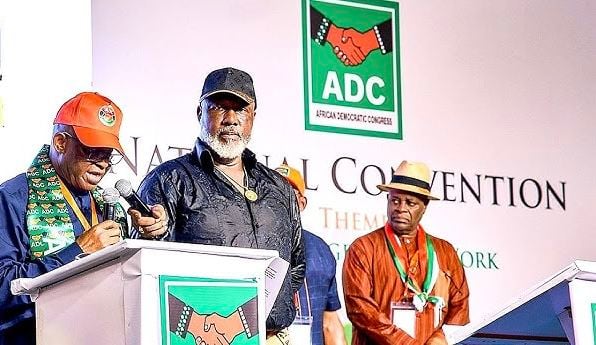
The announcement immediately generated excitement across Nigeria. For the first time since the coalition that gave birth to the APC in 2013, opposition politicians from different ideological and political backgrounds had agreed to rally around a single platform.
Speaking shortly after the adoption of the ADC, David Mark said the coalition was driven by the need to rescue the country and strengthen democracy.
“This coalition goes beyond gaining political power. It is about rebuilding the foundations of our democracy and giving Nigerians a government that truly works for them.”
Obi also defended his decision to join the coalition in a statement published on his X account on July 3, 2025. Explaining why he chose to work with politicians from different backgrounds, Obi said the country’s challenges demanded cooperation rather than division.
“No one group can change Nigeria alone. To dismantle the structures that keep our people in poverty and insecurity, we must build bridges, not walls, even when those bridges are uneasy.”
Obi added that the coalition members had reached a common understanding about their objective.
“Our commitment is to sacrifice and work together towards the 2027 General Elections, ensuring that Nigeria gets a competent, capable, and compassionate leadership that will prioritise the nation’s future by putting the welfare of Nigerians first.”
The coalition brought together politicians who had once been rivals. Atiku and Obi had contested against each other in the 2023 presidential election, while Amaechi had challenged both men in previous political contests. El-Rufai had been one of the APC’s most influential governors before leaving the ruling party. Yet they all appeared willing to set aside past differences in pursuit of a common political objective.
For many Nigerians, the coalition represented more than another political alliance. It was viewed as a serious attempt to create a united opposition capable of matching the APC’s nationwide political structure.
Political analysts also observed that if the coalition remained intact, it would combine experienced politicians, former governors, serving lawmakers, grassroots political structures and millions of supporters spread across every geopolitical zone.
However, even as coalition leaders publicly projected unity, questions quietly lingered beneath the surface.
ADC VS NDC – Opposition at Odds
The unity that defined the ADC coalition in its early days gradually came under strain as attention shifted from building a formidable opposition to deciding who would lead it into the 2027 presidential election.
Although coalition leaders publicly maintained that consultations were ongoing and no decision had been taken on the party’s presidential ticket, political observers noted that the issue had become the alliance’s biggest test.
Supporters of Obi argued that the former Anambra State governor had earned the right to lead the coalition after his performance in the 2023 presidential election. They pointed to the 6,101,533 votes he secured despite contesting on the platform of the Labour Party, his victories in 12 states, including Lagos and the Federal Capital Territory, and the nationwide Obidient Movement that emerged around his candidacy.
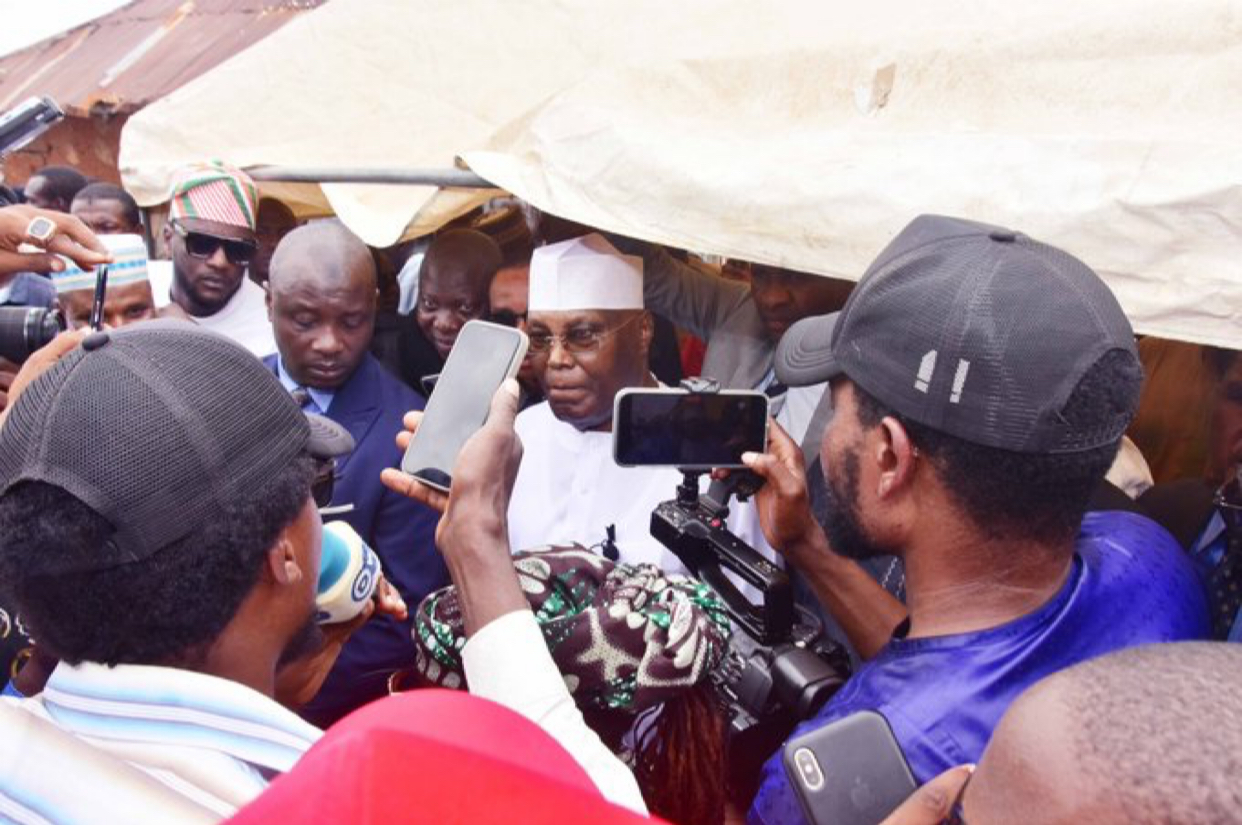
Many of his supporters insisted that the coalition should adopt Obi as its consensus presidential candidate instead of conducting another primary election. They argued that asking him to compete against politicians who had repeatedly contested previous presidential elections and with better experience in party primaries risked a defeat and loss of momentum he had built since 2023.
Supporters of Atiku, however, maintained that the coalition was founded on democratic principles and that every aspirant should have an equal opportunity to seek the party’s nomination through a transparent primary.
As the debate intensified, reports began circulating that Obi and Kwankwaso were holding separate consultations outside the coalition.
Neither camp immediately confirmed the discussions, but the rumours dominated political conversations both in print and online for weeks. Observers suggested that both leaders were exploring alternative options should the coalition fail to agree on a consensus presidential candidate.
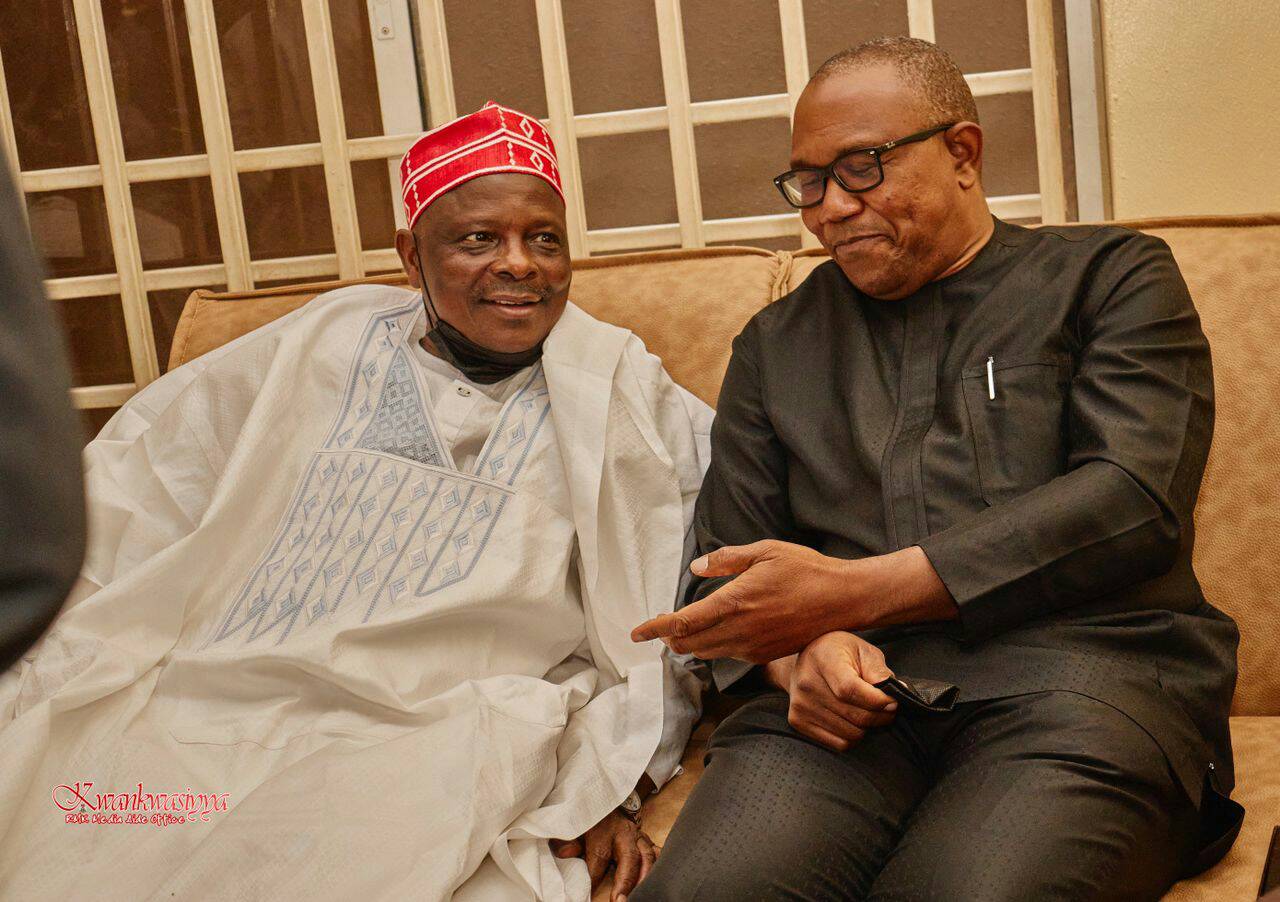
Despite several meetings by coalition leaders, no agreement was reached.
The disagreement eventually proved too deep to overcome.
On May 3, 2026, Obi formally announced his resignation from the ADC, saying his decision was not because of the party’s leadership or any personal grievances against those in the coalition.
In his statement, Obi said: “Let me state clearly: my decision to leave the ADC is not because our highly respected Chairman, Senator David Mark, treated me badly, nor because my leader and elder brother, Alhaji Atiku Abubakar, or any other respected leaders did anything personally wrong to me. I will continue to respect them.”
Explaining why he chose to leave, Obi added: “However, the same Nigerian state and its agents that created unnecessary crises and hostility within the Labour Party that forced me to leave now appear to be finding their way into the ADC, with endless court cases, internal battles, suspicion, and division, instead of focusing on deeper national problems and playing politics built more on control and exclusion than on service and nation-building.”
He also stressed that his decision was driven by his desire to continue pursuing what he described as a better future for Nigeria rather than by personal ambition.
Obi’s departure effectively ended hopes that the ADC coalition would present a single opposition ticket for the 2027 election.
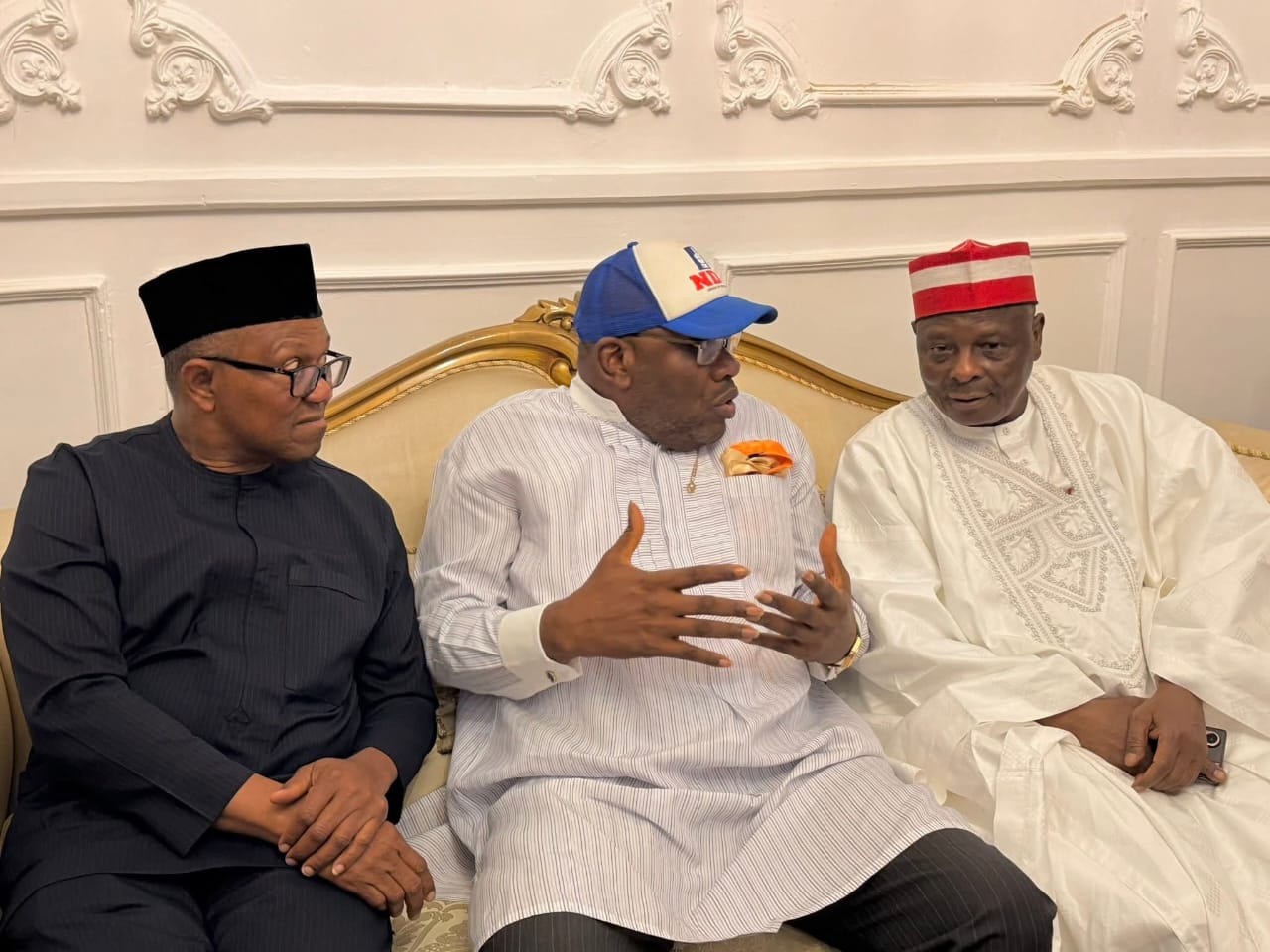
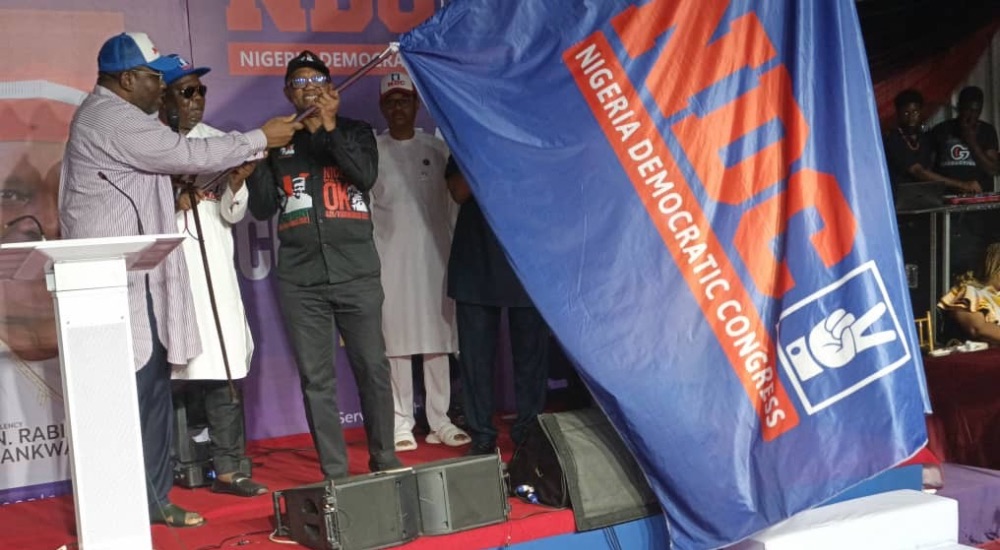
Only a few days later, months of speculation were confirmed when Obi and Kwankwaso publicly unveiled their alliance under the NDC. Obi emerged as the party’s presidential candidate, while Kwankwaso accepted the vice-presidential ticket, presenting themselves as a new alternative to both the APC and the ADC.
With Obi and Kwankwaso now outside the coalition, the ADC proceeded with its own internal process, eventually producing Atiku as its presidential candidate before he named Amaechi as his running mate.
The opposition was once again divided into two major camps: the Atiku-Amaechi ticket of the ADC and the Obi-Kwankwaso ticket of the NDC.
Rather than asking whether the opposition could remain united, political attention quickly shifted to a different question: Which of the two opposition tickets poses the greater challenge to President Bola Tinubu and the APC ahead of the 2027 presidential election?
What an Obi-Kwankwaso Alliance Could Mean for 2027
The emergence of Obi and Kwankwaso as the presidential and vice-presidential candidates of the NDC has significantly altered the political calculations ahead of the 2027 presidential election.
Unlike in 2023, when both men contested separately under different parties, the NDC ticket brings together two politicians who command loyal support bases in different parts of the country.
For Peter Obi, the alliance presents an opportunity to build on the momentum he generated during the 2023 election.
Although he finished third behind Tinubu and Atiku, Obi’s campaign altered the political understanding in the country . He secured more than 6.1 million votes, won 12 states and the Federal Capital Territory, and inspired the Obidient Movement, which attracted millions of young Nigerians, professionals and first-time voters.
His popularity has remained one of the defining features of Nigerian politics since 2023, with many of his supporters insisting that he represents a departure from the country’s traditional political establishment.
Kwankwaso brings a different but equally important political asset.
The former Kano State governor remains the undisputed leader of the Kwankwasiyya Movement, one of Nigeria’s most organised grassroots political structures. The movement has maintained a strong presence in Kano State for over two decades and continues to enjoy influence in parts of the North-West.
In the 2023 presidential election, Kwankwaso defeated both the APC and the PDP in Kano, polling more than 990,000 votes in the state alone. Kano remains Nigeria’s second most populous state and one of the biggest electoral prizes in any presidential contest because of its large number of registered voters.
For many political analysts, combining Obi’s appeal with Kwankwaso’s political machinery immediately makes the NDC a more formidable force than either politician would have been individually.
The alliance also appears designed to address one of the biggest criticisms levelled against Obi after the 2023 election—that while he performed strongly in the South-East, South-South and major urban centres, he needed to deepen his acceptance in northern Nigeria to stand a realistic chance of winning the presidency.
Kwankwaso’s presence on the ticket could help narrow that gap.
As a former governor, former Minister of Defence and one of northern Nigeria’s most recognisable political figures, Kwankwaso is expected to strengthen the NDC’s campaign across Kano and neighbouring states, while also appealing to voters who may have been reluctant to support Obi in 2023.
The alliance could also reduce the fragmentation of opposition votes in parts of northern Nigeria.
In 2023, Obi and Kwankwaso appealed to different voter blocs despite sharing similar messages on governance and institutional reform. Running on the same ticket could allow both camps to pool resources, campaign structures and volunteers instead of competing against one another.
Beyond electoral numbers, the ticket also carries symbolic significance.
Obi, a Christian from the South-East, and Kwankwaso, a Muslim from the North-West, reflect another North-South and Christian-Muslim balance that has traditionally featured in Nigerian presidential elections.
Supporters believe that combination could broaden the ticket’s national appeal and counter arguments that either candidate lacks nationwide acceptability.
However, the alliance is not without challenges.
Would an Obi-Kwankwaso Ticket Be Enough to Defeat APC?
The emergence of the Obi-Kwankwaso ticket has undoubtedly reshaped the political conversation ahead of the 2027 presidential election, but whether it will be enough to unseat the ruling APC remains one of the biggest questions as the election nears.
On paper, the NDC has assembled one of the strongest opposition tickets in recent years. Peter Obi remains one of the country’s most popular politicians, particularly among young voters, professionals and many urban residents. Since the 2023 election, he has continued to campaign on issues of economic reforms, production, education, healthcare and governance, maintaining a support base that has remained active beyond the election cycle.
Kwankwaso, however, enters the race under circumstances that are different from those of 2023.
While he remains the leader of the Kwankwasiyya Movement and one of the most influential political figures in the North, his political machinery suffered a major setback in January 2026 when Kano State Governor Abba Kabir Yusuf, his political protégé, defected from the NNPP to the APC. The governor left alongside 22 members of the Kano State House of Assembly and nine members of the House of Representatives, significantly reducing the institutional strength of the Kwankwasiyya movement in the state.
Abba Yusuf had risen through the Kwankwasiyya movement and won the Kano governorship in 2023 with Kwankwaso’s backing.
Despite that setback, many political observers believe it would be premature to write off Kwankwaso’s influence.
The Kwankwasiyya Movement was built around Kwankwaso’s personal political appeal long before it controlled the Kano State Government. Even after losing the governor and several elected officials to the APC, thousands of supporters remained loyal to him, and his rallies have continued to attract large crowds. Whether that personal loyalty can once again translate into votes without the backing of the state government is a question whose answer will be gotten in months to come.
Peter Obi faces a different challenge.
While he remains one of Nigeria’s most popular opposition figures, popularity alone has never guaranteed victory in a presidential election. Winning requires an extensive nationwide campaign organisation, polling agents, grassroots mobilisation and effective party structures across all 36 states and the FCT
This is where the APC continues to enjoy a considerable advantage.
As the ruling party, it controls the Federal Government and governs a substantial number of states. It also benefits from an established nationwide party structure, 31 governors, federal and state lawmakers, local government officials and decades of political organisation. Historically, incumbency has provided sitting Nigerian presidents with significant advantages during re-election campaigns.
The ADC also remains a formidable challenger.
Following the collapse of the coalition, Atiku and Amaechi being ADC’s presidential candidates bring decades of political experience and extensive networks across several parts of the country, meaning the NDC will have to compete not only with the APC but also with another strong opposition platform.
Another factor that cannot be ignored is voter behaviour.
Although many analysts point to the combined electoral strength of Obi and Kwankwaso, elections are not won by simply adding together previous vote totals. Some voters supported Obi in 2023 because of the Labour Party and the Obidient Movement, while others backed Kwankwaso because of the NNPP and the Kwankwasiyya movement. Whether those supporters will unite behind a single NDC ticket remains to be seen.
Beyond personalities, the issues that dominate the campaign could ultimately determine the outcome.
The economy, inflation, unemployment, insecurity, electricity supply, corruption, fuel prices and public confidence in government are likely to feature prominently in the campaigns of all three major parties. The party that best convinces Nigerians that it has practical solutions to these challenges may enjoy a sizeable advantage at the polls.
For the Obi-Kwankwaso ticket, the mission extends beyond presenting a fresh political alliance. The NDC must demonstrate that it possesses the organisational capacity, national spread and policy direction required to govern a country as diverse and complex as Nigeria.
For the APC, the challenge will be defending its record in office while persuading voters that continuity offers the best path for the country.
The ADC, on the other hand, will seek to convince Nigerians that the experience of Atiku and Amaechi makes it the most credible alternative.
One thing, however, is clear. The 2027 presidential election is unlikely to be decided by party slogans or personalities alone. It will be shaped by organisation, alliances, and campaign strategies made by the candidates and their camps.