The repeated incidents highlight growing safety and operational concerns in Nigeria’s aviation sector.
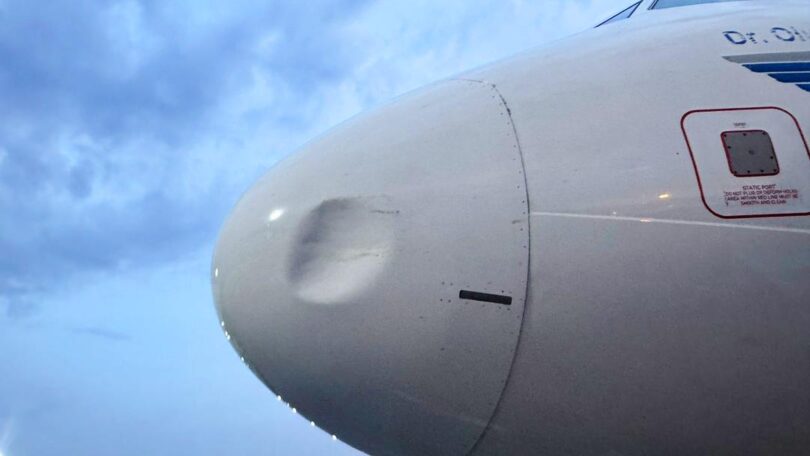
Passengers on a late afternoon flight out of Benin were preparing for a routine journey to Abuja when, moments after take-off, an unexpected impact forced yet another disruption, marking a third reported bird strike involving United Nigeria Airline within about 48 hours.
One incident occurred during landing at Nnamdi Azikiwe International Airport, while another affected a CRJ-900 aircraft arriving from Kano.
At the time, the airline described the back-to-back incidents as “deeply concerning,” noting that they brought the number of bird strikes involving its fleet in 2026 to six, with immediate operational consequences for passengers.
But less than a day later, another incident has compounded those concerns.
In a statement issued Friday, the airline confirmed that one of its aircraft, an Embraer 190 operating Flight UN0561, suffered a bird strike shortly after take-off from Benin Airport at about 4:20 p.m. on Thursday, 16 April.
The aircraft, en route to Abuja, sustained damage to its nose landing gear door linkage, forcing it to be withdrawn from service for detailed inspections and maintenance.
Following the latest occurrence, the airline said three of its aircraft have now been grounded due to bird strikes within 48 hours, bringing the total number of such incidents recorded in 2026 to seven.
Although bird strikes are not unusual in aviation, their frequency within such a short period has heightened concern about safety and operational reliability.
The airline noted that it reports only cases where damage grounds the aircraft, suggesting that minor, non-disruptive encounters may be more common.
An aviation analyst, Nura Ahmad, said the clustering of incidents within such a short period is unusual and points to possible gaps in wildlife control around airports.
He noted that while bird strikes are a known risk globally, “having multiple aircraft grounded within days raises concern and calls for a closer look at conditions around the airfields.”
United Nigeria Airlines said it has continued to prioritise safety by grounding affected aircraft immediately after each incident.
“Consistent with our strict and uncompromising safety standards, the aircraft has been withdrawn from operations to allow for detailed technical inspections,” the airline said.
However, the repeated groundings have placed increasing pressure on operations, reducing fleet availability and triggering delays and cancellations across routes.
The airline has called on the Federal Airports Authority of Nigeria to strengthen wildlife hazard management measures at airports to reduce the risk of such incidents.
Bird strikes are often linked to environmental conditions around airports, including poor waste management and nearby habitats that attract birds into flight paths, particularly during take-off and landing.