By Muhyideen Jimoh, NAN —
Upon assuming office in May 2023, President Bola Tinubu inherited a Nigerian economy contending with a severe combination of cascading crises.
These predicaments ranged from crippling fuel subsidies and multiple exchange rates to declining revenues, rising debt-servicing costs, insecurity and weak investor confidence.
To prevent further economic collapse, the administration opted for difficult reforms, including the removal of the petrol subsidy and the unification of the foreign exchange market, arguing that delaying action would have pushed the country deeper into an economic crisis.
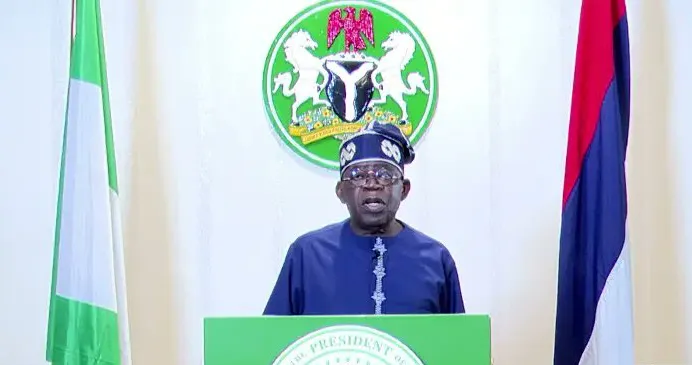
Tinubu succinctly captures it in his third anniversary address.
“At the height of the subsidy regime, Nigeria was spending as much as N18.4 billion daily to sustain petrol subsidies.
“Over N4 trillion was spent in 2022 alone, resources that could have been invested in roads, healthcare, education, housing and critical infrastructure.
“Multiple exchange rate windows and forex arbitrage created massive distortions, with Nigeria losing more than N8 trillion over three years to rent-seeking and speculative practices,” he said.
Though the reforms triggered sharp increases in living costs and tested the patience of many Nigerians, the government insists the sacrifices are beginning to yield measurable gains.
Policy analysts say one of the clearest indicators is improving competitiveness and renewed investor confidence.
The Nigerian stock market has witnessed significant growth, with market capitalisation rising from about N30 trillion in 2023 to N160 trillion in 2026.
Public finances have also improved, enabling states and local governments to access larger allocations for developmental projects and social services.
Mr Taiwo Oyedele, the Minister of Finance and Coordinating Minister of the Economy, said Nigeria was steadily moving from a phase of economic stabilisation to growth.
“We have seen moderation in inflation; we have seen the foreign exchange rate stabilise; and, in fact, steady appreciation over the past couple of years; we have also seen growth, modest growth, but increasing.
“So, we believe that we are now at a point where we are moving from stability to growth,” Oyedele said.
Across the country, observers say massive infrastructure projects are changing the landscape, with more than 2,700 kilometres of highways and major roads under construction, reconstruction or rehabilitation.
The Minister of Works, Sen. Dave Umahi, highlighted critical road projects.
He said the Federal Government was executing legacy highway projects designed to improve connectivity and boost socio-economic development across the six geopolitical zones.
The projects include the 750km Lagos-Calabar Coastal Highway, 1,068km Sokoto-Badagry Super Highway, Calabar-Abuja Superhighway, 482km Trans-Saharan Road and 439km Akwanga-Jos-Bauchi-Gombe Road.
Umahi said the Sokoto-Badagry Super Highway would be a game-changer for the economy.