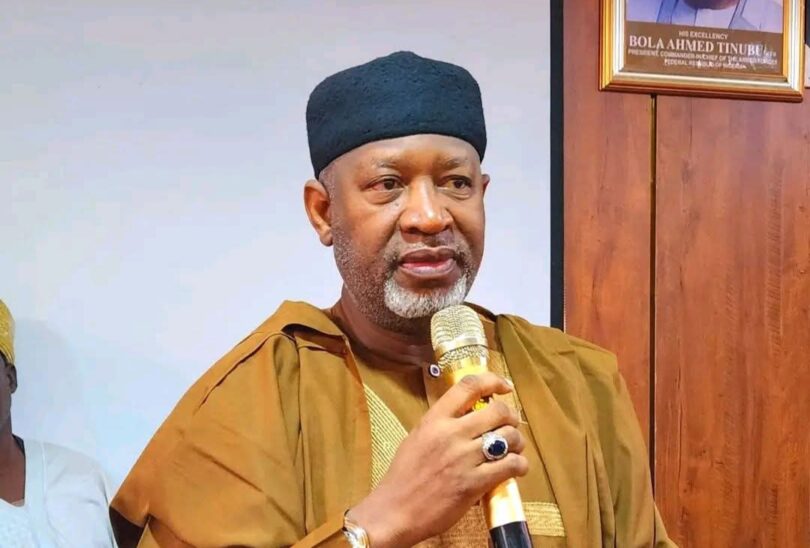
The District Heads, including Yusuf Buhari, would slug it out with other aspirants.
In an unprecedented move in Katsina State, three district heads have declared interest in seeking elections to the National Assembly in 2027.
All three will contest under the All Progressives Congress (APC).
The former aviation minister is the district head of Sirika and holds the traditional title of Marusan Katsina. He is seeking a Senate seat. Mr Buhari is the district head of Kwasarawa and the Talban Daura, while Mr Daha is the district head of Baure and holds the title of Danburam Daura. Messrs Buhari and Daha seek to be members of the House of Representatives.
Mr Siriika has not been turbaned as his appointment was only recently announced.
Katsina State has two emirs: Abdulmuninu Kabir (Katsina Emirate) and Umar Faruk-Umar (Daura Emirate). The emirs are the highest-ranking traditional officials in the state. Next in the hierarchy are the district heads.
The Katsina Emirate Law, as amended in 2025, does not disallow district, village ot ward heads from seeking political offices. District heads, especially those who don’t live in their domains, have a representative (Wakili) who manages the district’s affairs on their behalf.
The political ambitions of the three district heads have continued to generate reactions from political observers and historians in the state as jostling for political parties’ tickets continues.
For Kabir Yandaki, a political scientist at the Ummaru Musa Yar’adu’a University in Katsina, top traditional rulers seeking political offices demean the traditional institutions.
“They can contest on a constitutional basis because no one stops them from doing so. But it’s a symptom of the kind of degeneration or relegating the integrity of traditional institutions because of the nature of how politics is played in the country.
“Economic factors and the need for influence could lure them to join politics. But still, it’s not a good development on the part of the traditional institutions,” Mr Yandaki, a senior lecturer at the university, noted.
Some Nigerians believe that traditional rulers should be non-partisan and serve as advisers, expected to convey the feelings of the masses to leaders. Such people argue that when traditional rulers join party politics, they would be mocked or insulted like other politicians and public office holders.
“It is not a welcome development, especially on the part of the traditional institutions. We all know how politicians are disrespected in the north, but traditional rulers and clerics still enjoy respect in the north. District heads jumping into political contests may lose their reverence,” Hamza Saulawa, coordinator of Nigeria First Project Initiative, said.
For Baba Bala-Katsina, a cultural historian, the development may lead to complete politicisation of traditional institutions in Katsina, as seen in other northern states, especially Kano and Adamawa.
“Katsina has maintained its colonial status with two emirs and little political interference. The involvement of traditional rulers may change that status and may lead to several changes, like belittling the emirs, creating more districts, and dividing the emirate. The changes may be obvious in situations where the traditional rulers were brought to the seats through political influence,” he said.
He also noted that the development may lead to the restructuring of the hierarchy of kingmakers in the emirates and a possible change to the Katsina Emirate Law.
The historian pointed out that traditional rulers may be joining partisan politics to “avoid being sidelined or removed by politicians.”