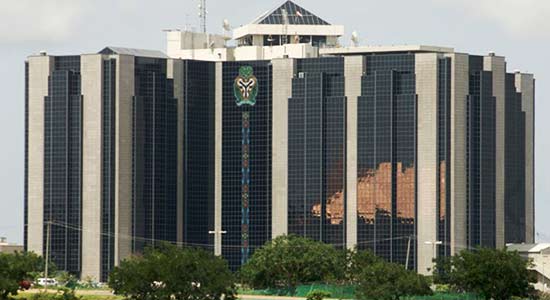
The Central Bank of Nigeria on Monday launched the Nigerian Overnight Financing Rate, a new transaction-based benchmark interest rate designed to strengthen transparency, improve monetary policy transmission and deepen the country’s financial markets.
Speaking at the launch of the benchmark at the CBN headquarters in Abuja, the Governor of the Central Bank of Nigeria, Mr Olayemi Cardoso, said the initiative formed part of the apex bank’s broader efforts to build a more resilient, efficient and credible financial system.
Cardoso described the Nigerian Overnight Financing Rate, known as NOFR, as a significant reform that would align Nigeria’s financial markets with global best practices and provide a reliable reference rate for banks, investors and other market participants.
“The introduction of NOFR represents a significant reform that reinforces the Central Bank of Nigeria’s commitment to building a more resilient, efficient, and credible financial services sector,” Cardoso said.
He explained that benchmark interest rates serve as the backbone of modern financial systems because they provide reference points for pricing financial instruments, managing liquidity and transmitting monetary policy decisions across the economy.
According to him, global financial markets have increasingly moved away from judgment-based benchmarks towards transaction-based rates derived from actual market activities in order to reduce the risk of manipulation and improve transparency.
Cardoso noted that the CBN developed NOFR in collaboration with the Financial Markets Dealers Association and with technical support from the European Bank for Reconstruction and Development.
He said the benchmark was designed as a transaction-based overnight secured interbank financing rate that reflects the true cost of overnight funding in Nigeria’s money market.
“By anchoring the benchmark on observable transactions, NOFR enhances market integrity and credibility, reduces reliance on subjective estimates, minimises the risk of manipulation, and improves price discovery and transparency,” he stated.
He added that the new framework would strengthen confidence in Nigeria’s financial markets and support efforts to deepen market activities.
“The result of all of that is a deepening of our financial markets. Markets get deeper when they are trusted and when they are credible,” Cardoso said.
The CBN governor said the benchmark would serve as a transparent and reliable reference rate for treasury operations, liquidity management, pricing of financial contracts and securities, development of derivatives and structured products, and enhancement of risk management frameworks.
He added that the initiative would support the future development of more sophisticated financial products and benchmark rates required for a dynamic financial market.
For businesses and borrowers, Cardoso said NOFR would introduce greater transparency into the pricing of loans and wholesale deposits within the banking system.
According to him, one of the most important benefits of the benchmark is its role in strengthening monetary policy transmission and supporting the central bank’s price stability mandate.
“These are critical to having a more effective monetary policy transmission mechanism supporting the delivery of the price stability mandate of the CBN,” he said.
In a rare reflection on the early days of his administration, Cardoso said weaknesses in the monetary policy transmission mechanism influenced the bank’s decision-making process when he assumed office.
He argued that holding monetary policy meetings without an effective transmission mechanism would not have delivered the desired outcomes for the economy.
Cardoso expressed confidence that the successful implementation of the benchmark would strengthen domestic and foreign investor confidence and contribute to sustainable economic growth.
“The successful implementation of NOFR will reinforce domestic and international investor confidence, thereby contributing to sustainable economic growth,” he stated.
Also speaking at the event, the Deputy Governor, Economic Policy Directorate, Philip Ikeazor, described the launch as a major milestone in the evolution of Nigeria’s financial markets.
He said the benchmark represented more than a market reform, adding that it reflected progress, modernisation and the country’s commitment to building stronger financial infrastructure.
“This journey to this moment demanded a clear vision, technical rigour, collaboration, resilience, and perhaps most importantly, a shared conviction that our financial system must continuously evolve to meet the demands of a changing world,” Ikeazor said.
He noted that as global markets increasingly adopt transaction-based reference rates, Nigeria must position itself not merely to follow international developments but to help shape them.
According to him, the launch marks the beginning of another phase of financial market development that will require sustained collaboration, discipline and commitment from stakeholders.
Representing the Managing Director of Access Bank Plc, Roosevelt Ogbonna, the bank’s Group Head of Treasury, David Enilolobo, described the launch as a structural reform rather than a ceremonial event.
He said benchmark rates influence pricing decisions affecting millions of customers and businesses daily, making the credibility of such rates critical to the financial system.
He argued that transaction-based benchmarks provide stronger market credibility than rates based on estimates or market opinions.
“That distinction is not technical; it is foundational. It is the difference between a rate the market can defend and a rate it has words to explain,” he said.
Enilolobo noted that stronger market infrastructure attracts investment, reduces financial risks and improves confidence among international investors.
“Nigeria’s ambition to deepen its financial market and grow its standing in global capital flows cannot be realised without this kind of infrastructure,” he said.
He pledged Access Bank’s support for the new benchmark and urged financial institutions to integrate it into money market instruments, floating-rate products and repurchase agreement transactions.
Earlier in April 2026, the CBN announced the introduction of the Nigerian Overnight Financing Rate as a new benchmark for the country’s money market, aimed at improving transparency and strengthening monetary policy transmission.