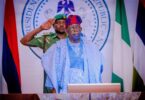
This week, President Bola Ahmed Tinubu will travel to the United Kingdom for what may prove to be one of the most consequential diplomatic engagements of his Presidency. It will be the first time a Nigerian leader will be berthing on the banks of the Thames on a State Visit in nearly four decades. Only very few such State visits in the past, by an African leader, have carried more symbolic and strategic weight.
In November 1977, Egyptian President Anwar Sadat made a historic journey to Jerusalem, becoming the first Arab leader to set foot on Jewish soil since the biblical Exodus—when Moses led the Israelites out of Egypt. That moment was more than a diplomatic gesture; it signaled a strategic rethinking of a relationship defined for decades by history, suspicion, and conflict.
President Tinubu’s visit to London may not carry the drama of Sadat’s visit to Begin, but its implications for the future of UK–Africa relations could prove just as significant. At first glance, Nigeria–UK relations may appear familiar- two countries bound by history, language, legal traditions, and dense people-to-people ties. Yet the significance of this visit lies not in nostalgia but in strategic renewal.
The agenda is forward-looking: investment, financial cooperation, technology partnerships, security coordination, education linkages, and diaspora engagement. But beyond the formal programme, the visit carries a deeper message: Nigeria and the United Kingdom are repositioning one of Africa’s most important bilateral relationships for a new global reality.
A Relationship Built on History
Few international partnerships between Africa and Europe carry the institutional depth of Nigeria–United Kingdom relations. From colonial administration to Nigeria’s independence in 1960 and through more than six decades of diplomatic engagement, the two nations have maintained enduring links across:
• governance and legal systems
• finance and banking
• security cooperation
• education and research
• trade and migration
.Security
Today, more than ever, the human connection alone is immense. More than 300,000 Nigerians live in the United Kingdom, forming one of the largest African diaspora communities in Europe. Nigerian students also rank among the largest foreign student populations in British universities, strengthening the intellectual bridge between both societies.
The economic relationship is equally significant: Total bilateral trade in goods and services reached approximately £8 billion in the four quarters ending mid-2025, with UK exports to Nigeria valued at £5.6 billion and imports from Nigeria at £2.3 billion.
Nigeria’s exports to the UK are dominated by oil and gas products, while British exports to Nigeria include industrial machinery, refined petroleum products, pharmaceuticals, consumer goods, and financial services. Despite these flows, the relationship still operates below its full potential.
Investment, Remittances and the Diaspora Economy
The financial ties between both countries extend far beyond trade. Nigeria remains one of the largest recipients of diaspora remittances globally, with inflows reaching about $21 billion in 2024, according to central bank estimates.
A significant share of these remittances originates from Nigerians resident in the United Kingdom, making the diaspora corridor one of the most important economic bridges between both countries. British investment has also played a long-standing role in Nigeria’s economy.
Major British-linked companies operate in Nigeria and recent data shows that the stock of UK foreign direct investment in Nigeria stood at about £385 million in 2023, highlighting the need to revitalize and scale investment flows between both economies.
This visit is therefore expected to focus heavily on unlocking new capital flows into Nigeria’s infrastructure, technology, energy and financial sectors.
Security Cooperation: Quiet but Significant
Security cooperation between Nigeria and the United Kingdom is one of the most substantive, though often understated, pillars of the bilateral relationship.
For over three decades, British and Nigerian armed forces have collaborated on training, intelligence sharing, counter-terrorism strategy, and military professionalization. Sandhust for Nigeria Military is the Harvard of elite Military training.
British military advisory teams have trained hundreds of Nigerian military personnel, including specialized counterterrorism and civil-military relations units within the Armed Forces of Nigeria. In recent years, this cooperation has deepened through the UK–Nigeria Security and Defence
Partnership, which focuses on:
• counter-terrorism operations
• counter-terrorist financing investigations
• intelligence coordination