The economy Mr Edun met at a 2.5 per cent growth rate, when he took office in the third quarter of 2023, had achieved a 4.1 per cent expansion rate as of the fourth quarter of 2025.
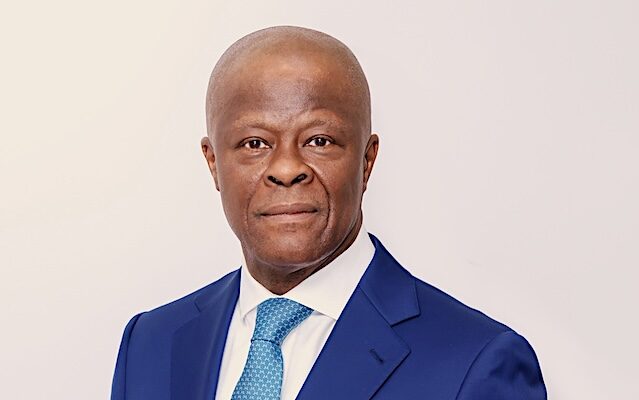
Wale Edun, Nigeria’s immediate past minister of finance and coordinating minister of the economy, who gave up his role on Tuesday, was essentially a corporate finance professional before Nigeria’s transition into democratic rule in 1999 enabled him to cut his teeth in politics as a political appointee.
Starting off at Chase Merchant Bank in Lagos in 1980, Mr Edun rose to lead the treasury unit of the financial institution and later took the position of deputy head of corporate finance. He parted ways with the company in 1986. During the six-year stint, he gained a broad experience in the money market, financial advisory and the capital market.
In 1989, following his return to Nigeria, he co-founded Investment Banking & Trust Company (IBTC) Limited, a merchant bank which would later metamorphose into a commercial bank, gaining a public company status in 2005.
That year, IBTC completed a business combination with Chartered Bank PLC and Regent Bank PLC. The enlarged entity took the name “IBTC Chartered Bank PLC” in January 2006. IBTC Chartered forged a merger with Stanbic Bank Nigeria Limited a year later, becoming Stanbic IBTC Bank.
In 1994, Mr Edun established Denham Management Limited, the precursor of the Lagos-based investment bank Chapel Hill Denham Group, where he was chair from 2008 to 2021. He founded West Africa Ratings Limited, which, after a series of mergers, is now Moody’s-affiliated Global Credit Ratings.
President Bola Tinubu, then the executive governor of Lagos State, appointed him as the commissioner for finance in 1999. Mr Edun served in that capacity until 2004. During his time, he led reforms that transformed the state’s tax system with strong outcomes that included an upsurge in internally generated revenue, helping wean Lagos off its reliance on federal allocations.
On the strength of those accomplishments, Mr Tinubu, on ascending to presidency, appointed him minister of finance and coordinating minister of the economy in August 2023.
Mr Edun had played a role in drafting Mr Tinubu’s manifesto and was one of the key figures in his economic before becoming president, at a point serving as his special adviser on monetary policy.
Mr Edun, alongside Yemi Cardoso, the governor of the Central Bank of Nigeria, was a member of the top economic policy team of the Tinubu administration, saddled with the task of ensuring that fiscal and monetary policies do not operate at arm’s length.
The economy he met at a 2.5 per cent growth rate, when he took office in the third quarter of 2023, had achieved a 4.1 per cent expansion rate as of the fourth quarter of 2025. Under his stewardship, inflation fell from 35 to 15 per cent, even though the methodology was revised.
Overseeing a flurry of tough but investor-friendly economic reforms, aimed at turbocharging Nigeria’s sluggish growth, meant he often came under pressure to take urgent, important decisions.
He led a rebasing of the GDP, Nigeria’s first in eleven years, in a push to capture structural shifts in major sectors of the economy, while also coordinating the overhaul of inflation data with a view to tracking contemporary consumption patterns in Africa’s most populous country.
Nigeria’s most ambitious tax revamp to date, which, among other things, aspires to raise the tax-to-GDP ratio to 18 per cent in 2026 from 10.9 in 2023, fell under his purview.
Similarly, he helped in cutting back the government’s appetite for deficit financing through ways and means, a Central Bank of Nigeria facility that masked the nation’s debt burden and revenue shortfall concern for many years.
Mr Edun featured prominently in a series of international engagements with global DFIs such as the World Bank and the IMF, and networked with international investors towards repositioning Nigeria as a haven for investment.
His efforts help compliment far-reaching reforms like automation of the Treasury Single Account, among other policies, all targeted at macroeconomic stability.
Nigeria’s daily oil production (condensate inclusive), at 1.41 million barrels per day in August 2023, had climbed to 1.84 million as of early April 2026.
The tough and unpopular reform of fuel subsidy removal, necessary as it was, fuelled Nigeria’s worst cost-of-living crisis in nearly three decades. Analysts say much as the move has helped save a great deal of cash that for long had been a drain on the treasury, it has sharply increased allocations to states and other sub-nationals without a commensurate level of development.
Similarly, while a couple of devaluation cycles implemented under his leadership has made the economy more attractive to investors, it has proved a major factor that has stoked inflation in the last few years.
In terms of budgeting, both the 2025 and 2026 appropriation bills suffered a delay in approval, each not signed into law until February of the following year. Performance has been problematic, with pending capital projects from past years’ budgets rolled into the preceding years.
According to analysts, many of the reforms have worsened poverty levels, widened the inequality gap and come at a painful cost, without adequate measures to soften the blow.