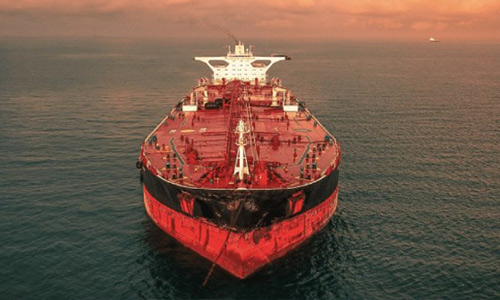
The United States Coast Guard, USCG, has lifted the Condition of Entry imposed on vessels arriving in the United States after calling at designated Nigerian ports, bringing to an end a security regime that had remained in place for about 12 years.
The Minister of Marine and Blue Economy, Adegboyega Oyetola, announced the development on Tuesday, describing it as a major breakthrough for Nigeria’s maritime industry and an affirmation of improvements in the country’s port security architecture.
The restriction, introduced in June 2014, subjected vessels heading to the United States to additional security requirements where they had called at affected Nigerian ports among their previous five port calls.
The United States Coast Guard had imposed the measures after concluding at the time that Nigerian ports, apart from specifically exempted facilities, did not maintain adequate anti-terrorism measures.
The original 2014 US Federal Register notice identified deficiencies involving Nigeria’s maritime security legal regime, designated authority oversight, access control and cargo control.
Under the arrangement, affected ships were required, among other measures, to implement security precautions equivalent to Security Level 2 while at the affected Nigerian ports, secure access points and demonstrate that specified protective measures had been taken before they could enter United States waters.
The Condition of Entry became effective in June 2014 and applied to vessels that had visited non-exempt Nigerian ports within their previous five port calls.
Some terminals and port facilities in Apapa, Bonny and other locations were exempted from the restrictions at different times.
NIMASA said the latest decision means vessels calling at Nigerian ports before proceeding to the United States will no longer be subjected to the additional USCG security requirements imposed specifically under the Condition of Entry.
Oyetola attributed the removal to sustained improvements in maritime security and Nigeria’s implementation of the International Ship and Port Facility Security, ISPS, Code.
“The lifting of the Conditions of Entry is a major milestone for Nigeria’s maritime sector. It is a strong affirmation of the progress we have made in strengthening maritime security and implementing the ISPS Code across our ports and facilities,” the minister said.
“We are committed to sustaining this momentum and ensuring that Nigeria remains a safe, secure and competitive destination for international shipping.”
According to NIMASA, the decision followed four comprehensive assessments of Nigeria’s national maritime security framework and port facilities conducted by the US Coast Guard between March 2024 and April 2026.
The assessment missions took place between March 11 and 13, 2024; April 15 and 19, 2024; March 15 and 21, 2025; and April 13 and 17, 2026.
NIMASA said the assessments demonstrated significant improvement in Nigeria’s maritime security performance and compliance with the ISPS Code, ultimately paving the way for the lifting of the restriction.
During an earlier assessment in March 2025, a US Coast Guard delegation had commended Nigeria’s progress in implementing the ISPS Code after inspecting port facilities including the Lekki Deep Seaport, Dangote Port and facilities in Warri.
The delegation said at the time that the level of compliance observed at the facilities compared favourably with standards in leading maritime jurisdictions.
Oyetola credited the development to collaboration between the Federal Ministry of Marine and Blue Economy, NIMASA, other government agencies, port and terminal operators, shipping companies and stakeholders in the maritime industry.
He also commended the Director-General of NIMASA, Dr Dayo Mobereola, and officials of the agency for their role in addressing gaps previously identified in Nigeria’s port security system.
The minister said the significance of the decision went beyond security, arguing that removal of the additional requirements could improve the efficiency and competitiveness of Nigerian ports.
NIMASA said vessels affected by the former regime had faced additional documentation, security measures, inspections and other compliance requirements that could contribute to delays and increased operating costs.
With the restriction removed, the agency expects improved vessel turnaround times and greater schedule reliability for ships trading between Nigerian ports and the United States.
The government also expects the development to make Nigerian ports more attractive to international shipping lines, potentially stimulating additional shipping activity, trade, investment, employment and port revenue.
The decision marks the culmination of years of engagement between Nigeria and the US Coast Guard.
In July 2023, NewsNGR reported that then-NIMASA Director-General, Dr Bashir Jamoh, had urged the United States to remove Nigeria from the Condition of Entry regime, arguing that the additional security controls increased delays and shipping costs.
At the time, a US Coast Guard delegation said it hoped continued cooperation and improvement in ISPS Code compliance would eventually reduce or end the Conditions of Entry applicable to vessels from Nigeria.
Three years later, the restriction has now been lifted following successive security assessments and improvements acknowledged by the US authorities.