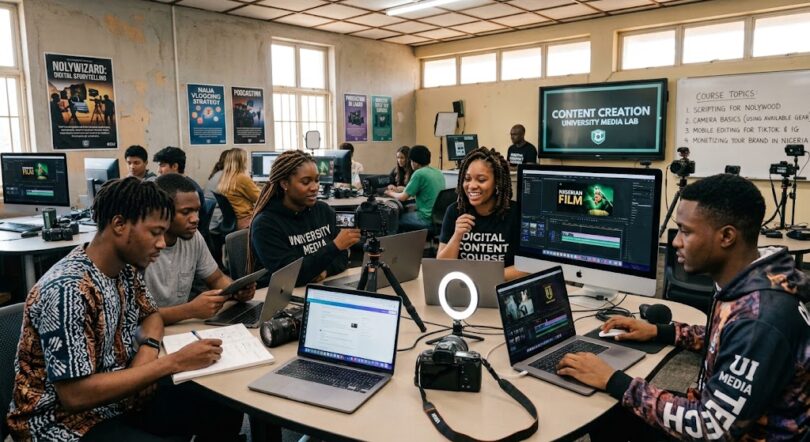
While some have questioned whether content creation requires a university degree, others argue that the profession involves specialised skills that can be taught and applied to other careers.
Arizona State University (ASU), a public research university in the United States, has launched a bachelor’s degree in content creation, sparking debate over the value of such a programme.
While some have questioned whether content creation requires a university degree, others argue that the profession involves specialised skills that can be taught and applied to other careers.
The programme is offered through ASU’s Walter Cronkite School of Journalism and Mass Communication, according to the university’s programme description.
According to ASU, the programme covers content planning and development, multimedia production, social media strategy, audience analytics and integrated communication.
Students will learn video, audio, graphic design, writing and editing, as well as branding, audience engagement, ethics, copyright and monetisation.
The university said students will also gain practical experience through brand content projects, media internships, the Los Angeles Content Studio, and content-creation trips abroad.
It said graduates will be prepared for professional and entrepreneurial roles in content strategy, digital influence, brand development, social media management and audience engagement across different industries.
According to a report by The Independent, Syracuse University, Quinnipiac University and Colorado State University offer minors in content creation, while St Bonaventure University has introduced a full content creation major.
The development has raised questions about whether a university degree can prepare students for an industry in which success often depends on creativity, personality, audience growth, and rapidly evolving social media platforms.
In the report by The Independent, Brooke Duffy, a communication professor at Cornell University, said content creation is often misunderstood as an easy or glamorous career, noting that it can be time-consuming and poorly paid, particularly at the beginning.
Max Willens, a principal analyst at eMarketer who covers the creator economy, also questioned whether a specialised degree would automatically lead to success as an influencer.
Content creators, however, have defended the programme’s value. A content creator, Aiesha Beasley, told The Independent that skills involved in building a digital presence and personal brand could also be useful in communications and marketing.
Another creator, Sammy Cristerna, said such a programme could teach students practical skills, including negotiating brand sponsorships, monetisation and building and retaining an audience.