The Independent Corrupt Practices and Other Related Offences Commission, ICPC, has denied claims that the detained former governor of Kaduna State, Nasir El-Rufai, was denied access to food, family visits and medical care while in its custody.
El-Rufai has been in ICPC custody since February 19 over allegations of financial impropriety during his tenure as governor of Kaduna State between 2015 and 2023.
The former governor was arraigned on April 13 before the Kaduna State High Court on an amended nine-count charge bordering on alleged fraud and abuse of office.
Controversy arose after Mohammed Bello, member representing Kaduna North Federal Constituency in the House of Representatives and son of the former governor, alleged that ICPC officials prevented El-Rufai’s wife from bringing food to him.
Bello also alleged that a doctor was barred from seeing his father, describing the development as a violation of his fundamental rights.
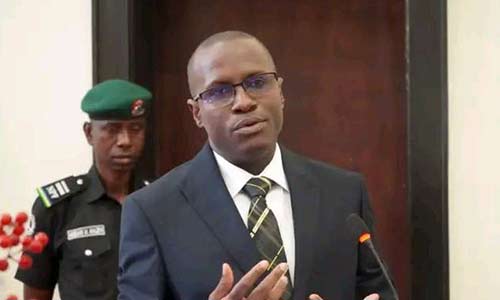
But speaking at a press conference on Monday, ICPC spokesperson, Okor Odey, dismissed the claims as “false and misleading.”
Odey said the commission was disturbed that people would allegedly spread falsehood against the anti-graft agency despite what he described as clear custody and access protocols.
According to him, ICPC’s access control rules allow visitors into its detention facility only between 9 a.m. and 6:30 p.m.
He said the former governor’s wife arrived outside the approved visiting period, adding that the family had been duly informed of the rules and had complied with them before the incident.
“The families of all defendants and suspects in ICPC custody, including the family in question, were duly informed of this protocol and have, until this incident, been in compliance,” Odey said.
He added that on the Friday in question, one of El-Rufai’s wives and a housemaid were allowed to bring food to him at least three times between 10:30 a.m. and 5:30 p.m.
Odey said the visitor’s register, which records the names of family members and the purpose of each visit, was available for verification.
“Authorised visitors, including family members, legal counsel, and medical personnel, are permitted to visit, deliver food, and consult with persons in custody,” he said.
“However, entry is strictly not permitted after 6:30 p.m.”
The ICPC spokesperson also dismissed a viral video in which El-Rufai’s wife claimed she was denied access, saying she arrived at about 7 p.m., 30 minutes after the official visiting period had closed.
He further stated that the woman admitted in the same video that she had delivered breakfast and lunch to her husband earlier that day, a fact he said contradicted the allegation that the commission denied him access to food.
Odey said, given El-Rufai’s public profile, the commission was required to maintain enhanced security measures for his protection and the safety of other persons in custody.
On the allegation that El-Rufai’s medical personnel were denied access, Odey said ICPC operatives only requested proper identification from the medical team and confirmation from the former governor before granting them supervised access.
He described the process as a standard security procedure.
According to him, in the week preceding the incident, El-Rufai had requested and received approval to visit both his dentist and eye doctor on two separate occasions, with ICPC officers accompanying him on both visits.
“This is in addition to the regular access he enjoys to the commission’s in-house medical personnel and facilities upon request,” Odey said.
The commission insisted that it would not be drawn into what it described as “dramatised narratives designed to circumvent lawful institutional procedures.”
However, the denial is likely to be met with public scrutiny, given long-standing concerns among many Nigerians about transparency and credibility in the handling of detainees by law enforcement agencies.
The ICPC maintained that it had acted within established rules and that El-Rufai’s family, lawyers and medical personnel had not been denied lawful access to him.