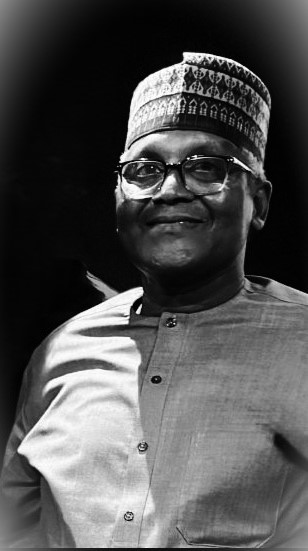
When conversations turn to investment in Africa, one name consistently dominates the discussion: Aliko Dangote. Over the past four decades, the Nigerian industrialist has become more than Africa’s richest businessman –he has emerged as one of the continent’s most influential advocates for industrialisation, value addition and economic self-reliance.
His investments tell a story that goes beyond profit; they reflect a philosophy that Africa can no longer afford to remain merely a supplier of raw materials while importing finished products at enormous cost.
Dangote’s vision is rooted in a simple but transformative belief: Africa must produce what it consumes and trade more with itself. This conviction aligns perfectly with the aspirations of the African Continental Free Trade Area (AfCFTA), which seeks to create a single African market and stimulate manufacturing, investment and intra-African trade.
Unlike many investors who view Africa as a collection of disconnected national markets, Dangote has consistently viewed the continent as one vast economic space with immense potential. His strategy has therefore been to establish industries that solve critical supply gaps while creating jobs, developing local expertise and reducing dependence on imports.
His most visible success story is cement. Through the Dangote Cement Group, he transformed Nigeria from one of the world’s largest cement importers into a net exporter. Today, the company operates manufacturing plants in numerous African countries, including Ethiopia, Tanzania, Senegal, Zambia, Cameroon, Congo, South Africa and Ghana, among others. Collectively, these investments have created tens of thousands of direct and indirect jobs while supplying the materials needed for roads, bridges, schools, hospitals, housing and other infrastructure that underpin economic development.
Dangote has repeatedly argued that infrastructure is impossible without locally available cement. By manufacturing close to African markets, his company reduces transportation costs, conserves foreign exchange and builds domestic industrial capacity. The result is not merely commercial success but the strengthening of Africa’s productive economy.
Dangote’s US$45 billion capital expansion programme (2026 – 2030) across Africa clearly underscores his vison of prosperity for the continent. Dangote Cement alone has invested US$8.5 billion across Africa in 15 years. However, his commitment extends beyond cement into agriculture and food security. Through Dangote Sugar Refinery, he has invested heavily in integrated sugar production with the objective of reducing Africa’s dependence on imported sugar. The strategy combines cultivation, processing and refining, creating agricultural value chains that benefit farmers, transporters, processors and distributors.
Sugar, often overlooked in discussions of industrialisation, illustrates Dangote’s broader philosophy. Africa possesses fertile land, favourable climate and abundant labour. Yet, billions of dollars leave the continent annually to import products that could be produced locally. Dangote believes reversing this trend is essential for sustainable development.
The same philosophy explains his investment in fertiliser. The Dangote Fertiliser Plant in Nigeria is among the largest granulated urea fertiliser facilities in the world. Its significance extends well beyond Nigeria’s borders. Fertiliser is fundamental to improving agricultural productivity across Africa, where millions of smallholder farmers struggle with declining soil fertility and low crop yields.
By producing fertiliser locally, Africa reduces import dependence while making a strategic input more accessible to farmers.
In Ethiopia, Dangote has invested over US$4 billion in the country’s fertiliser plant to cut imports and reduce forex pressure. Higher agricultural productivity contributes directly to food security, export competitiveness and rural prosperity. For Dangote, industrialisation and agriculture are complementary pillars of economic transformation rather than competing priorities.
Perhaps no investment better illustrates his long-term vision than the Dangote Petroleum Refinery. For decades, Nigeria – despite being one of Africa’s largest crude oil producers – imported much of its refined petroleum products. This paradox imposed enormous costs on the economy and exposed the country to supply disruptions and foreign exchange pressures.
The refinery seeks to reverse this historical anomaly by refining crude oil domestically on an unprecedented scale. Beyond meeting Nigeria’s needs, it has the capacity to supply refined petroleum products to many African countries, reducing the continent’s dependence on imports from Europe, Asia and the Middle East. It also demonstrates that Africa can execute world-scale industrial projects despite enormous financial, technical and logistical challenges.
Dangote’s ambitions are increasingly continental. Reports of planned refinery investments and partnerships in Kenya reflect his broader vision of strengthening Africa’s energy security and industrial base beyond Nigeria. The proposed 700,000 bpd refinery in Kenya will cost about US$17 billion, and it is projected that it will take about three to five years to build. Whether through new investments, partnerships or strategic supply arrangements, the objective remains consistent: creating integrated African value chains capable of supporting economic growth across multiple countries.
The Dangote Petroleum Refinery in Ibeju Lekki, Lagos has significantly strengthened Nigeria’s energy security at a time of heightened geopolitical tensions in the Middle East, where conflicts have disrupted global oil supply chains and fuel markets. By refining crude oil locally, Nigeria has reduced its dependence on imported petroleum products, making the country less vulnerable to external supply shocks, freight disruptions and price volatility.
Had the refinery not come on stream, Nigeria would likely have faced acute petrol shortages, steeper pump prices and intensified pressure on scarce foreign exchange needed for fuel imports. Increased demand for U.S. dollars would have placed further strain on the naira, worsening exchange rate instability and fueling inflation across the economy. While Nigeria remains exposed to global crude oil price movements, the Dangote Refinery has provided a vital buffer, enhancing energy resilience, conserving foreign exchange and reinforcing the country’s economic stability during a period of global uncertainty.
Central to Dangote’s philosophy is his confidence in Africa’s future. He has frequently encouraged both African and international investors to stop seeing Africa through the narrow lens of political instability, poverty and risk. Instead, he points to the continent’s rapidly growing population, expanding middle class, abundant natural resources and entrepreneurial energy as compelling reasons to invest.
He often reminds audiences that every successful economy was built by investors willing to take calculated risks. In his view, Africa’s challenges should not discourage investment; rather, they represent opportunities to create solutions that generate both commercial returns and lasting social impact.
His message to African governments is equally consistent: sustainable development requires policies that encourage industrial investment, protect legitimate businesses, improve infrastructure and create predictable regulatory environments. Investors need confidence that long-term projects will receive stable policy support.
Dangote also believes that African capital should play a leading role in Africa’s development. While foreign direct investment remains valuable, local investors understand African markets more deeply and are often willing to commit for the long term. Their success, he argues, inspires confidence among international investors.
The emergence of the AfCFTA makes Dangote’s vision even more relevant. A continent-wide market of over 1.4 billion people offers manufacturers unprecedented opportunities to achieve economies of scale. Companies producing cement, fertiliser, sugar and refined petroleum products can increasingly serve multiple African markets under a more integrated trading framework. This is precisely the future Dangote has anticipated through decades of cross-border investment.
Ultimately, Aliko Dangote’s legacy will not be measured solely by his wealth but by the industries he has built and the confidence he has inspired in Africa’s economic potential. His investments demonstrate that African entrepreneurs can conceive, finance and execute projects of global significance. They show that industrialisation is not an abstract aspiration but a practical pathway to jobs, technology transfer, export growth and shared prosperity.
As global investors gather at Africa-focused business summits from Abuja to Nairobi, Accra, Kigali, Lome, Abidjan, Johannesburg, London, New York, Washington DC, Paris, Dubai, Beijing, Moscow, Singapore and beyond, Dangote’s journey offers an important lesson: investing in Africa is not an act of charity; it is a strategic economic decision grounded in the continent’s vast opportunities.
His life’s work is an enduring reminder that Africa’s greatest wealth lies not only beneath its soil but also in its capacity to manufacture, innovate and create value for its own people and for the world.
Braimah is a PR specialist, marketing strategist, and publisher/editor-in-chief of Naija Times (www.ntm.ng) and Lagos Post (www.lagospost.ng). He is a strong advocate for African prosperity and can be reached through: [email protected]