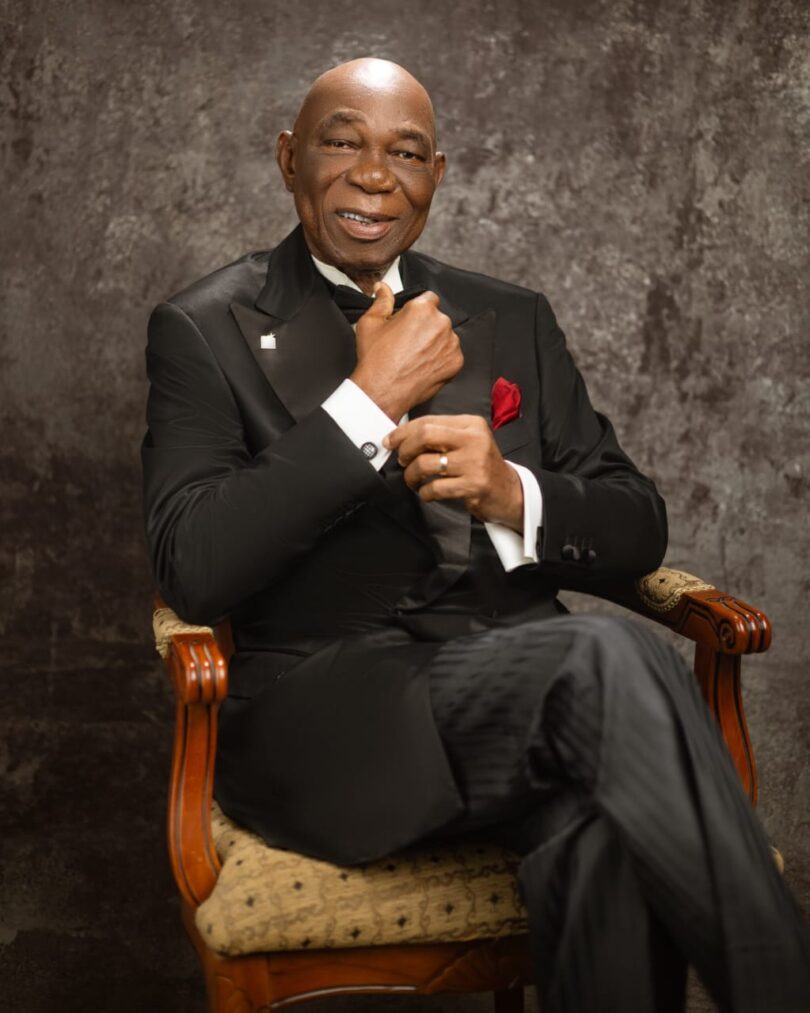
On May 27, 2026, Nigeria’s entertainment icon, businessman and cultural trailblazer, Mr. Ken Calebs Olumese, popularly known as “The Guvnor,” turned 82.
The milestone naturally triggered tributes from friends, admirers, celebrities, captains of industry and ordinary Nigerians whose lives he touched in one way or another. Yet beyond the birthday wishes and social media celebrations lies a more important question: when will Nigeria truly honour Ken Calebs Olumese?
For decades, the Guvnor has remained one of the most influential figures in Nigeria’s entertainment and hospitality industry.
Long before nightlife became fashionable and entertainment became a billion-naira industry, Ken Calebs Olumese had already built a cultural institution known as Niteshift Coliseum – arguably Africa’s most famous entertainment venue at the time.
Situated in Opebi, Ikeja, Lagos, the venue was not merely a nightclub. It was a melting pot of power, politics, business, culture and entertainment.
At Niteshift Coliseum, governors mingled with musicians, diplomats sat beside actors, and presidents interacted with ordinary citizens.
The venue hosted some of the most influential personalities on the African continent, including President Bola Ahmed Tinubu, former Vice President Atiku Abubakar, former Ghanaian President Jerry Rawlings and countless dignitaries from across the world. In many ways, Niteshift Coliseum became an unofficial cultural embassy of Nigeria’s entertainment and social life.
Yet, despite his enormous contribution to the nation’s cultural history, Ken Calebs Olumese remains one of those rare pioneers Nigeria appears content to celebrate only in private conversations and birthday tributes, rather than through institutional recognition.
Why?
Why do we wait until our icons are gone before we remember their contributions? Why are we so quick to immortalise people after death, while hesitating to celebrate them meaningfully when they are alive to appreciate it?
This is not merely about one man. It is about a national culture that often fails to honour visionaries in real time.
Ken Calebs Olumese helped shape Nigeria’s entertainment ecosystem long before Afrobeats conquered the world. Today, Nigerian music dominates global charts. Nigerian nightlife is a global attraction. Lagos is recognised internationally as Africa’s entertainment capital. But pioneers like the Guvnor laid the foundation for that recognition decades ago.
The irony is painful. Nigeria often borrows the culture of honouring living legends from other nations only after their passing. Streets are renamed after them when they can no longer walk through them. Institutions are named after them when they are no longer alive to witness the appreciation. National honours suddenly arrive wrapped in regret and posthumous speeches.
Surely, we can do better.
What exactly stops Lagos State or even the Federal Government from naming a street after Ken Calebs Olumese? Why can’t there be a cultural centre, entertainment hub or tourism initiative bearing his name? Why shouldn’t a man who transformed nightlife into a respectable business model in Nigeria receive formal recognition from the country he served with passion and creativity?
This is not about hero worship. It is about acknowledging impact.
The Guvnor did not simply run a nightclub. He built an ecosystem. He created opportunities. He supported entertainers. He elevated hospitality standards. He created a safe social environment where Nigeria’s elite and middle class could interact freely. At a time when entertainment entrepreneurship was poorly understood, he was already operating at an international standard.
Beyond business, those who know Ken Calebs Olumese often speak about his generosity, mentorship and loyalty to friends and associates. Many successful people in Nigeria’s entertainment and hospitality industry today passed through doors he opened directly or indirectly.
At 82, he remains a symbol of resilience, style, excellence and reinvention. His life represents a significant chapter in Nigeria’s modern cultural evolution.
The truth is simple: nations that fail to honour their living legends risk discouraging future pioneers. Recognition is not merely ceremonial; it is educational. It tells younger generations that service, innovation and consistency matter.
As Nigerians celebrate the Guvnor at 82, perhaps this is the right moment for government, corporate Nigeria and the entertainment industry to ask themselves difficult questions. Must we always wait for funeral tributes before acknowledging greatness? Must immortality only come through obituary headlines?
Thankfully, Mr. Ken Calebs Olumese is still here with us – vibrant, respected and deeply admired. And while we continue to pray that God grants him many more years in good health, strength of mind and peace, perhaps Nigeria should begin to think seriously about giving him his flowers now.
Not tomorrow.
Not posthumously.
But now.
Because some legends deserve to witness their own immortality.