International and local experience shows that targeted leader killings tend to have more symbolic than practical impact.
The joint Nigerian-United States (US) operation on 16 May that reportedly killed Islamic State West Africa Province (ISWAP) second-in-command Abu-Bilal al-Minuki will boost efforts to dismantle one of Africa’s most deadly terror groups.
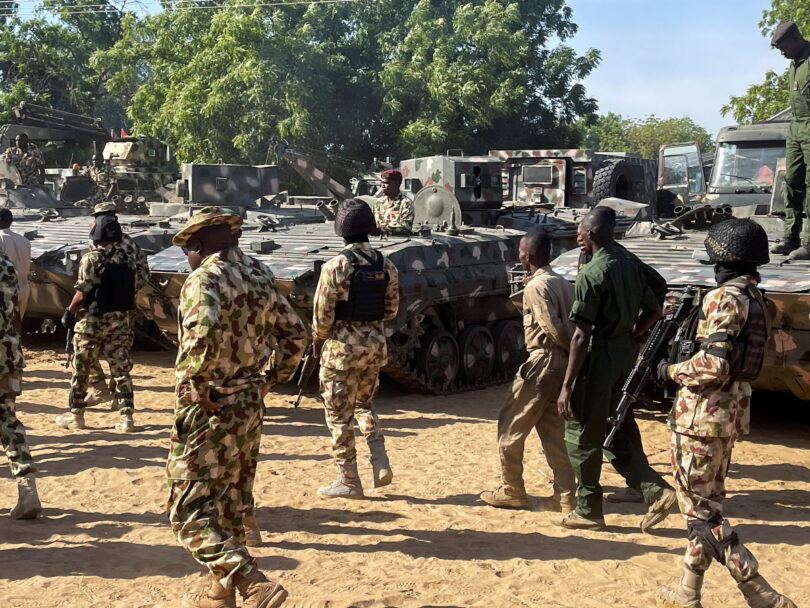
Al-Minuki and about 40 of his lieutenants were allegedly killed in a nearly three-hour battle involving a helicopter-borne assault by a commando from the Nigerian Army and the US Navy’s SEAL Team 6, according to a military source cited by The New York Times.
Al-Minuki, 44, was a key figure in the history of terrorism in the Lake Chad Basin. Under Boko Haram leader Abubakar Shekau, he became a tactical strategist and field commander.
A staunch Islamic State supporter, he aligned himself with the Boko Haram splinter group that pledged allegiance to Islamic State and subsequently became ISWAP in 2016.
As ISWAP’s deputy head, al-Minuki’s influence spread far beyond the Lake Chad Basin.
He is believed to have fought with Islamic State in Libya, and at the time of his death was a senior figure in Islamic State-Global, coordinating the operations of Islamic State affiliates.
As chief planner of ISWAP operations in the Lake Chad Basin and the Mandara Mountains, al-Minuki focused on attacking defence forces and kidnapping schoolchildren.
He aimed to win locals’ hearts by providing aid and tokens of allegiance. Rather than targeting villages, he developed a political economy based on levying taxes on residents, commercial spaces and areas of socio-economic opportunity such as fishing zones, transhumance routes or grazing areas.
The dramatic announcements of al-Minuki’s death by US and Nigerian authorities suggest that both hoped the news would be a public relations win in their domestic constituencies.
The joint operation shows the benefits of strong intelligence, surveillance and reconnaissance capabilities, and the precise targeting of al-Minuki suggests that other ISWAP leaders may also be vulnerable.
But in Nigeria, President Bola Tinubu’s announcement downplays local dynamics and serious governance problems that fuel terrorism and limit the success of purely military responses.
And the new terms of US counter-terrorism support carry risks for countries in the Lake Chad Basin region.
Up until the 2025 Christmas night air strikes in Nigeria’s North West zone, US military support comprised sanctions against jihadist group members, intelligence sharing and capacity building.
Since then, kinetic operations involving raids and airstrikes have ostensibly targeted Islamic State to end what the US describes as the persecution of Christians in Nigeria.
This interpretation of the threat has added to local concerns, not least because it could inflame political and inter-group conflict.
The al-Minuki case raises the much-debated question of what eliminating terrorist leaders achieves. His death could certainly temporarily disrupt ISWAP’s operations. His strategic and tactical skills enabled complex attacks, such as the 19 and 26 February strikes in Cameroon’s Far North Region, which targeted a mobile detachment of the country’s elite Rapid Intervention Battalion.
In his Truth Social post after the attack on al-Minuki, US President Donald Trump declared that Islamic State’s global operations would decline significantly following the ISWAP deputy’s death. That may be the case, but the impact on terrorism in the Lake Chad Basin is less clear.
In the past, neither internal conflicts nor leaders’ deaths have been enough to dismantle Boko Haram. The group has withstood Shekau’s death and those of several senior cadres and warlords.
It has also shown resilience by splitting into factions such as Jama’atu Ahlis Sunna Lidda’Awati Wal-Jihad (JAS) Shekau, JAS Bakura, ISWAP and Ansaru.
And because Islamic State’s involvement in ISWAP activities is limited, local leaders can easily be replaced. This happened with JAS in 2015, when Shekau initiated a bloody internal purge, and again in 2021, when he killed himself during an ISWAP assault in the Sambisa Forest.
The fragmentation of jihadist groups in the Lake Chad Basin may also undermine the effectiveness of leadership assassination.
Institute for Security Studies researchers interviewed several former terrorists at the Centre for Disarmament, Demobilisation and Reintegration in Meri (Cameroon) between 2020 and 2026.
They said that ISWAP’s structure has transformed since its split from Boko Haram in 2016, with leaders at different levels blending into local society.
The group’s fragmented structure also gives zone commanders greater operational autonomy, enabling them to be active in multiple locations at once.
These lessons from the Lake Chad Basin are confirmed by international experience. Targeted leader killings yield mixed results and tend to have more symbolic than practical impact.
In ISWAP’s case, al-Minuki’s death would undoubtedly undermine group morale and force members to refocus on ensuring their survival.
The strike could also lead to retaliatory attacks by jihadists, if only to regain the psychological advantage. This risk is amplified by Trump’s framing of the US intervention in Nigeria as protecting Christians, giving the impression of a religious war.
In the short term, Lake Chad Basin countries should anticipate retaliation and prioritise protecting civilians. In the medium to long term, structural and preventive measures are needed to address the root causes of terrorism.
It is also vital that the Status of Forces Agreement between Nigeria and the US be made public. That could reassure Nigerians concerned about protecting their country’s sovereignty and help prevent the region from attracting more foreign fighters.
Raoul Sumo Tayo is a Senior Researcher in the Central Africa Observatory at the Institute for Security Studies (ISS).