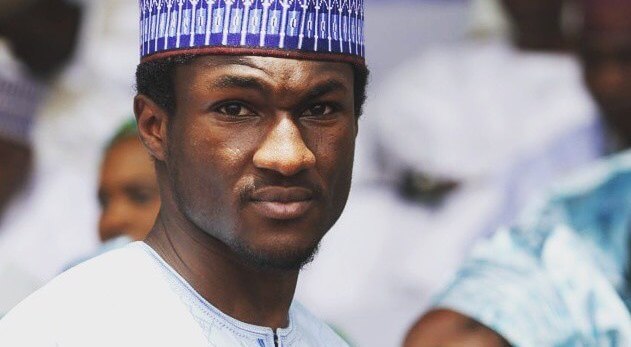
On April 22, 2026, a neatly worded letter arrived at the desks of party stakeholders in Katsina State. Signed by Yusuf Muhammadu Buhari, the only surviving son of Nigeria’s late former president, it announced what many in the state had quietly anticipated since his father’s burial last July.
“I am extremely delighted to write and inform you of my intention to contest for the seat of House of Representatives at the above-mentioned constituency — Sandamu/Daura/Mai’Adua — under the platform of the All Progressives Congress,” the letter read.
The declaration was brief, measured, almost understated. But in the constituency where the elder Buhari was born, buried, and mourned as a son of the soil, it carried the weight of history.
Yusuf Buhari is 34. Born on April 23, 1992, in Daura, Katsina State, he is the only surviving son of Muhammadu Buhari, who served as Nigeria’s military Head of State from 1984 to 1985 and later as democratically elected president from 2015 to 2023. His mother, Aisha Buhari, remains a prominent public figure in her own right. By lineage, geography, and political circumstance, Yusuf is as close to the heartland of Buhari country as any aspirant can be.
Yet the question of whether his surname is a political inheritance or a political burden — or both at once — is precisely what makes his entry into elective politics one of the most closely watched developments in Nigeria’s 2027 cycle.
The Man Behind the Name
Those who knew Yusuf before his father’s presidency describe a young man of deliberate anonymity. One account from a Nigerian who encountered him at the University of Surrey recalled him as “unassuming, unpretentious and un-ostentatious” — a young man who refused to flaunt his family background even on a foreign campus, and who identified himself simply as someone from Daura based in Kaduna. That restraint, whether instinctive or cultivated, has defined his public persona.
Yusuf attended Kaduna International School and the British School of Lomé for his early education before pursuing a degree in economics at the University of Surrey in the United Kingdom. His academic background is in economics — a discipline that, if translated into policy instinct, could serve him in a legislature increasingly tasked with oversight of fiscal decisions.
He met his wife, Zahra Nasir Ado-Bayero, the daughter of the Emir of Bichi, while studying in Surrey — a union that knits together two of the North’s most influential dynastic families.
His public life gained its first major national attention not through politics but through crisis. In December 2017, he was involved in a serious motorbike accident in Abuja, sustaining head injuries and a broken limb.
After emergency surgery at Cedarcrest Hospital in Abuja, he was flown abroad for further treatment, making a recovery that was widely described as remarkable. Following his recovery, he completed his mandatory National Youth Service Corps programme in 2018.
Then, in December 2021, came a different kind of recognition: he was appointed District Head of Kwasarawa in the Daura Emirate and conferred with the traditional title of Talban Daura, a title that places him in active proximity to local governance and community affairs.
That traditional role, analysts say, is not incidental to his political timing. It gave him a platform from which to be visible without being overtly partisan, and a constituency — in the social, not legislative, sense — before he ever sought votes.
The Father’s Double-Edged Sword
No assessment of Yusuf’s political fortunes can escape the long shadow of Muhammadu Buhari. The late president’s legacy is arguably the most contested of any Nigerian leader in recent memory — a fact that cuts both ways for his son.
In Daura and its surrounding communities, the elder Buhari remains a figure of deep, almost tribal reverence. He was a son of the soil who rose to the highest office in the land — twice. To his admirers in Katsina and the broader North-West, he embodied discipline, incorruptibility, and an unbroken commitment to his roots.
He was buried in Daura, as he had reportedly wished, surrounded by his people. For many in the constituency Yusuf now seeks to represent, supporting the former president’s son is less a political calculation than an act of cultural loyalty.
But the national record complicates that sentiment considerably. Buhari’s presidency was marred by economic mismanagement, a failure to implement bold structural reforms, ethnic favouritism, and an unfulfilled promise of change.
Over 63,000 Nigerians were killed in violent incidents during his eight years in office, averaging about 22 deaths per day, while his government’s failure to significantly curb kidnappings, banditry, and communal violence undermined his initial campaign promise to restore security. From a figure of 90 million people in poverty at the start of his presidency, the number grew to 130 million.
In the North-West — the very geopolitical zone Yusuf seeks to serve — those statistics are not abstractions. Banditry and kidnapping devastated farming communities across Zamfara, Katsina, and Kebbi throughout the Buhari years.
Katsina State itself bore some of the worst of the violence, including the December 2020 abduction of hundreds of students from Government Science Secondary School in Kankara, barely 100 kilometres from Daura. Critics argue the administration’s response was slow and inadequate.
“The father’s name opens doors, but it can also close minds,” said a political analyst in Kano who follows North-West politics closely. “In Daura specifically, the emotional bond to the Buhari family is strong. But a voter in Sandamu who lost a son to bandits may not separate the father’s failure from the son’s ambition.”
Political Machinery and Early Momentum
If Yusuf’s path is complicated by history, it appears well-greased by present-day political machinery.
His declaration came barely one week after stakeholders of the APC in the Sandamu Local Government Area publicly backed him as their preferred choice, a decision taken during a high-level meeting held at the Sandamu Local Government Secretariat, which brought together elected officials and political appointees across the federal constituency.
Governor Dikko Umaru Radda received Yusuf on a courtesy visit and commended him for his interest in serving the people of Katsina State, reiterating his administration’s commitment to internal democracy, fairness, and unity within the APC. Sources within the party say the governor’s support, whether publicly stated or quietly conveyed, is the most significant variable in the primary contest.
Former presidential media aide Bashir Ahmad — who served the elder Buhari and has emerged as a vocal champion of the son’s ambitions — confirmed the declaration publicly, describing it as the culmination of wide consultations with political leaders across the area.
Yusuf’s declaration signals the entry of another member of the Buhari family into active partisan politics, setting the stage for what could become a closely watched contest in Katsina State as preparations build toward the 2027 general elections.
Political watchers in Katsina note that Yusuf’s candidacy sits at an uncomfortable intersection of sentiment and democratic expectation.
Muhammad Usman, a political analyst told NewsNGR that “his father’s name carries enormous emotional currency in Daura, but the same name is freighted with memories of economic hardship and insecurity that defined much of the North-West during the Buhari years.
“The risk for the younger Buhari is that voters may conflate the two — rewarding the son for affection toward the father in the primary, while holding him accountable for the father’s failures at the general election.”
Resistance in the Ranks
Yet the path is not uncontested. While his entry is seen by supporters as a continuation of the Buhari political legacy, critics within the APC have raised concerns over potential imposition and lack of broader consensus. A group of stakeholders from five local government areas in the Daura Emirate reportedly vowed to oppose any imposition of candidates — a development that suggests there are local political actors who resent the idea that the Buhari name should automatically translate into a legislative seat.
The tension between sentiment and democratic process is a familiar one in Nigerian politics, where political godfatherism often determines outcomes long before primaries are conducted.
Whether Yusuf’s candidacy is being organically driven by grassroots affection or top-down party engineering is a question that will likely define how it is received beyond the inner circle of party loyalists.