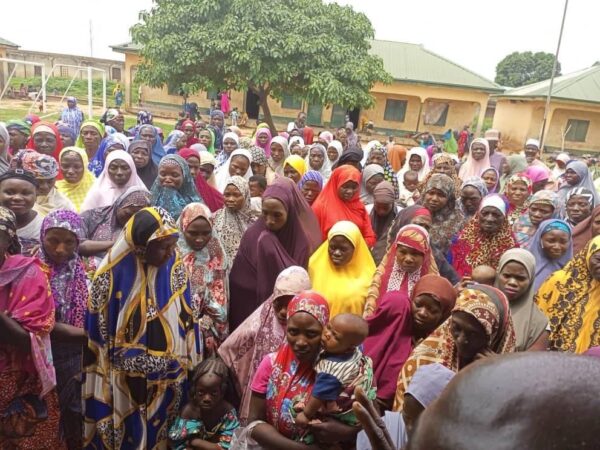
Amnesty alleges deaths and abuse of detained people in the Kwara military camp.
Amnesty International has accused Nigerian authorities of failing to protect detained Fulani pastoralists in Kwara State, alleging that at least 150 people, most of them children, died in a military-controlled camp where displaced persons were held for months under harsh conditions.
Amnesty said its findings were based on field research conducted between 5 and 11 April, during which its investigators visited the camp and surrounding communities, interviewed about 60 people in affected areas, and spoke directly with 30 detainees, survivors and family members.
According to the report, many detainees had initially fled their homes in Asa, Edu, Ifelodun and Patigi local government areas due to escalating violence. Military authorities later directed some to relocate to designated assembly points before transporting them to the camp in Yikpata.
In a series of reports, PREMIUM TIMES documented the security situation in these areas, including recent coordinated attacks on Isin and Ifelodun local government areas and other areas, as seen here and here.
Rather than finding safety, Amnesty said the displaced persons were subjected to overcrowded and unsanitary conditions, with limited access to food, healthcare and freedom of movement.
“Members of the Fulani community face persecution on two fronts, from armed groups and the military,” said Isa Sanusi, Director of Amnesty International Nigeria. “Instead of receiving protection, they are being denied their rights to personal liberty, livelihood, movement, education and healthcare.”
The organisation said acute malnutrition and disease were widespread in the camp, with at least 100 pregnant women reportedly at risk of life-threatening complications due to lack of maternal care.
Images obtained from the facility showed children with visible signs of severe malnutrition, including protruding ribs and extreme weakness, Amnesty added.
Amnesty said accounts from survivors pointed to a pattern of deaths linked to hunger, illness and poor living conditions. A woman detained at the camp told the organisation that several children and pregnant women died during their stay.
“At the camp, we did not have enough food, sometimes only beans in the evening, and even that was not guaranteed,” it said. “Starvation claimed the lives of many children and pregnant women. My twin daughters died there.”
Amnesty added that detainees had to raise funds to bury the dead. “We contributed money to buy shrouds because of the increasing number of deaths. We buried three corpses in a single grave.”
A 43-year-old man who escaped from the camp said the number of deaths had reached at least 154 by the time he fled.
“On the day I escaped, six children died,” he said, attributing the deaths to hunger and disease.
Beyond conditions in the camp, Amnesty alleged that Fulani individuals were subjected to profiling and abuse during security operations.
Some interviewees said they were stopped on commuter buses, searched based on their identity, and in some cases forced to pay bribes to secure their release or recover seized property.
“Detaining people based on their identity constitutes discriminatory profiling and exposes people to violence and other human rights violations,” Mr Sanusi said.
The organisation argued that the mass detention of Fulani pastoralists was unlawful and violated both Nigeria’s constitution and its international human rights obligations.
Amnesty called on Nigerian authorities to conduct what it described as a prompt, independent and transparent investigation into the reported deaths and treatment of detainees.
“Nigerian authorities must promptly and effectively investigate the reported deaths and bring to justice those suspected to be responsible,” Mr Sanusi said. He added that victims and their families should be granted access to justice and remedies.
The group also urged the government to end what it described as arbitrary detention and ensure that displaced persons receive adequate protection and humanitarian support.
The allegations come amid ongoing military operations in Kwara State, launched in January 2026 in response to rising attacks by armed groups and bandits.
The operations have coincided with increased displacement across rural communities, particularly in forested areas where armed groups are known to operate.
Amnesty said some of those detained had initially been told to leave their villages to allow military clearance operations, only to end up confined in the camp for months without due process.
Nigeria continues to face a complex security crisis involving banditry, insurgency and communal violence, with civilians often caught between armed groups and state responses.
As of the time of filing this report, Nigerian military authorities had not publicly responded to Amnesty International’s report, and an enquiry sent to army spokesperson Appolonia Anele had not been responded to.