Mr Mohammed, who has barely spent four months in office, will be replaced by Rabiu Umar, a former executive of the Dangote Group, subject to confirmation by the Senate.
Many Nigerians, especially stakeholders in the oil and gas industry, were taken by surprise on Wednesday following the announcement that President Bola Tinubu had approved the removal of Saidu Mohammed as the Chief Executive Officer of the Nigerian Midstream and Downstream Petroleum Regulatory Authority (NMDPRA).
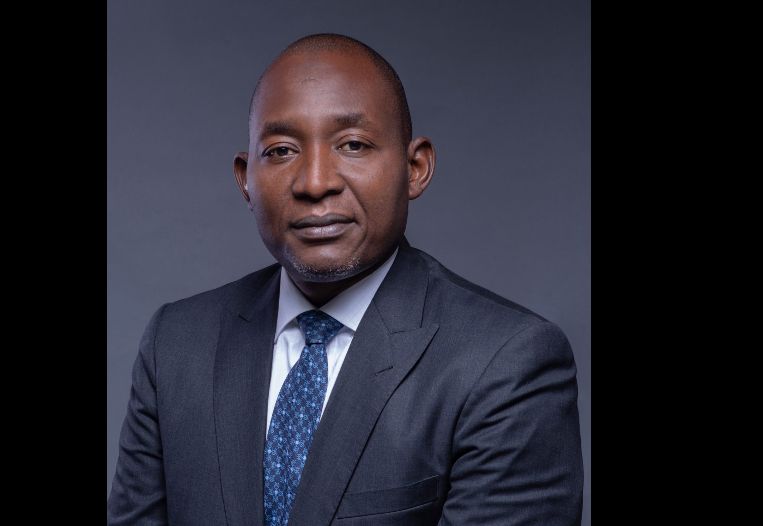
Mr Mohammed, who has barely spent four months in office, will be replaced by Rabiu Umar, a former executive of the Dangote Group, subject to confirmation by the Senate.
Mr Umar previously served as Group Sales and Marketing Director at Dangote Cement Plc and has over 20 years of experience in senior and executive roles across the downstream petroleum and cement manufacturing sectors.
Before joining Dangote Cement, he began his career at Oando Plc, where he rose through several management positions within the marketing business and successfully led the company’s sales and marketing transformation plan.
He holds a degree in Accounting from Bayero University, Kano, is an alumnus of Harvard Business School, and a member of the Institute of Directors.
Mr Umar’s appointment comes less than five months after Mr Tinubu appointed Mr Mohammed to succeed Farouk Ahmed, the former NMDPRA chief executive who had a prolonged public dispute with Aliko Dangote, President and Chief Executive Officer of Dangote Group, over the issuance of petroleum import licences.
Since the commencement of operations at the Dangote Refinery in 2024, Mr Dangote has repeatedly pushed for local marketers to rely primarily on local refinery for petroleum products rather than continue importing refined fuel.
However, the former NMDPRA leadership under Mr Ahmed consistently opposed any move perceived as creating a monopoly, insisting that allowing a single refinery to dominate supply would undermine competition and threaten Nigeria’s long-term energy security.
That disagreement marked the beginning of the feud between Messrs Dangote and Ahmed.
Mr Dangote later accused Mr Ahmed of corruption and alleged that the regulator was colluding with international traders and fuel importers to frustrate local refining by continuing to issue import licences.
He also alleged that Mr Ahmed was living beyond his legitimate means, claiming that four of his children were enrolled in expensive secondary schools in Switzerland, raising concerns over possible abuse of office and regulatory integrity.
Mr Ahmed eventually resigned following the controversy.
Although the presidency has not provided specific reasons for Mr Mohammed’s removal, his exit comes at a period of heightened pressure in the downstream sector.
Nigeria’s aviation industry is currently grappling with rising aviation fuel costs, with several airlines warning of possible operational disruptions.
Mr Mohammed was reportedly removed while on an official trip to Berlin, Germany, where he was leading NMDPRA delegates to the Pipeline Technology Conference held from 27 to 30 April.
In a statement issued on Wednesday, the Presidency said the decision was made pursuant to the Petroleum Industry Act (PIA) 2021 and was aimed at strengthening regulatory effectiveness in the midstream and downstream petroleum sectors in line with the administration’s Renewed Hope Agenda.
President Tinubu described Mr Umar as a seasoned executive with more than 25 years of experience across the energy, manufacturing and infrastructure sectors.
According to the statement, he has a proven track record in strategic leadership, operational transformation and large-scale project delivery.
Mr Umar’s appointment comes at a time when the federal government is intensifying efforts to reform Nigeria’s oil and gas sector and maximise the country’s hydrocarbon resources for economic growth.
The emergence of Dangote Refinery has also become more significant amid global oil market volatility and tensions in the Middle East, which have contributed to rising petrol prices.
While government officials and industry stakeholders have described the refinery as a major stabilising force, many Nigerians continue to struggle with the high cost of fuel nationwide.
Industry observers say the situation could have been significantly worse without local refining capacity from the refinery.
As global crude prices fluctuate, the refinery has repeatedly adjusted its ex-depot and pump prices in response to market conditions.
Meanwhile, several African countries are reportedly in discussions with Mr Dangote on the possibility of replicating similar large-scale refinery projects in East Africa.
Given Mr Umar’s previous role within the Dangote Group, some analysts believe his appointment may be interpreted as a strategic signal to align regulatory leadership more closely with the realities of Nigeria’s evolving downstream market, particularly as Dangote seeks to protect his estimated $20 billion refinery investment.