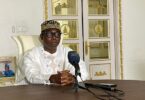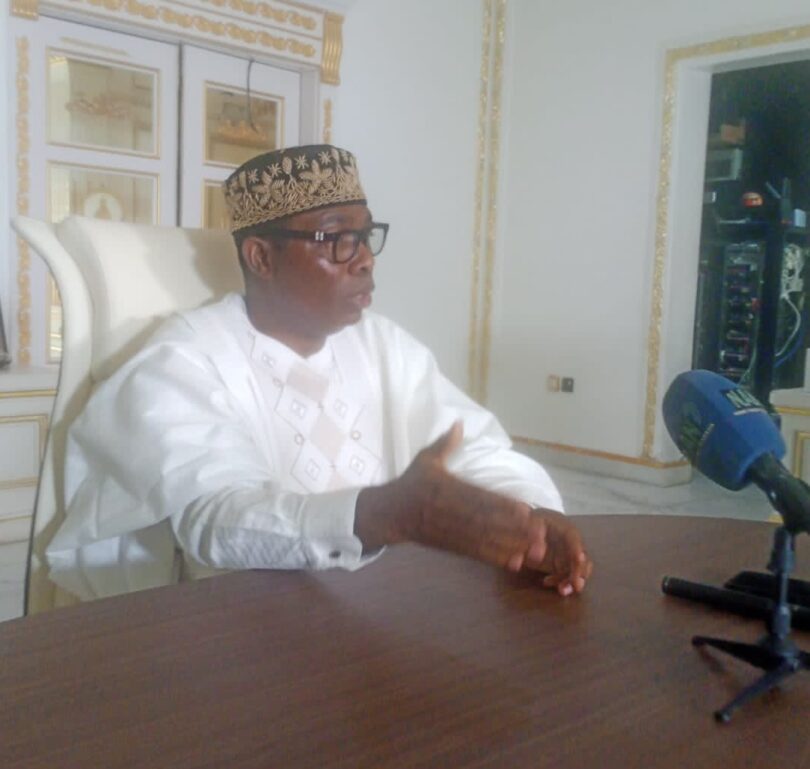
The Social Democratic Party, SDP, presidential candidate, Prince Adewole Adebayo, says decentralised generation, renewable energy and local manufacturing will drive his strategy to transform Nigeria’s power sector.
Mr Adebayo bared his mind while featuring on Personality Interview Series of the News Agency of Nigeria on Sunday in Abuja.
He said his administration would combine solar, gas and hydroelectric power, while rehabilitating the existing hydro stations to expand electricity generation to 75,000MW.
He said Nigeria must move beyond low power generation and plan for an electricity system capable of supporting large-scale industrialisation.
Adebayo said the country’s electricity requirements had outgrown previous generation targets, making long-term planning essential to enhance economic development.
“For now, any presidential candidate who is not giving you a plan for 50,000 megawatts is behind the time. Nigeria has passed the age where we need 10,000 megawatts or 20,000 megawatts,” he said.
The presidential candidate said his administration would deliberately diversify the country’s energy mix rather than relying on a single source of electricity generation.
He said that since gas remained a major advantage for the country, it should be deliberately deployed to support electricity generation, alongside renewable energy sources.
Adebayo also proposed greater use of solar power, particularly as part of a decentralised electricity system capable of serving communities and economic clusters.
He said power generation should not be concentrated entirely within the existing national-grid structure, arguing that generation power in clusters could complement the national grid.
According to him, mini-grids and embedded generation could bring electricity closer to consumers, while supporting economic activities in areas poorly served by the national grid.
“A lot of it will be green, like solar; a lot of it will be gas, because we have a bonus of gas,” he said.
Adebayo said the strategy would also involve rehabilitation of existing hydro electric facilities to recover generation capacity from infrastructure already available.
He said that Nigeria should maximise its existing energy assets, while simultaneously investing in new generation capacity.
The presidential candidate said local manufacturing would be another important component of the strategy, particularly in the renewable energy segment.
He said producing solar equipment and other energy components locally would reduce import dependence and create employment opportunities.
He also said that electricity policy should be linked directly to Nigeria’s industrialisation strategy, particularly manufacturing, agriculture and small businesses.
Adebayo argued that reliable electricity would reduce the cost of production by helping businesses cut their dependence on alternative sources of power.
He said that if voted into power, his administration would approach electricity as an economic development issue rather than merely a utility challenge.
He said the proposed generation expansion would be supported by reforms aimed at making the electricity market more efficient and responsive to consumers.