Special Reports
2027: Tinubu’s performance enough for his re-election, says education minister Tunji Alausa

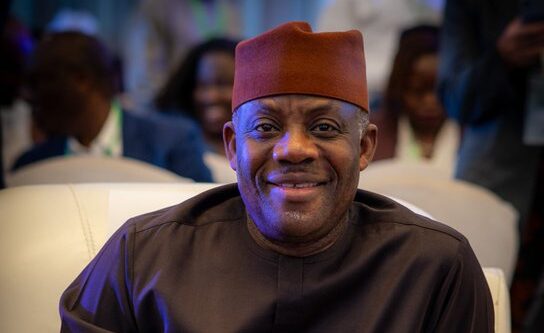
“There are objective programmatic deliveries that President Bola Tinubu has made in transforming this country for good in a way that it’s never been transformed before,” Mr Alausa said.
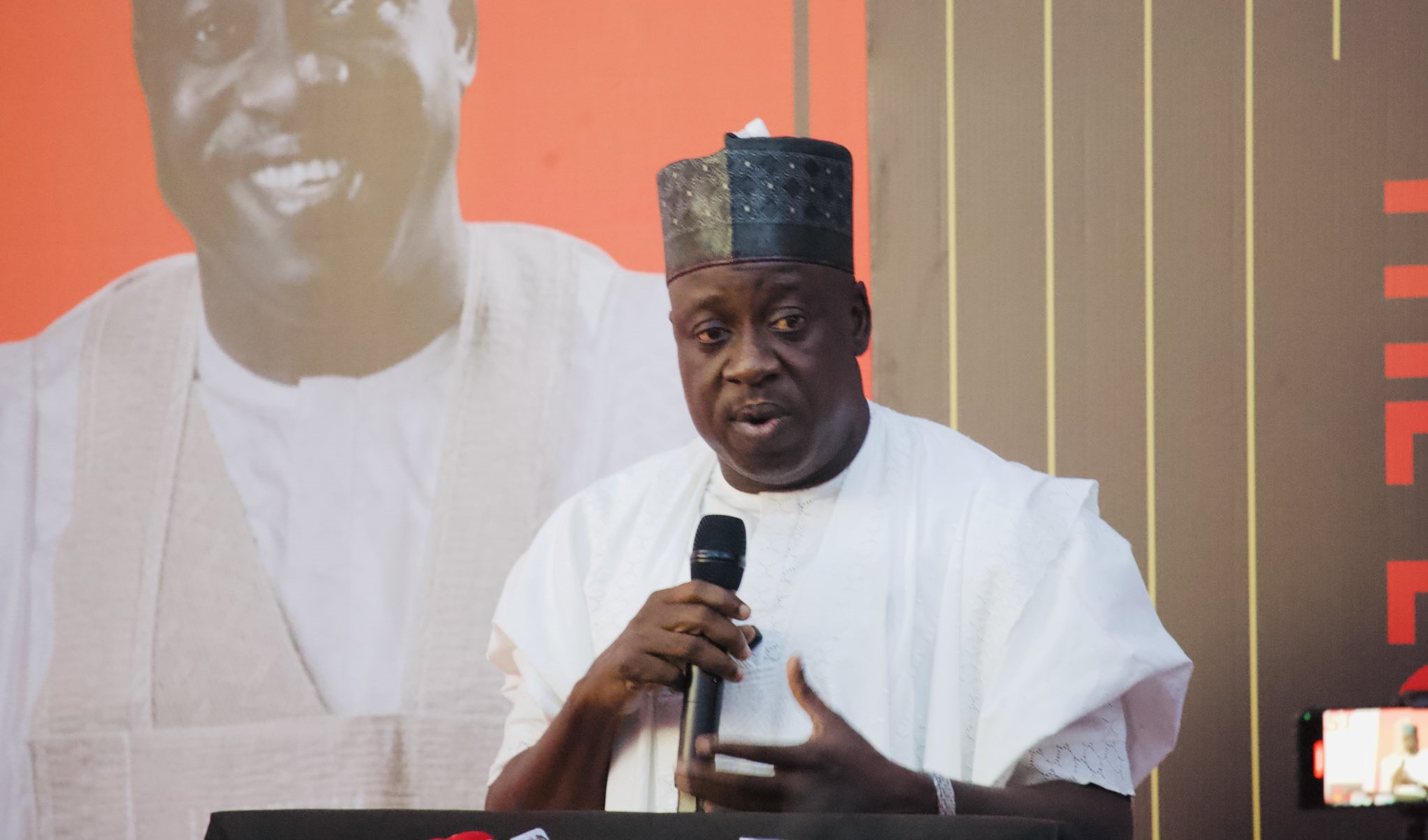
The Minister of Education, Tunji Alausa, on Tuesday, called for President Bola Tinubu’s re-election for second term on the strength of his prformance in the last three and a half years in office.
Speaking as a guest on Channels Television’s Politics Today programme monitored by PREMIUM TIMES on Tuesday, Mr Alausa said Nigeria, under the Tinubu administration, now has over $55 billion in foreign reserves, a stabilised exchange rate, GDP growth of almost 4.43 per cent, quarter over quarter, and infrastructural upgrade. He also noted that states have been able to pay salaries.
While the minister praised the administration’s efforts, many Nigerians continue to struggle with the harsh realities of the administration’s policies.
The macro-economic gains often touted by a officials and supporters of the administration have not trickled down to the ordinary Nigerians. Residents have staged a series of protests to express their displeasure.
In his Independence Day address, the President acknowledged the severe economic strain citizens are facing.
He noted that the reforms that followed were difficult and its side effects were real.
But he said the medicine must not be confused with the disease, arguing that his administration’s “overriding purpose” in the past three years was to “correct our nation’s course.”
Mr Alausa said that the renewed hope agenda of the Tinubu administration “delivered 100 per cent” in the education sector.
He listed the educational policies, including the student loan scheme, the Inspired Live initiative reaching remote areas, and the Federal Ministry of Education (FME) Technical and Vocational Education and Training (TVET) Initiative.
“We’ve made a significant increase in the salary. We call it CATA: Consolidated Academic Tool Allowances. Over 500 billion has been injected into the economy just based on stable tertiary education.
“We have significant money from the Nigerian Education Loan Fund of almost about N370 billion, with about N192 billion in student stipends..We now have students in school all year, all sessions around,” the minister said.
But the out-of-school children crisis remains persistent in the country.
Mr Alausa rejected UNICEF’s out-of-school children statistics. Nigeria is believed to have between 15 million to 17.5 million out-of-school children, an estimate mR Alausa rejected.
He anchored his objection on lack of an updated census figures in the country.
Mr Alausa projects Nigeria bas only eight million out-of-school children. He added that 1.2 million children have been taken off the streets through multi-layer intervention.
He noted thar the National Bureau of Statistics is carrying out a general household survey to “count the number of out-of-school children across the country,” from January 2026.
“I can tell you at the end of the day we’ll have about 8 million out-of-school children,” the minister said.
Meanwhile, abductions of students during President Tinubu’s administration have caused major disruptions in school calenders in different parts of the country.
In November 2025, terrorists abducted 25 schoolgirls from Maga Comprehensive Girls’ Secondary School in Danko/Wasagu Local Government Area of Kebbi State, North-west Nigeria, and killed two teachers.
Within the same month, terrorists attacked St Mary’s School, a Catholic-owned institution in Papiri community, Agwara Local Government Area of Niger State, north-central Nigeria and abducted 265 students and staff members.
In reaction to the Niger and Kebbi kidnappings, the federal government ordered the closure of all Unity Schools, and the governors of Katsina, Kebbi, Plateau, and Yobe States similarly halted school activities.
In September, students and workers of Federal Unity Schools in Anambra, Ebonyi and Enugu states stayed away from school as education unions’ strike delayed the commencement of the 2026/2027 academic session.
Public schools in the Federal Capital Territory (FCT), Abuja, faced a similar ordeal as FCT workers went on an indefinite strike.
Dozens of students and their teachers who were kidnapped in two separate attacks between May and June in Askira/Uba LGA of Borno State remains in captivity.
The first abduction took place in Mussa, and coincided with the coordinated kidnapping of 39 students and seven teachers from three schools in Oyo State.
While the Oyo students were freed after 57 days in captivity, their Borno counterparts are still held captive, with their parents accusing the federal government of selective response.
PRMIUM TIMES reported in October how more than 2,000 students have been abducted in roughly 30 mass kidnapping incidents, and how school abductions have grimly evolved into a normalised feature of Nigeria’s security landscape.


2027: ‘Tomorrow is Here’ group rallies Nsukka voters for Mbah, Tinubu’s re-election

2027: Tinubu’s performance enough for his re-election, says education minister Tunji Alausa
NBS: Enugu records lowest ‘tax revenue-to-IGR ratio’

Ogun reconstitutes Awujale Interregnum Council, names Adesanya Chairman, Okunowo Secretary

APC Shuns Adeleke, Sets Up Separate Campaign Council in Osun
ADC warns Sokoto govt, vows to hold governor responsible for intimidation, violence against opposition

Enugu govt empowers 520 vulnerable persons with grinding machines
Police probe teenager’s corpse found in Cross River community

INVESTIGATION: How Anthony Kila falsified all his academic qualifications – from Bachelor’s to Doctorate

Customer Service Week: Inside How Jumia Is Using Technology To Go The Extra Mile For Shoppers

Google opens AI-content detector to enable verification

Kayefi headlines Tales & Tunes as ID Cabasa leads music direction in Sheffield

How Houthi military aggression in Red Sea threatens Africa

Ogaga Ifowodo wins $100,000 Nigeria Prize for Literature

How Lagos Families Are Allegedly Buying Contaminated Meat In Dirty Conditions At Mushin, Oshodi, Mile 12, Surulere Markets

UK migrant workers wear chains, sing Asa’s ‘Jailer’ to protest proposed visa reforms

 Business5 days ago
“User Funds Are Completely Safe” — Binance Investigates Suspected $6.3 Billion Hack, Suspends Deposits And Withdrawals
- Special Reports6 days ago
Jumia Nigeria Unveils ‘No Manage Am’ Black Friday 2026 Campaign With Up To 60% Off
-
 Special Reports6 days ago
“Section 65(b) Poses A Threat To Democracy” — Court Reserves Judgment In Suit Challenging INEC’s Power To Review Election Results
- Special Reports7 days ago
FIFA U-17 Women’s World Cup: Nigeria’s Flamingos, Ghana, Morocco, Kenya lead Africa’s Quarter-Final charge
- Politics6 days ago
ADC Postpones Presidential Campaign Flagoff, Fixes New Date
- News7 days ago
Police confirm killing of Sheikh Masussuka
- Top Stories6 days ago
“We Will Meet On The Final List Of Candidates Today” — INEC To Decide Fate Of Pantami, Adebutu, Other Omitted Governorship Candidates
- Special Reports7 days ago
How Imeh Patience Okon Took The Public Service Institute Of Nigeria From A Sitting Administrator Whose Renewed Tenure Ran To 2027 And Who Died Five Days After Her Takeover