Top Stories
“A Judge Can Be Firm Without Being Discourteous” — CJN Kekere-Ekun Warns Lower Court Judges Against Hasty Decisions, Urges Fair Hearing

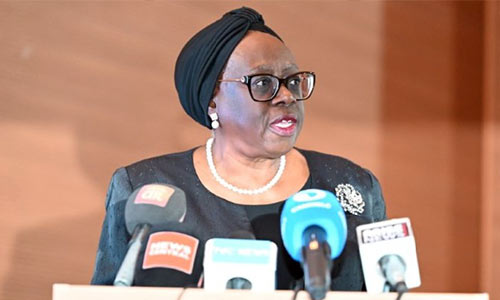
The Chief Justice of Nigeria (CJN), Justice Kudirat Kekere-Ekun, has warned magistrates and other lower court judges against allowing pressure to dispose of cases quickly to push them into making hasty decisions, stressing that the administration of justice must balance efficiency with fairness, patience and respect for the rights of litigants.
The CJN also urged judicial officers to address unnecessary delays, improve courtroom management and embrace technological innovations without compromising judicial ethics, independence or the fundamental right of parties to a fair hearing.
Kekere-Ekun gave the warning on Monday, November 16, 2026, at the opening ceremony of the 2026 All Nigeria Judges’ Conference of the Lower Courts, organised by the National Judicial Institute (NJI) in Abuja.
The conference, themed “Enhancing Effective Justice Delivery Through Innovation and Institutional Efficiency,” brought attention to the challenges confronting lower courts and the need to strengthen judicial administration through improved institutional practices and technological development.
Addressing the participants, the CJN emphasised that judicial officers must resist the temptation to sacrifice fairness and thorough consideration of cases in their efforts to ensure speedy justice delivery.
She maintained that the appropriate approach was to conduct proceedings with firmness and purpose while ensuring that every matter received the attention and consideration it deserved.
According to her, lower courts occupy a particularly important position in Nigeria’s judicial system because they handle disputes that directly affect the daily lives and welfare of ordinary citizens.
“The magistrate courts, Sharia courts, area courts and customary courts occupy a particularly important place in our judicial system.
“They deal with matters that touch the lives of ordinary people in very direct and personal ways: family relationships, inheritance, land disputes, commercial transactions, personal liberty and other issues that affect the peace and stability of individuals and communities,” she stated.
Kekere-Ekun explained that the experiences of litigants before lower courts often influence their perception of the entire judiciary, making it essential for judicial officers to discharge their responsibilities with professionalism and integrity.
“For many Nigerians, their first, and sometimes only, experience of the judiciary is through these courts. The impression they form from that encounter often shapes their perception of the entire institution. This places a special responsibility on you,” the CJN said.
She identified delays in judicial proceedings as one of the most persistent complaints against Nigeria’s justice system, noting that the consequences were particularly severe for ordinary citizens who lacked the financial resources to sustain prolonged litigation.
According to her, repeated adjournments and lengthy proceedings often impose additional financial and emotional burdens on litigants seeking the resolution of family disputes, land matters and criminal charges.
“Its consequences are often more severe for the ordinary litigant, who may have to spend scarce resources travelling to court, paying legal fees and attending repeated adjournments.
“For a person seeking the return of a parcel of land, the resolution of a family dispute or the determination of a criminal charge, prolonged proceedings can become an additional hardship,” she stated.
The CJN acknowledged that some causes of judicial delay were institutional and beyond the immediate control of individual judges.
She identified inadequate facilities, insufficient manpower and limited resources as genuine challenges that required the attention of appropriate authorities.
However, Kekere-Ekun maintained that judicial officers also had personal responsibilities in addressing delays through discipline, proper case management and the effective administration of courtroom proceedings.
“Inadequate facilities, insufficient manpower and limited resources are genuine challenges that must be brought to the attention of the appropriate authorities.
“However, there are also aspects of delay that can be addressed through personal discipline and effective courtroom management,” she said.
She consequently urged magistrates and other lower court judges to take responsibility for the proceedings before them while ensuring that the pursuit of efficiency did not undermine fairness or the quality of judicial decisions.
The CJN also emphasised the importance of treating litigants, lawyers, witnesses and other court users with dignity and respect, regardless of their educational or financial circumstances.
She warned that judicial officers must never allow the social or economic status of individuals appearing before them to influence the courtesy and fairness they receive.
“The manner in which you treat those who appear before you is closely related to this. Judicial authority must be exercised with dignity, patience and restraint.
“The fact that a person is unrepresented, poorly educated or financially disadvantaged must never diminish the courtesy and fairness to which that person is entitled. The same applies to counsel, witnesses and other court users. A judge can be firm without being discourteous, and can maintain order without humiliating anyone,” she declared.
Kekere-Ekun reminded participants that the credibility of the judiciary depended not only on the legal correctness of its decisions but also on the manner in which judicial officers treated people who came before the courts.
“I ask you to remember that people may not always understand the legal reasoning behind a decision, but they should never leave your courtroom feeling that they were denied the opportunity to be heard or that they were treated without dignity,” she stated.
Turning to the conference theme, the CJN urged lower court judges to explore how technological innovations could improve judicial administration, reduce delays and make court processes more accessible.
She identified digital case management, electronic filing, electronic records and other technological tools as innovations capable of improving the efficiency of judicial proceedings and access to court information.
However, she cautioned that the adoption of technology must be supported by appropriate training, reliable infrastructure, technical assistance and adequate safeguards for confidential information.
“Training, reliable infrastructure, technical assistance and proper safeguards for confidential information must accompany its adoption.
“We must also ensure that persons who lack access to digital facilities are not excluded from the justice system,” she said.
The CJN further observed that artificial intelligence offered opportunities to support legal research, document summarisation and certain administrative functions within the judiciary.
She encouraged judicial officers to familiarise themselves with emerging technological developments while exercising appropriate caution in their application.
According to her, the successful integration of technology into judicial processes would depend on the quality of the personnel, systems and institutional arrangements supporting its use.
Also speaking at the conference, the Administrator of the National Judicial Institute, Justice Babatunde Adejumo, urged lower court judges to remain within established ethical boundaries as they adopted technological innovations.
Adejumo warned that technology, when introduced without adequate control and discipline, could create serious risks and undermine the integrity of judicial administration.
“Do not carry out acts capable of compromising the integrity of the judiciary or undermining the authority of your heads of courts.
“Bear in mind that innovation without control or discipline often gives rise to severe risks and flawed solutions,” he cautioned.
The NJI Administrator explained that the institute had intensified its efforts to develop and implement capacity-building programmes for lower court judges in line with its statutory responsibility to provide judicial education for all categories of judicial officers.
“On our part, and in line with our statutory mandate to provide judicial education for all categories of judicial officers, the Institute has intensified its efforts in curating a range of capacity-building programmes for judges of the lower courts,” he stated.
Adejumo described the All Nigeria Judges’ Conference of the Lower Courts as an important platform for recognising the contributions of judicial officers whose work remained essential to upholding the rule of law and ensuring effective justice delivery.
He maintained that the conference had continued to serve as a major gathering for judicial officers responsible for the administration of justice at the grassroots.
According to him, although the responsibilities of lower court judges were often demanding and insufficiently appreciated, their contributions remained indispensable to the functioning of Nigeria’s judicial system.
“While it is widely acknowledged that your job can be a thankless one, this biennial gathering offers us a vital platform to appreciate your contributions to the Judiciary,” Adejumo said.
.. “A Judge Can Be Firm Without Being Discourteous” — CJN Kekere-Ekun Warns Lower Court Judges Against Hasty Decisions, Urges Fair Hearing … NewsNGR.


2027: Don’t allow Atiku, Obi to secure 25% votes in FCT – Wike charges campaign council

“A Judge Can Be Firm Without Being Discourteous” — CJN Kekere-Ekun Warns Lower Court Judges Against Hasty Decisions, Urges Fair Hearing

2027: Uba Sani seeks traditional, religious leaders’ support for Tinubu, APC candidates

Nigerian Police Academy Wudil Kano Spends Over 200 Million On Feeding In A Month, Yet Students Eat Bread And Coloured Water As Tea

Police arrest suspects in attack on NDC campaign in Kano

“Gwarzo Joined As 3rd Defendant” — Court Hears Suit Seeking To Stop NDC From Fielding Kano Governorship Candidate

Igbo Buru Otu Wins Eze Okpoko Cup After Beating Eastern Brothers In Final

2027: Don’t Allow ADC, NDC Get 25% Votes – Wike Tells Rainbow Coalition
2027: AbdulRazaq predicts APC victory in Kwara, cites Wike’s support for Tinubu
Afrinvest repays undocumented $1 million from Elumelu with interest
Int’l Day For The Eradication Of Poverty: BAT-KOHrrect Commends President Tinubu, Announces Food Outreach To 1000 Families
Radical Simplification Of The Tax System And Reduction Of Multi-Taxation : A Fulcrum For National Economic Reset
Power, Scanner Failures Stall Trade At Nigeria’s Borders – NCS
WAFU-B U-17 Championship: Nigeria’s Golden Eaglets crash out, to miss AFCON, World Cup again
Venezia, Fulham win as Adams, Iwobi deliver decisive goals
President Tinubu Congratulates DG Of Energy Commission, Mustapha Abdullahi On His Election As NBBF President

 News4 days ago
“Autonomy Brings Responsibility” — ICPC Recovers ₦5.3bn From LG Accounts In Seven States, FCT, Moves To Publish 774 Councils’ Finances Online
- Special Reports4 days ago
Federal Science College, Sokoto Sinks Into Regulatory Breach After ₦3.82 Million Is Diverted Into Staff Bank Accounts Against Financial Regulations
- Special Reports6 days ago
Nigeria releases ₦422.3 billion for basic healthcare since 2019, disburses ₦249.5 billion under Tinubu
- Business5 days ago
“₦1.2m Return Ticket To London” — Enugu Air Slashes Fares By Up To 50%, Targets December Launch Through Omni Blu Partnership
- News4 days ago
“EFCC Recruitment Is Absolutely Free” — Commission Warns Nigerians Against Fake Employment Emails Demanding ₦3,354
- Top Stories3 days ago
“States, Not FIRS, Collect Itinerant Workers’ Income Tax” — Supreme Court Rules For Bayelsa In Offshore PAYE Dispute
- Special Reports4 days ago
EFCC Docks Music Star, Felix Duke For Alleged N21.2m Fraud
- Special Reports3 days ago
Young Nigerians pledge to become responsible digital citizens in Lagos