Senior Advocates of Nigeria have challenged the legal foundation of a Federal High Court ruling in Lokoja that set aside an earlier judgment directing the Independent National Electoral Commission (INEC) to register the Nigeria Democratic Congress (NDC) as a political party, arguing that a Federal High Court judge cannot set aside the judgment of a court of coordinate jurisdiction and that only the Court of Appeal has such authority.
The ruling, delivered by Justice Isah Dashen on Friday, June 20, 2026, has triggered a political and legal storm, with the NDC immediately announcing it would file an appeal on Monday, its presidential candidate Peter Obi accusing the federal government of a coordinated campaign to prevent him from appearing on the 2027 ballot, the party’s founder Seriake Dickson describing the ruling as “illegal and politically motivated,” and the African Democratic Congress (ADC) warning that “no opposition party is safe if such actions are allowed to stand.”
What the Lawyers Are Saying
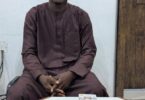
Senior Advocate of Nigeria John Olusola Baiyeshea stated categorically that a Federal High Court judge cannot overrule or set aside the judgment of another Federal High Court judge, as only the Court of Appeal can do that.
He identified the limited circumstances under which a court can set aside its own judgment: “If the judgement or order was obtained by a party by fraud or by misrepresentation or by misleading the court. The court can also do so if it is discovered that at the time of making the order or delivering the judgement, the Court actually had no jurisdiction to entertain the subject matter in the first place.”
However, Baiyeshea drew a critical distinction: “If the Federal High Court in Lokoja set aside the order made previously by that same Court, that may be okay if the conditions for such are met. But if the Federal High Court set aside a previous order for registration of NDC by another Judge of the Federal High Court, that is abominably wrong, please.”
He noted that conflicting judgments from courts of coordinate jurisdiction have become a recurring problem in Nigeria: “What has been happening in Nigeria for many years is for courts of coordinate jurisdiction giving conflicting judgments or orders on the same issues or subject matter, like it happened in the PDP cases in recent times.”
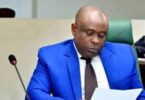
Senior Advocate Dayo Akinlaja, SAN, argued that where a judge acts outside the permissible circumstances to set aside a judgment, such decisions could be regarded as improper.
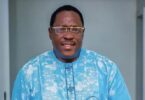
The NDC’s National Secretary, Ikenna Enekweizu, a lawyer himself, stated that under Nigerian law there are only two recognised grounds upon which a court can set aside its own judgment: where the judgment is a nullity or where it was obtained through fraud or false representation.
“As a lawyer, there are only two grounds in law upon which a judgment can be set aside. First, where the judgment itself is a nullity. Second, where the judgment was obtained by fraud or false representation,” Enekweizu stated.
He questioned the basis for the court’s decision: “When a party feels that its interest has been affected by any judgment, what it should do is apply to appeal against that judgment as an interested party. The law provides time limits for that.”
“The question is why a court, particularly one presided over by a judge of such experience on the Bench, would take that course,” he added.
What the Court Ruled
Justice Dashen held that the earlier judgment directing INEC to register the NDC was “constitutionally defective” because it was delivered without hearing from all interested parties. He upheld an application filed by the Peace Movement Party (PMP), ruling that the party was a necessary party to the suit whose rights were affected.
The judge declared that the omission of the PMP from the original proceedings rendered “the entire process null and void” and ordered that the status quo be restored to what it was before the December 2025 judgment, pending the determination of the substantive suit.
Justice Dashen also observed that “certain material facts were suppressed in the earlier proceedings,” which justified the decision to set aside the judgment.
He ordered that the substantive suit should begin afresh, with INEC, the PMP, and the NDC as parties to the case.
The Peace Movement Party’s Case
Counsel to the PMP, Chikezie Ekeocha, told journalists that his client approached the court after discovering that the NDC’s registration was based on a logo that the PMP had previously submitted to INEC before the commencement of the suit.
Ekeocha stated that the court agreed that the PMP’s rights had been affected and consequently vacated the earlier judgment.
He argued that the implications of the ruling were comprehensive: “The recognition of the NDC, the issuance of its certificate of registration, its inclusion in INEC’s records, and any appearance on ballot papers arising from that judgment must be withdrawn pending the final determination of the substantive suit.”
Ekeocha dismissed suggestions that the court merely ordered parties to maintain the status quo, insisting that the ruling “specifically directed a restoration of the position that existed before the December 10, 2025 judgment.”
NDC: “We Have Not Been Deregistered”
The NDC immediately pushed back against the ruling at an emergency press conference in Abuja, with National Chairman Senator Moses Cleopas insisting that the party remained legally registered.
“The court may have set aside its earlier judgment of December 2025, but there was no order directing the deregistration of the NDC,” Cleopas stated.
“We are dissatisfied with the decision and have instructed our lawyers to immediately proceed to the Court of Appeal to challenge both the jurisdiction and propriety of the order,” he added.
Cleopas recounted that the NDC approached the Federal High Court in December 2025 after INEC declined to register it, and that the court upheld the party’s constitutional right to freedom of association and ordered INEC to register it, a directive which INEC subsequently complied with.
Since its registration, the NDC had carried out all activities required of a political party: nationwide membership registration, ward, local government, state, and national congresses, a national convention, primary elections in line with INEC’s timetable, and participation in recent senatorial by-elections in Nasarawa and Enugu states. It had also nominated candidates for all elective offices ahead of the 2027 general elections.
Cleopas questioned the legal standing of the PMP, describing it as “an unregistered association that was unknown to the NDC.” He argued that the PMP’s claim related to party symbols that had already been fully determined in the original case, and that no appeal had been filed within the prescribed time.
“If the association believed it was affected by the judgment, its remedy was to file an appeal. That window has long closed. Attempting to overturn the judgment through a motion is unheard of, illegal and amounts to an abuse of court process,” Cleopas stated.
He alleged that the ruling was “part of broader efforts to weaken opposition politics and narrow Nigeria’s democratic space ahead of the 2027 elections.”
Cleopas assured supporters that all NDC candidates, including Peter Obi, would remain in the race, and disclosed that the ruling had not disrupted the party’s operations. “After this briefing, I am proceeding to INEC to collect our uploading code. Our preparations for the elections continue uninterrupted,” he stated.
Peter Obi: “They Cannot Stop Me”
The NDC presidential candidate, speaking at a leadership programme hosted by NextGen Mentorship and Leadership Initiative at Madonna University, Okija, Anambra State, directly accused the federal government of orchestrating efforts to remove him from the 2027 ballot.
“If you know what they are doing is to ensure that I’m not on the ballot in 2027, you will be surprised. Nigeria’s government is doing everything to ensure that I do not contest in this election, but I’m not looking at the obstacles, but at the destination,” Obi stated.