Politics
ADC Chieftain Faults Fani-Kayode’s Conduct As Ambassador To South Africa

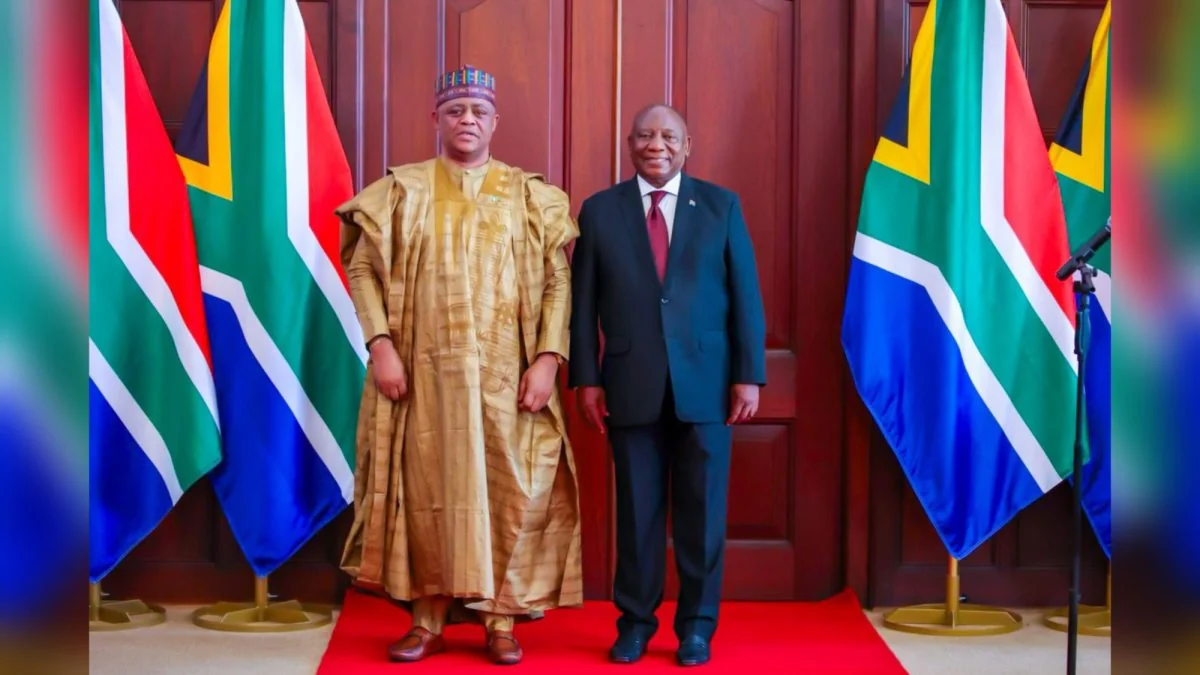
A former Minister of Youth and Sports Development, Solomon Dalung, has criticised Nigeria’s High Commissioner to South Africa, Femi Fani-Kayode, over his conduct amid the diplomatic disagreement between both countries.
Dalung argued that although Fani-Kayode had a responsibility to defend Nigerians against xenophobic attacks in South Africa, his actions must reflect the diplomatic judgment required of someone representing the country.
The African Democratic Congress (ADC) chieftain made the remarks in a Facebook post on Sunday, amid the controversy surrounding the alleged exclusion of Fani-Kayode’s speech from the livestream of a ceremony where he presented his credentials to South African President Cyril Ramaphosa.
He condemned the recurring xenophobic attacks, killings, destruction of businesses and hostility against Nigerians in South Africa, insisting that the government must take seriously its responsibility to protect citizens abroad.
However, Dalung maintained that speaking against injustice should not come at the expense of diplomatic tact, stressing that the effectiveness of an ambassador should be determined by the results he achieves rather than the controversies he generates.
He said, “The question, therefore, is not whether FFK should speak against xenophobia. Of course, he should. The question is whether his approach advances the safety of Nigerians in South Africa or unnecessarily complicates the diplomatic relationship through which that safety must be pursued.”
The former minister noted that diplomacy did not amount to cowardice or silence but required confronting difficult situations in ways that could produce meaningful outcomes.
He also cautioned against relying on Nigeria’s historical contributions to South Africa’s liberation struggle as justification for disregarding the country’s sovereignty and diplomatic sensitivities.
According to him, relations between both countries involve trade, investment, security and continental cooperation, making strategic engagement necessary, particularly amid existing tensions.
Dalung further argued that an ambassador’s responsibility was to strengthen bilateral relations, protect national interests and secure tangible benefits for citizens, rather than engage in personal confrontations or seek public recognition.
“An ambassador is not appointed to win arguments, settle personal scores or demand public applause. He is appointed to build relationships, protect national interests and secure tangible outcomes for the citizens whose interests he represents,” he stated.
He described the controversy as unfortunate, particularly at the beginning of Fani-Kayode’s ambassadorial assignment, when his priority should be rebuilding confidence and improving relations between Nigeria and South Africa.
Dalung also warned that Nigeria’s international reputation could suffer when individuals mistake personal aggression for national assertiveness or prioritise defending their public image over the country’s interests.
“A country’s ambassador carries the dignity of millions of citizens, not the ego of one individual,” he added.
His comments come amid an exchange of strong words between the Nigerian High Commission in Pretoria and South African presidential spokesperson Vincent Magwenya over Fani-Kayode’s complaint that his speech was excluded from the livestream of the diplomatic ceremony.
Fani-Kayode had alleged that he was the only one among 15 ambassadors who were given the opportunity to address the gathering whose speech was omitted from the broadcast during the presentation of credentials at the Sefako Makgatho Presidential Guest House in Pretoria.
He suggested that some elements in South Africa did not want to hear his message or see him, but maintained that he would remain in the country as long as he enjoyed the confidence of President Ramaphosa.
However, Magwenya rejected the allegation, explaining that the ceremony was broadcast by the South African Broadcasting Corporation (SABC), whose editorial decisions were independent of the presidency.
He also accused Fani-Kayode of misrepresenting the circumstances surrounding the broadcast.
The Nigerian High Commission subsequently responded by accusing Magwenya of attempting to worsen diplomatic tensions. It described him as a liar and a disgrace, arguing that his comments showed contempt for Nigeria and its newly accredited envoy.
The disagreement comes against the backdrop of renewed tensions between both countries following another wave of xenophobic violence in South Africa, which has been linked to the deaths of at least 12 Nigerians.
Dalung, however, insisted that the ultimate measure of Fani-Kayode’s performance should be his ability to secure the safety of Nigerians, resolve disputes and strengthen relations between the two countries.
He concluded that the true test of courage in diplomacy was not the ability to generate controversy but the capacity to protect national interests in the process.


Alia links Benue APC crisis to dispute over state funds

ADC Chieftain Faults Fani-Kayode’s Conduct As Ambassador To South Africa

Police arrest kidnappers who allegedly killed victim after ₦5 million ransom

Tinubu repeats youth unemployment pledge in 2027 manifesto, adds training and funding targets

NASS Roundup: Human trafficking, political violence, Flamingos win, other stories from House of Reps

EBL Speaks On Delayed Payments, Structural Adjustments Made

NASS Roundup: N100m gift to Flamingos, alternative landing for aircraft, ‘missing’ N210trn, other Senate stories

Obi Condemns Attack On Kwankwaso’s Convoy, Demands Arrests
2027: AbdulRazaq predicts APC victory in Kwara, cites Wike’s support for Tinubu
One Voice Started A Movement: ONC Thanks Burna Boy, VDM, Winnie Miller For Rebuilding Odiokwu School
Enugu Govt Approves ₦32bn For Gratuity Arrears Payment
Afrinvest repays undocumented $1 million from Elumelu with interest
Int’l Day For The Eradication Of Poverty: BAT-KOHrrect Commends President Tinubu, Announces Food Outreach To 1000 Families
Radical Simplification Of The Tax System And Reduction Of Multi-Taxation : A Fulcrum For National Economic Reset
Power, Scanner Failures Stall Trade At Nigeria’s Borders – NCS
Ikeja LG Boss, Comrade Dauda Celebrates Former CPS, Olalekan Oni On His Birthday

 News3 days ago
“Autonomy Brings Responsibility” — ICPC Recovers ₦5.3bn From LG Accounts In Seven States, FCT, Moves To Publish 774 Councils’ Finances Online
- Special Reports4 days ago
Federal Science College, Sokoto Sinks Into Regulatory Breach After ₦3.82 Million Is Diverted Into Staff Bank Accounts Against Financial Regulations
- Special Reports6 days ago
Nigeria releases ₦422.3 billion for basic healthcare since 2019, disburses ₦249.5 billion under Tinubu
- Business4 days ago
“₦1.2m Return Ticket To London” — Enugu Air Slashes Fares By Up To 50%, Targets December Launch Through Omni Blu Partnership
- News3 days ago
“EFCC Recruitment Is Absolutely Free” — Commission Warns Nigerians Against Fake Employment Emails Demanding ₦3,354
- Top Stories3 days ago
“States, Not FIRS, Collect Itinerant Workers’ Income Tax” — Supreme Court Rules For Bayelsa In Offshore PAYE Dispute
- Special Reports3 days ago
EFCC Docks Music Star, Felix Duke For Alleged N21.2m Fraud
- Special Reports3 days ago
Young Nigerians pledge to become responsible digital citizens in Lagos