The Minister warns that Africa remains trapped by a “prejudice premium” in global finance, calling for urgent reforms to unlock affordable capital and drive industrial growth across the continent.
Nigeria’s Minister of Finance and Coordinating Minister of the Economy, Taiwo Oyedele, has called for urgent reforms to the global financial architecture, saying Africa continues to face structural barriers that limit access to affordable capital and long-term industrial growth.
In a post shared on his official X handle on Wednesday, he said the current international financial system constrains Africa’s industrialisation ambitions through high borrowing costs, restrictive financing terms, limited access to long-term capital, and inadequate funding for productivity and value addition.
Beyond global reforms, the minister stressed the need for African countries to strengthen domestic systems by improving governance, ensuring policy stability, enforcing contracts, and deepening regional integration.
He warned that fragmented markets across the continent weaken competitiveness in a global economy that increasingly rewards scale and integration.
Mr Oyedele also urged African governments to mobilise domestic savings, including pension funds, while creating stronger pathways for private capital to flow into productive sectors.
He noted that with more than $120 trillion in global private capital seeking investment opportunities, Africa must position itself as a competitive investment destination rather than remain primarily a recipient of development assistance.
According to him, financing priorities must shift from raw material extraction and crisis response toward value addition, infrastructure development, skills, technology, innovation and regional value chains.
He added that Africa’s long-term growth will depend on productivity, integration and value creation rather than dependency.
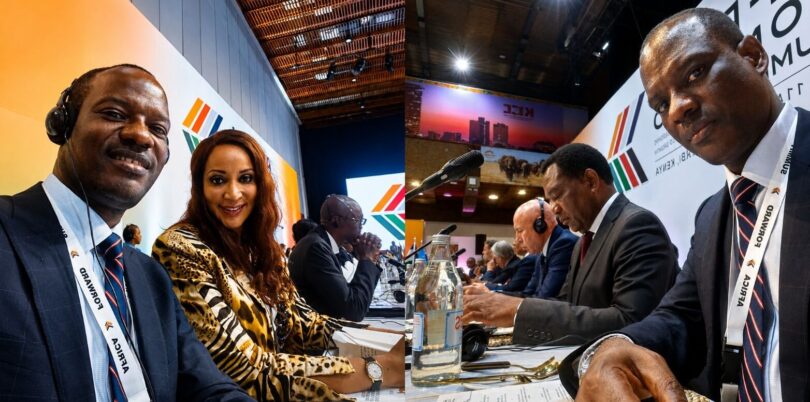
PREMIUM TIMES earlier reported that President Bola Tinubu, at the Africa Forward Summit in Nairobi, said the growing economic relationship between Nigeria and France must translate into tangible development outcomes, as trade between both countries reached $4.7 billion in 2025.