Special Reports
“Anything Outside The Prescribed 14 Days Is Null And Void” — Court Rejects Atiku’s Fresh Evidence In Suit Seeking Tinubu’s 2027 Disqualification

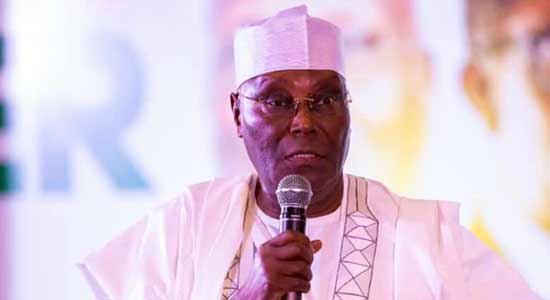
The Federal High Court in Abuja has dismissed an application filed by former Vice President Atiku Abubakar and the African Democratic Congress (ADC) seeking permission to introduce fresh evidence in their suit challenging President Bola Tinubu’s eligibility to contest the 2027 presidential election.
Justice Inyang Ekwo, who delivered the ruling on Friday, November 20, 2026, held that the proposed amendment to the plaintiffs’ originating summons would introduce fresh evidence outside the 14-day constitutional period prescribed for instituting pre-election matters under Section 285(9) of the 1999 Constitution, as amended.
The judge ruled that allowing the application would fundamentally alter the nature of the original case and occasion injustice to the defendants by permitting the introduction of new evidence after the constitutionally prescribed period.
Atiku, who is the ADC presidential candidate, and his party had instituted the suit against President Tinubu, the All Progressives Congress (APC) and the Independent National Electoral Commission (INEC), seeking to disqualify Tinubu and the APC from participating in the 2027 presidential election.
The plaintiffs based their action on allegations concerning the authenticity of a National Youth Service Corps (NYSC) discharge certificate allegedly submitted to INEC in connection with Tinubu’s presidential candidacy.
They asked the court to compel the electoral commission to remove Tinubu and the APC from the list of candidates and political parties participating in the presidential election.
However, Tinubu and the APC challenged the competence of the suit and denied the allegations, while INEC separately raised objections to the proceedings.
In the course of the case, Atiku and the ADC filed a motion on notice dated September 10, 2026, seeking permission to amend their originating summons.
The plaintiffs maintained that the proposed amendments would not introduce a fresh issue into the proceedings.
However, the defendants opposed the application, arguing that the proposed changes would effectively allow the plaintiffs to introduce new evidence outside the constitutional timeframe governing pre-election litigation.
Delivering his ruling, Justice Ekwo agreed with the defendants that the proposed amendments were not merely procedural corrections to the originating summons.
The judge observed that although Atiku had presented the application as one that would not introduce a fresh issue, a careful examination of the materials showed that the plaintiffs intended to substitute existing evidence with new exhibits.
According to the court, permitting the substitution would undermine the constitutional time limit applicable to pre-election disputes.
Justice Ekwo maintained that Section 285(9) of the Constitution imposed a mandatory 14-day period, which could not be circumvented through an application to amend an existing suit.
The judge held that allowing the plaintiffs to introduce additional evidence in the manner proposed would fundamentally change the character of the original proceedings.
He further reasoned that the defendants would suffer fundamental injustice if the plaintiffs were allowed to introduce fresh evidence against them through the back door.
Consequently, the court dismissed the application, declining to grant Atiku and the ADC permission to introduce the additional exhibits.
The ruling represents a procedural setback for the plaintiffs in their attempt to challenge Tinubu’s eligibility for the 2027 presidential election.
However, it does not amount to a dismissal of the substantive suit or a final determination of the allegations concerning the President’s NYSC discharge certificate.
The underlying dispute arose from allegations by Atiku and the ADC that the APC submitted a forged NYSC discharge certificate belonging to Tinubu to the electoral commission.
The plaintiffs consequently sought judicial orders preventing Tinubu and the APC from participating in the forthcoming presidential election.
In response, President Tinubu and the APC filed a joint counter-affidavit on September 9, 2026, asking the court to dismiss the suit in its entirety.
The defendants described the action as incompetent and argued that the plaintiffs lacked the legal standing to institute the proceedings.
They also denied submitting any forged certificate to INEC in connection with either the 2023 or 2027 presidential elections.
Through the APC’s Director of Legal Services, Sanusi Samaila, Tinubu and the party maintained that they did not submit Form CF001 to INEC for either election, contrary to the plaintiffs’ allegations.
The defendants further argued that the National Youth Service Corps had never denied issuing the discharge certificate to Tinubu at the completion of his service year.
They contended that a claim of certificate forgery required appropriate evidence from the institution alleged to have issued the document.
In support of their position, the defendants referred to a previous Supreme Court decision, arguing that a disclaimer from the purported issuing institution would constitute relevant evidence in establishing an allegation of forgery.
They consequently urged the Federal High Court to uphold their objections and dismiss the plaintiffs’ suit.
INEC also challenged the competence of the action in a separate preliminary objection filed on September 7, 2026, through its counsel, Alex Izinyon, SAN.
The electoral commission argued that the suit was statute-barred and that the plaintiffs lacked the requisite locus standi to institute it.
INEC further contended that the action disclosed no reasonable cause of action and constituted an abuse of court process.
The commission also alleged that the plaintiffs failed to comply with the mandatory written deposition requirement prescribed under Paragraph 7(1) of the Federal High Court Pre-Election Practice Directions (Amendment) 2026.
In addition, INEC challenged the propriety of Reliefs 2 and 3 contained in the plaintiffs’ originating summons.
The electoral commission consequently asked the court to dismiss the action on the grounds raised in its preliminary objection.
While those objections remained part of the substantive dispute, the immediate issue before Justice Ekwo was whether Atiku and the ADC could amend their originating summons to introduce additional evidence.
The court resolved that issue against the plaintiffs, holding that the proposed amendment would violate the constitutional limitation applicable to pre-election matters.
Following the ruling, counsel representing the parties agreed on a date for the hearing of the substantive suit.
Justice Ekwo subsequently adjourned the matter until December 2, 2026, for hearing.
.. “Anything Outside The Prescribed 14 Days Is Null And Void” — Court Rejects Atiku’s Fresh Evidence In Suit Seeking Tinubu’s 2027 Disqualification … NewsNGR.


“I Survived An Assassination Attempt” — Football Legend Segun Odegbami Escapes Death As Armed Men Invade His Abeokuta Residence

“Anything Outside The Prescribed 14 Days Is Null And Void” — Court Rejects Atiku’s Fresh Evidence In Suit Seeking Tinubu’s 2027 Disqualification

When Opposition Loses The Plot: Dele Momodu, Politics Of Animosity And The Burden Of Responsible Criticism

APC campaign finance director dies in road crash

Nigeria Targets 6 Million Local Passport Production Annually By 2027

Otti presents N1.2trn 2027 Appropriation Bill to Abia Assembly

UPDATED: Odegbami survives attack, police launch manhunt for assailants

Ex-Super Eagles Captain Segun Odegbami Attacked At Abeokuta Home
“The Task Force Is On Top Of It, NCDC Is On Top Of It” — FG Assures Nigerians Of Capacity To Contain Ebola
AGN President Abubakar Yakubu Bags Bebuzee Ambassadorial Deal
Otti Flags Off Reconstruction Of Two Aba Roads
Enugu People Cry Blood As Gov. Peter Mbah Voted Twice For The Same Five-Star Hotel In One Budget After Spending N9.73 Billion On It
“The Legal Process Must Not Become A Source Of Intimidation” — NUJ Demands Probe Of Kaduna Journalist’s Conviction Over Facebook Post
Falling Food Prices Fail To Ease Nigerians’ Cost-Of-Living Burden — Report
Comrade Dauda Welcomes City Boy Movement (Ikeja Chapter), Pledges Vehicle Support Ahead Of 2027 Election
2027: Sowore Fires Back At APC Chieftain For Calling Him Skit Maker

 Investigations3 days ago
OPay in Trouble as CBN and Others Slam Fintech With ₦946m in Fines Over Money Laundering and Other Breaches
- News7 days ago
“Unfair, Deceptive Real Estate Practices” — Kairos-HOF Consultants Limited Dragged To FCCPC Over Alleged Failure To Deliver ₦45m Abuja Duplex
- News6 days ago
OPay Fined N994m for Money Laundering and Other Breaches
- News5 days ago
OPay faces CBN sanction, fined ₦994m for Money laundering, Terrorism Financing amid US IPO Setback
- Investigations4 days ago
Exclusive: Stanbic IBTC Group CEO Nwokocha secures ₦1.36bn home loans from group’s bank seven weeks after appointment, holds zero shares
- Special Reports5 days ago
JUST IN: Gov Sanwo-Olu rewards Flamingos with ₦300 million, iPhones
- News6 days ago
“They Collected The Ransom On Tuesday, On Wednesday They Gave Us His Corpse” — Bandits Return Kaduna Farmer Dead After ₦56m Payment
- Top Stories4 days ago
“₦10 Million Each” — Sanwo-Olu Announces ₦300m Reward, iPhones For Flamingos After Historic World Cup Victory