*As Federal High Court Bail Hearing Also Resumes
The Independent Corrupt Practices and Other Related Offences Commission has arraigned former Kaduna State Governor Nasir El-Rufai before a Kaduna State High Court over multiple corruption-related allegations, barely three days after he buried his late mother who passed away in Egypt.
El-Rufai, who is a chieftain of the African Democratic Congress, was arraigned alongside one Amadu Sule for alleged offences ranging from abuse of office, fraud, intent to commit fraud, and conferring undue advantage while in office.
The charges stem from investigations into alleged financial misconduct during his tenure as governor between 2015 and 2023.
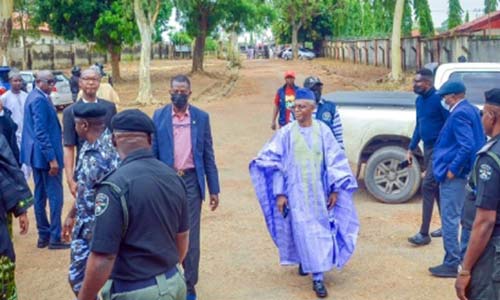
The former governor arrived at the Kaduna State High Court on Tuesday for the continuation of his trial following the burial of his mother, Hajiya Umma El-Rufai.
The ICPC had earlier granted him temporary release from custody on compassionate grounds to enable him attend the burial rites of his mother.
The death of Hajiya Umma was announced by her grandson, Mohammed Bello El-Rufai, in a post on X on Friday evening. She reportedly died in Cairo, Egypt at approximately 100 years of age.
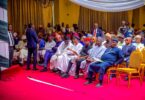
The Janazah (funeral) prayer was held at the National Mosque in Abuja on Sunday, attended by dignitaries from across the political spectrum.
El-Rufai has been in ICPC custody since February 18, 2026, over allegations involving the conversion of public assets and money laundering.
After 34 days in custody, he was first arraigned on March 24, 2026, at the Federal High Court in Kaduna alongside a co-defendant, Joel Adoga, on a 10-count charge.
The court had adjourned ruling on his bail application to March 31, when proceedings were expected to continue.
During the Federal High Court proceedings, El-Rufai’s legal team led by Barrister Ubong Akpan reminded the court of their client’s petition against the presiding judge, Justice Rilwan Aikawa, which is pending before the National Judicial Council.
Justice Aikawa ruled that he would at least conduct the arraignment of the two defendants and hear the matter of his recusal based on a formal application.
The court later adjourned proceedings to March 31, 2026, for hearing of the bail application and any other application filed on behalf of El-Rufai and his co-defendant, Joel Adoga.
The former governor now faces charges in two separate courts:
Federal High Court, Kaduna: 10-count charge including abuse of office, money laundering, and fraud. He is accused of receiving ₦289,826,998.12 as severance allowance when he was legally entitled to only ₦20,013,245. He is also alleged to have $817,900 in a GTBank domiciliary account. His co-accused in this case is Joel Adoga.
Kaduna State High Court: Charges of abuse of office, fraud, intent to commit fraud, and conferring undue advantage. His co-accused in this case is Amadu Sule.
The case has attracted public attention following the ICPC’s controversial release of El-Rufai from custody on compassionate grounds to enable him attend his mother’s burial, despite a subsisting court remand order.
Human rights lawyer Inibehe Effiong had questioned the legality of the release without a court order, asking: “Is this another government magic that the legendary Fela sang about?”
Some Nigerians on social media also questioned whether those who put El-Rufai in ICPC detention were now offering “fake sympathy” at the funeral.
Despite his legal troubles, El-Rufai received condolence messages and visits from top dignitaries, including President Bola Tinubu, Vice President Kashim Shettima, and National Security Adviser Nuhu Ribadu.
The National Chairman of the All Progressives Congress, Professor Nentawe Yilwatda, paid a condolence visit to El-Rufai at his residence in Abuja on Saturday, shortly after the former governor returned home on compassionate grounds.
More than 10 governors, including Senator Uba Sani of Kaduna State — El-Rufai’s estranged ally — participated in the funeral activities.
Key ADC chieftains who personally condoled with him include former Vice President Atiku Abubakar, former Senate President David Mark, and former Labour Party presidential candidate Peter Obi.
Former ministers Abubakar Malami, Isa Pantami, Rotimi Amaechi, and Rauf Aregbesola were also among those who offered condolences.
The 16th Emir of Kano, Muhammadu Sanusi II, paid a condolence visit to El-Rufai in Abuja following the funeral prayers.
A social media post by Bashir El-Rufai, son of the former governor, stirred reactions online after he appeared to mock Kaduna Governor Uba Sani following an encounter with his father at the funeral.
In .. shared on X, Bashir wrote: “Lmao. Pantami the Kingmaker. One felt shame, the other indifference,” in apparent reference to a moment when El-Rufai and Governor Sani exchanged greetings at the funeral prayers.
The development comes against the backdrop of a growing rift between El-Rufai and Sani, whose relationship has deteriorated since the transition of power in Kaduna State.
In addition to the ICPC charges, El-Rufai also faces a separate prosecution by the State Security Service over allegations of phone-tapping involving National Security Adviser Nuhu Ribadu.
The arraignment for that case is scheduled for April 23, 2026.
Associate Bashir Garba Sufyan revealed that El-Rufai fasted throughout his detention, completed reading the entire Quran, read 10 books, and wrote books while in ICPC custody.
El-Rufai’s return to court barely 72 hours after burying his mother underscores the relentless pace of his legal troubles.
The former governor, who once wielded significant political influence in northern Nigeria and was instrumental in President Tinubu’s emergence, now finds himself facing multiple charges across two different courts, with a third prosecution by the SSS pending.
The attendance of President Tinubu’s representatives and other government officials at his mother’s funeral, even as ICPC — a federal agency — prosecutes him, highlights the complex and sometimes contradictory nature of Nigerian politics.