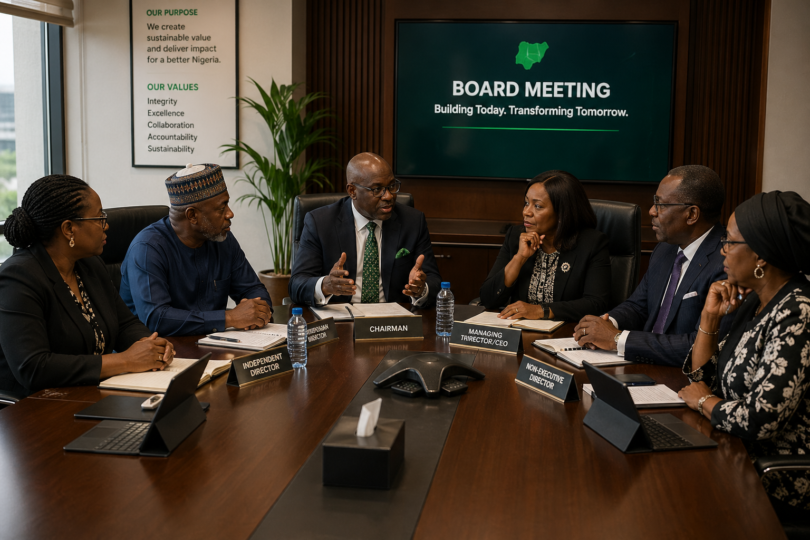
Senior leaders who have participated in TEXEM programmes often describe the experience as transformative. This one on artificial intelligence won’t be different.
Across Africa’s boardrooms, artificial intelligence has rapidly moved from a distant concept to a central strategic concern. Directors approve digital transformation budgets. Executives commission data initiatives. Organisations experiment with automation and predictive tools. Yet many institutions across Nigeria, Kenya and Egypt quietly face the same uncomfortable truth.
Technology projects are launched without clear strategic alignment. Data is collected but not translated into insight. Digital initiatives promise efficiency yet fail to transform decision quality. In many cases, boards are left asking an uncomfortable question. How do we ensure that artificial intelligence strengthens institutional performance rather than becoming another costly experiment?
This challenge is now emerging across Africa’s most important institutions.
TEXEM’s executive development programme titled “Beyond the Algorithm: AI, Data and Human Judgement” has been designed precisely to address this leadership challenge.
Africa’s leading organisations operate in environments defined by complexity and opportunity. Nigeria’s financial sector continues to innovate at scale. Kenya’s digital economy remains one of the most dynamic on the continent. Egypt’s institutions are investing heavily in infrastructure and national development.
Yet technological progress across these markets has introduced a new strategic responsibility for boards and senior executives. Leaders must ensure that artificial intelligence strengthens organisational capability while preserving accountability, transparency and trust.
Artificial intelligence is not merely a technology issue. It is a leadership issue.
Boards must now understand how algorithms influence strategic decisions. Executives must design governance frameworks that ensure data integrity. Institutions must balance innovation with regulatory responsibility.
This programme equips African leaders to confront these realities with clarity.
Participants explore how to translate artificial intelligence experimentation into measurable operational and financial outcomes. They examine governance frameworks that reinforce credibility in the deployment of AI. They learn how intelligent systems can support human judgement rather than replacing it.
These insights are particularly relevant for African institutions where leadership judgement remains the most valuable strategic asset.
Artificial intelligence will transform how organisations operate. It will accelerate analysis, optimise processes and expand the capacity of institutions to understand complex systems.
Yet technology alone cannot determine strategy.
Machines can process vast quantities of data, but they cannot interpret national priorities, organisational values or ethical responsibility. They cannot weigh social consequences against commercial outcomes. They cannot guide institutions through moments of uncertainty.
Only leadership can perform these functions.
The most successful organisations across Africa will therefore be those whose leaders understand how to guide technological transformation with wisdom and discipline. Leaders who can ensure that innovation strengthens institutional credibility. Leaders who understand that technology must always serve strategic purpose.
This programme develops precisely these capabilities.
Participants gain the confidence to deploy artificial intelligence in mission critical environments. They strengthen their ability to integrate data with leadership judgement. They develop the strategic insight required to lead teams through complex technological transitions.
The programme is led by Professor Rodria J. Laline, a globally respected strategist whose career reflects the intersection of technology, governance and leadership.
Professor Laline previously served as Chief Executive Officer of Oracle Asia Pacific. She has taught as a visiting professor at Harvard, INSEAD and IMD. Earlier in her career she invented the first microchip used in ATM cards, a technological innovation that helped transform the global banking system.
Today she advises presidents, central bank governors and chief executives around the world on digital transformation and strategic leadership.
Her experience ensures that participants engage with artificial intelligence not as a theoretical concept but as a strategic tool capable of shaping institutional performance.
TEXEM’s global reputation rests not only on faculty excellence but on a distinctive approach to executive learning.
The organisation’s core competencies combine strategic insight, experiential learning and practical application. TEXEM programmes are carefully designed to ensure that participants do not merely understand concepts but develop the ability to apply them within their institutions.
Participants explore real leadership challenges drawn from global case studies. They engage in collaborative discussions that stimulate reflection and strategic thinking. They experience learning environments that connect academic rigour with practical decision making.
This methodology ensures that insights gained during the programme translate into actionable leadership capability.
Senior leaders who have participated in TEXEM programmes often describe the experience as transformative.
Mr. Oluwatoyin Edu, Executive Director Corporate Services at the Bank of Industry, reflected on the strategic value of the experience.
“Wow. It is so fully packed and the quality of the faculty is second to none. The quality of their presentation really stood out to me. I realised that practical and operational issues can be left to middle level officers while I focus on strategy and ensure my organisation delivers on its objectives.”