Special Reports
Beyond the Ribbon-Cutting: Can Maiduguri’s New Hub Rewrite the North-East’s Digital Story?

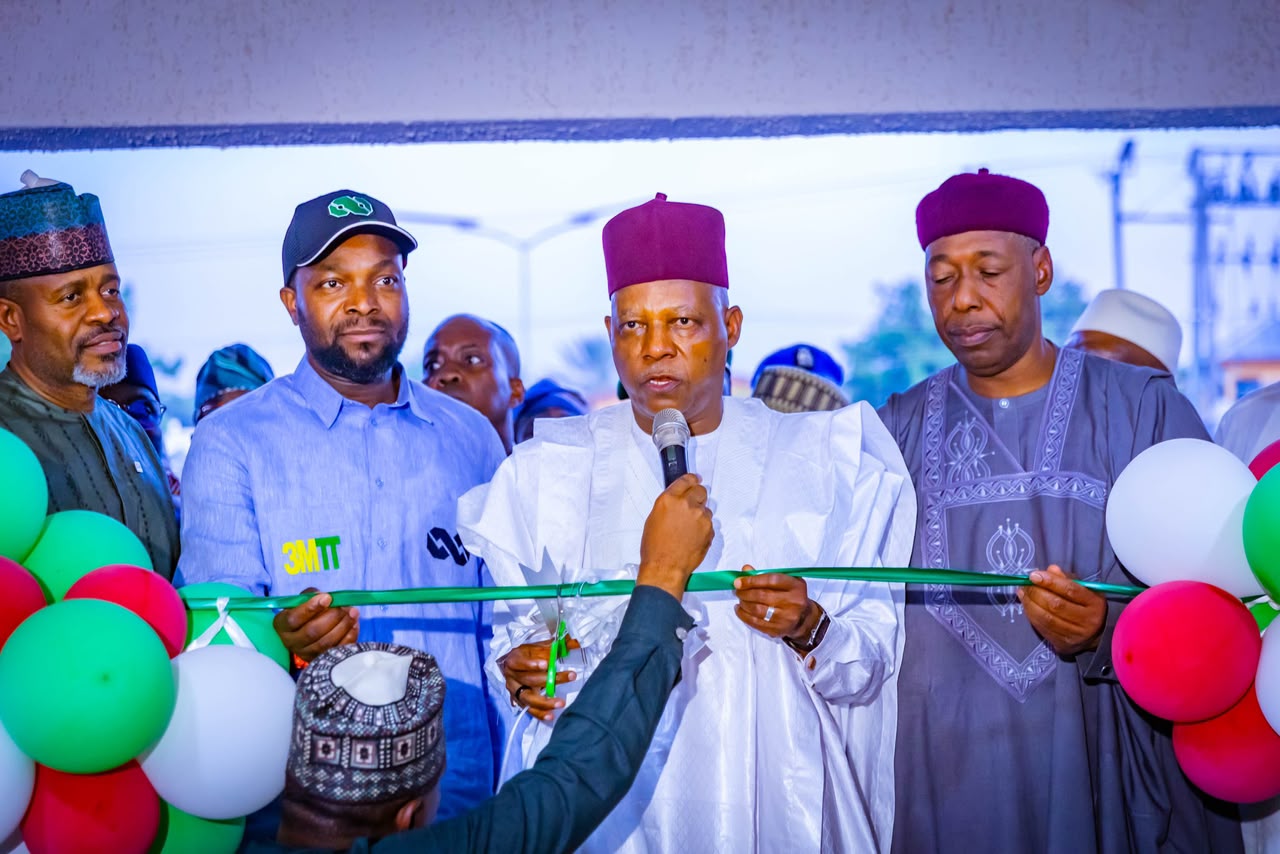
Vice-President Kashim Shettima, a proud son of Borno, set the tone at the inauguration of the Ambassador Babagana Kingibe Innovation Hub in Maiduguri when he described the facility as “a playground of ideas.”
His presence and words carried special weight. For a region that has endured years of hardship, the Vice-President’s endorsement signalled that the North-East is no longer on the margins of Nigeria’s digital future but is being deliberately brought into its centre.
The opening of the hub is more than another technology facility. It is a concrete step to widen the geography of opportunity, invest in young talent, and ensure that the benefits of Nigeria’s digital transformation reach communities far beyond the country’s established tech centres.
At the heart of this effort is the vision of the Minister of Communications, Innovation and Digital Economy, Dr Bosun Tijani, whose work has steadily emphasised the need to democratise access to digital skills, technology infrastructure and economic opportunities.
The Maiduguri hub is one of the clearest expressions of that vision, bringing government, the private sector and the innovation community together in a partnership designed to create opportunities where they are needed most.
Named after Ambassador Babagana Kingibe, one of Borno State’s most distinguished public servants and diplomats, the facility carries both historical significance and forward-looking ambition.
Kingibe’s career across public service, diplomacy and national leadership remains a reminder of what becomes possible when talent is nurtured and given room to thrive. An innovation hub bearing his name in Maiduguri is an investment in a new generation that can equally make its mark nationally and globally.
The partnership behind the facility deserves recognition. The Federal Ministry of Communications, Innovation and Digital Economy, the Borno State Government under Governor Babagana Zulum, and IHS Nigeria have established a platform already being managed by Co-creation Hub (CcHub).

The hub is linked to the 3 Million Technical Talent (3MTT) programme, giving fellows in Borno a space for collaboration, project development, portfolio building and clear pathways into employment and entrepreneurship.
This is a significant step towards a more inclusive digital economy.
For years, much of Nigeria’s technology ecosystem has been concentrated in Lagos, with secondary centres in Abuja and a few other cities. While those hubs have driven impressive growth, the country’s digital ambitions cannot be fully realised if opportunity remains geographically narrow.
Minister Tijani’s approach recognises this reality. Building a digital economy requires more than online training or national targets. It requires physical and institutional environments in which talent can meet, collaborate, experiment, build products, form businesses and connect with markets. The Kingibe Innovation Hub brings these elements closer to young people in the North-East.
For Borno State the significance is particularly profound. The region has endured insecurity, disrupted education, displacement and economic dislocation. Yet its young population remains an enormous reservoir of potential. Investments that connect this population to digital skills, innovation and global opportunities can broaden the pathways available to young people and support the region’s ongoing recovery.
The hub builds on the work already being done by the Borno State Government in education, vocational development and digital literacy. It moves the conversation beyond foundational training towards a more ambitious ecosystem in which young people can develop practical solutions, participate in technology-driven industries and pursue opportunities not limited by their immediate location.
The role of IHS Nigeria is equally important. Digital infrastructure is indispensable, but connectivity becomes far more meaningful when people have the skills and platforms to use it productively. The prioritisation of 89 rural connectivity towers under the Nigerian Universal Communications Access Project (NUCAP) in Borno, alongside the broader Project BRIDGE fibre rollout, shows the value of linking infrastructure development with human-capital investment.
The broader ambition is clear: connectivity must translate into opportunity. A young person with reliable internet, practical digital training, mentorship and a supportive innovation environment has a wider range of possibilities for learning, working and building. The hub offers a platform through which those possibilities can begin to take shape.
The 3MTT programme itself reflects the scale of the Minister’s ambition for Nigeria’s digital talent. With substantial participation across its cohorts and growing interest from Nigerians seeking technical skills, the programme has placed digital talent development firmly in the national conversation.
The next phase is to strengthen the links between training, industry demand, employment, entrepreneurship and measurable economic value. Facilities such as the Kingibe Hub can contribute meaningfully to that process.
Important work still lies ahead. Sustaining the hub will require reliable power, consistent mentorship, access to funding, strong industry relationships and programmes that respond to the realities of the local economy. Its impact will also depend on how effectively young people from surrounding communities and local government areas can access its opportunities.
These are not reasons to diminish the significance of the initiative. They are the next set of priorities that must accompany an investment of this scale. The success of an innovation hub is measured not only by the quality of its facilities but by the ideas it nurtures, the businesses it helps create, the careers it supports and the economic activity it stimulates.
In this regard, the partnership involving CcHub, IHS Nigeria, the Federal Ministry and the Borno State Government provides a solid foundation. The involvement of organisations with experience in innovation management, telecommunications infrastructure and public policy creates the possibility for the hub to grow beyond its physical location and connect to wider networks of talent, industry and investment.
Vice-President Shettima’s description of the facility as a playground of ideas captures the spirit of what it could become. Behind the metaphor lies a serious economic proposition: that young people in Maiduguri and across the North-East can participate in the future of technology not merely as consumers of digital products, but as creators, innovators, entrepreneurs and contributors to the global digital economy.
That proposition deserves to be taken seriously. Nigeria’s digital transformation will be stronger when it draws talent from every region, when innovation is not defined by geography, and when investments in technology are matched by investments in people.

The Ambassador Babagana Kingibe Innovation Hub is a step in that direction. It reflects a broader effort to bring the digital economy closer to Nigerians who have historically had fewer opportunities to participate in it. The work ahead will determine the scale of its impact, but the foundation being laid is significant.
For Maiduguri, and for the North-East, this is an opportunity to build, participate and compete. And for Nigeria’s digital economy, it is a reminder that the country’s greatest resource is not confined to any one city or region. It is the talent, ambition and ingenuity of its people, wherever they may be.












PREMIUM TIMES reporter wins 2026 Ray Ekpu Investigative Journalism Prize

Beyond the Ribbon-Cutting: Can Maiduguri’s New Hub Rewrite the North-East’s Digital Story?

Governor Charles Soludo Cornered N34.2 Billion for His Own Office in Anambra in Nine Months While the Whole State Used Only 30 Per Cent of Its Budget

Is renaming ASCON necessary?, By MJ Balogun

Oando Signs ₦203.8bn Rights Issue At ₦50 Per Share, Stock Jumps 9.92% To ₦39.90

A race to the king’s rear, By Osmund Agbo

Alleged N3.1bn fraud: Court reserves judgment in Suswam, Oklobia’s trial

Shooting Stars fans attack referee, Rivers United players as NPFL violence persists
Jumia Nigeria Unveils ‘No Manage Am’ Black Friday 2026 Campaign With Up To 60% Off
“User Funds Are Completely Safe” — Binance Investigates Suspected $6.3 Billion Hack, Suspends Deposits And Withdrawals

“Airlines Increase Seat Availability But Do Not Necessarily Reduce Airfare” — Christmas Return Tickets Hit ₦822,000 As Carriers Expand Flights Across Nigeria
How A 22-year Old’s Phone Video Led To Arrest Of 4 Police Officers In Ikorodu
NAFDAC Destroys N8bn Fake, Unsafe Goods
Drugs: Kano Task Force Nabs Gang Leader In Port Harcourt
Abuja Market Shooting: NSCDC Suspends Officer, Begins Disciplinary Trial
PSC Promotes FCT Police Spokesperson Adeh, 3,800 Officers

 Business4 days ago
“Airlines Increase Seat Availability But Do Not Necessarily Reduce Airfare” — Christmas Return Tickets Hit ₦822,000 As Carriers Expand Flights Across Nigeria
- Special Reports4 days ago
Zamfara Govt Suspends Campaign In Maru LGA Following Fatal Accident In Gummi
- Top Stories5 days ago
“1,571 Tractors Deployed To 23 States” — APC PCC Lists Agriculture Interventions As Tinubu Approves ₦1.5tn BOA Recapitalisation
- News4 days ago
NAFDAC Threatens Prosecution Over Illegal Pharmacy Raids In Edo
- Top Stories5 days ago
“We Are Examining The Video” — Daura Emirate Launches Probe Into Tourist’s Sexual Assault Allegations Against Emir Faruk Umar Faruk
- News5 days ago
One Dead As Fire Guts Lagos Filling Station
 Politics4 days ago
ADC Demands Tinubu’s Impeachment Over Gov Yusuf’s S’Court Revelation
- Special Reports4 days ago
Alleged ₦110.4b Kogi Fraud: Witness Narrates How Kogi LGs Repaid N2.1bn Loan for Bello’s Children School Fees