News
Bianca Warns Disinformation Threatens Nigeria’s Diplomatic Relations

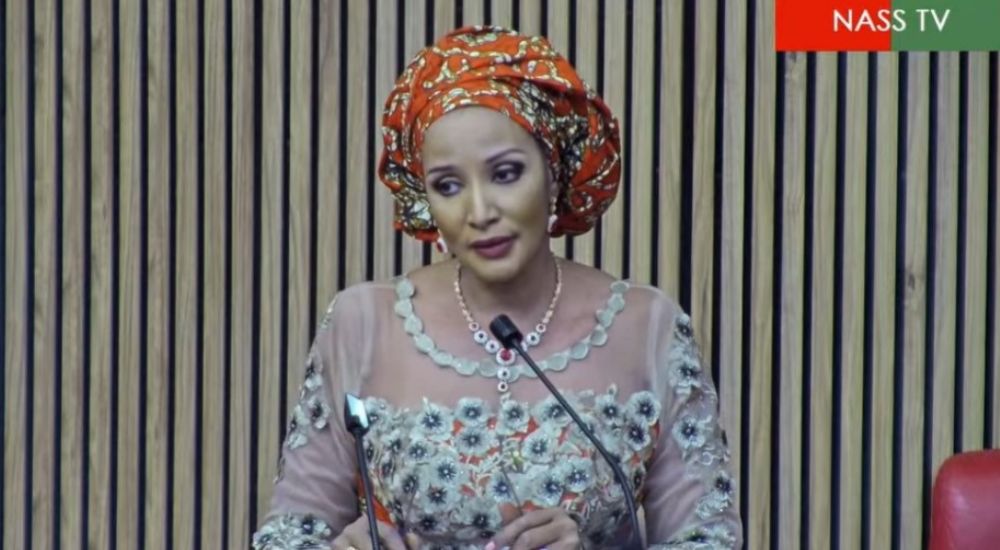
The Minister of Foreign Affairs, Ambassador Bianca Odumegwu-Ojukwu, has warned that misinformation and deliberate disinformation pose significant threats to international relations, diplomatic engagements and global trust.
She said responsible communication was essential to sustaining diplomatic relations, promoting cooperation and preventing tensions among nations.
Odumegwu-Ojukwu stated this on Tuesday while addressing participants at the ongoing World Public Relations Forum in Abuja.
Speaking on the importance of responsible communication in international relations, the minister said the world was experiencing profound geopolitical changes, prolonged conflicts, strategic rivalries and growing competition for influence.
She noted that the rapid development of digital technologies had transformed how information was produced and disseminated, making it increasingly difficult to distinguish credible information from misinformation and deliberate disinformation.
“In an age of global distrust, communication is no longer simply an instrument of diplomacy. It is one of the foundations upon which diplomacy must operate,” she said.
The minister explained that diplomacy required dialogue, mutual understanding and the recognition that lasting solutions could rarely be achieved in isolation.
She added that responsible communication demanded honesty in presenting national positions, consistency between words and actions, respect for differing perspectives and commitment to dialogue rather than confrontation.
According to her, the narratives and statements of nations could either deepen divisions or create opportunities for reconciliation and peaceful resolution.
On Nigeria’s foreign policy, Odumegwu-Ojukwu said the country remained committed to multilateralism, regional cooperation, peaceful resolution of disputes and constructive international partnerships.
She said Nigeria’s commitment to Africa’s peace and security, particularly through regional and continental cooperation, reflected the understanding that the stability and prosperity of nations were interconnected.
“No country can insulate itself entirely from the consequences of instability in its neighbourhood or beyond,” she said.
The minister called for stronger regional institutions, including the African Union and the Economic Community of West African States, ECOWAS, while advocating reforms to make multilateral institutions more responsive, inclusive and representative of contemporary global realities.
She also called for greater African participation in international discussions and decision-making, arguing that the continent should not merely feature in global conversations but should help shape them.
“For too long conversations about our continent have often been framed without sufficient participation from the people and institutions whose realities they seek to describe. Africa must not merely feature in global conversations, it must help shape them,” she said.
Odumegwu-Ojukwu said Nigeria valued dialogue with ECOWAS members and neighbouring countries in the Sahel, stressing the need for continued cooperation on trade, border management and common security challenges.
She added that under President Bola Tinubu’s administration, Nigeria’s foreign policy was guided by democracy, development, demography and diaspora.
The minister said government partnerships and agreements should be communicated in ways that enabled citizens to understand their potential benefits, implementation responsibilities and progress.
She illustrated the dangers of disinformation with a hypothetical situation in which a fabricated recording falsely announced the closure of a country’s border.
According to her, such false information could cause people to cancel journeys and disrupt activities before the truth emerged.
She stressed the importance of effective communication channels between diplomatic officials and the public, as well as timely corrections in languages understood by affected communities.
Odumegwu-Ojukwu said diplomatic missions, public relations professionals, journalists and technology platforms all had important roles to play in promoting accurate information.
She also emphasised the importance of media independence, saying journalists should have access to timely answers, including on difficult questions, to enable the public to make informed judgments.
On emerging technologies, particularly artificial intelligence, the minister acknowledged their potential to improve international engagement and access to information but warned that they also raised concerns about information integrity, accountability and responsible technology use.
She urged governments, media institutions, diplomatic establishments and communication professionals to work together to promote credible information ecosystems and ensure that technological advancement strengthened rather than undermined public confidence.
She maintained that responsible communication should go beyond managing perceptions and contribute to practical outcomes, including peace.



Before 2027: ‘Tinubu Must Go’ leaders must reject political violence, By Umar Farouk Bala

Bianca Warns Disinformation Threatens Nigeria’s Diplomatic Relations

NDLEA arrests eight over cocaine trafficking route from Lagos to Europe

Wike approves promotion of 7,714 FCT workers

How Lagos ‘Big Boy’, Tosin Oyebade Was Arrested In Canada For Alleged Stealing of High-Value Vehicles

NNPC probes Lagos filling station fire that destroyed seven classrooms

Governor Sheriff Oborevwori’s SSG Office Ran Up N21.4 Billion in Delta in Nine Months While the Tenders Board That Processes Contracts Got Nothing

Matawalle receives Zamfara PDP Dep. Gov. aspirant, 6 others into APC
2027: AbdulRazaq predicts APC victory in Kwara, cites Wike’s support for Tinubu
Afrinvest repays undocumented $1 million from Elumelu with interest
Emirates explores a range of new innovations for customers with accessible travel requirements at AccessAbilities Expo, Dubai 2026
51 African nations participate in Dangote Refinery IPO as offer emerges as Africa’s first truly pan-African public offering
Stakeholders say poor healthcare coordination leaves patients to navigate care alone
LASU professor Tunde Akanni inducted as peace studies fellow
Tinubu Camp Unveils ‘We Are MAD’ Slogan for 2027 Elections
Ex-Governor Uduaghan is dead

 News4 days ago
“Autonomy Brings Responsibility” — ICPC Recovers ₦5.3bn From LG Accounts In Seven States, FCT, Moves To Publish 774 Councils’ Finances Online
- Special Reports7 days ago
Nigeria releases ₦422.3 billion for basic healthcare since 2019, disburses ₦249.5 billion under Tinubu
- Business5 days ago
“₦1.2m Return Ticket To London” — Enugu Air Slashes Fares By Up To 50%, Targets December Launch Through Omni Blu Partnership
- News4 days ago
“EFCC Recruitment Is Absolutely Free” — Commission Warns Nigerians Against Fake Employment Emails Demanding ₦3,354
- Special Reports5 days ago
Federal Science College, Sokoto Sinks Into Regulatory Breach After ₦3.82 Million Is Diverted Into Staff Bank Accounts Against Financial Regulations
- Top Stories4 days ago
“States, Not FIRS, Collect Itinerant Workers’ Income Tax” — Supreme Court Rules For Bayelsa In Offshore PAYE Dispute
- Special Reports5 days ago
EFCC Docks Music Star, Felix Duke For Alleged N21.2m Fraud
- Business4 days ago
“Fixes Are Not Taking As Expected” — Microsoft Struggles To Restore Outlook, Teams, Copilot As Global Outage Hits 74 Countries