Special Reports
CJN swears in 12 judges elevated to Court of Appeal

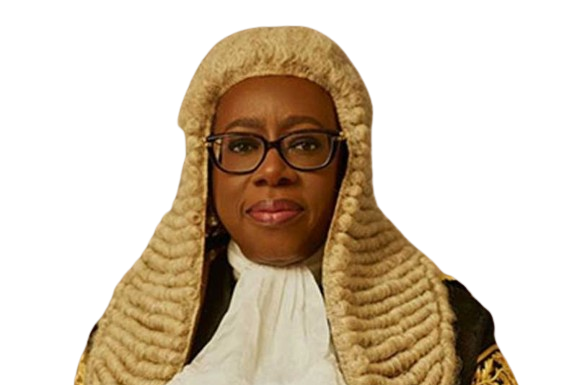
The 12 appeal court judges were sworn in at a ceremony held at the main courtroom of the Supreme Court complex, where Ms Kekere-Ekun charged the new Court of Appeal judges to uphold judicial independence, resist external pressure and approach their new responsibilities with integrity.
The Chief Justice of Nigeria (CJN), Kudirat Kekere-Ekun, on Tuesday, swore in 12 new judges of the Court of Appeal.
The 12 judges were elevated from state High Courts, state Customary Courts of Appeal, the National Industrial Court of Nigeria, and the Federal High Court.
They include Yakubu Abdulhammeed Mohammed, Monisola Oluwatoyin Abodunde, Raphael Ajuwa, Elias Ojie Abua, Mbalamen Jennifer Ijohor and Sabiu Bala Shuaibu.
The rest are James Omotosho, Emeka Nwite, Dauda Njane Buba, Sanusi Kado, Enikuomehin Ademola and Juliet Veronica Dadom.
Their elevation followed a selection process that began with 48 judges nominated for appointment to the Court of Appeal. The Federal Judicial Service Commission (FJSC) recommended 24 of them to the National Judicial Council (NJC), which conducted a further selection process before recommending 12 to President Bola Tinubu for appointment.
The NJC made its final recommendation at its 111th meeting in May. It said the appointments were intended to “fill vacancies created by the elevation and retirement” of judicial officers and strengthen the capacity of the courts.
While addressing the new appellate judges, Ms Kekere-Ekun said the new judges brought experience from different parts of the country and judicial institutions with distinct responsibilities.
According to her, the new appointees come from the High Courts of Gombe, Bayelsa, Cross River, Benue, Kebbi, Taraba and Ondo states.
She said others are from the Federal High Court, the National Industrial Court of Nigeria and the Customary Courts of Appeal of Ekiti and Plateau states.
The CJN noted during the ceremony that the new judges must protect their independence, even when their views differ from those of colleagues. She told them that “Public approval must not be the basis for you to depart from the law, just as criticism must not deter you from reaching a decision that your conscience and the law require”.
Ms Kekere-Ekun said the transition from lower courts to the Court of Appeal would require the new judges to adapt to a different system of adjudication.
She explained that most of them had previously presided over cases alone, heard parties, evaluated evidence and delivered decisions independently.
But at the Court of Appeal, they would sit in panels, deliberate collectively and reach decisions through discussions with other judges.
She urged them to listen to their colleagues, consider different perspectives and remain open to changing their positions when persuaded by sound arguments. But she warned that “Sitting in a panel does not diminish the personal responsibility each judge bears for his or her judicial opinion”.
According to her, a judge should have the courage to express a different position where necessary.
“A well-reasoned dissent is a legitimate feature of appellate adjudication and may, in time, contribute to the development or reconsideration of the law,” she said.
She reminded the new appointees of the Court of Appeal’s role of reviewing decisions from courts and tribunals across the country. Its work covers civil, criminal, constitutional, electoral, commercial and labour disputes.
She urged them to examine records of proceedings carefully and intervene only where the law justifies it. She also cautioned against allowing public commentary, political pressure, financial interests or personal relationships to influence their decisions.
The CJN further urged them to keep abreast of developments in digital commerce, data protection, intellectual property and financial regulation.
On artificial intelligence, she said technology could assist judicial research and the organisation of court work, but judges must verify legal authorities and independently assess arguments.
She said judicial decisions must remain the product of their own considered judgement, while confidentiality and ethical obligations must be preserved.
Among the 12 new judges are two judges of the Federal High Court, Mr Omotosho and Mr Nwite. Both served in Abuja and handled high-profile cases before their elevation.
Mr Omotosho came into public attention after taking over the terrorism trial of Nnamdi Kanu in March 2025. He was the fourth judge to handle the case after three previous judges withdrew following allegations of bias by the defendant.
On 20 November 2025, Mr Omotosho convicted Mr Kanu, the leader of the proscribed Indigenous People of Biafra, on seven terrorism-related counts and sentenced him to life imprisonment and other prison terms.
PREMIUM TIMES reported that Mr Kanu appealed the conviction and sentence, but the appeal had not been listed for hearing, despite being filed in February. This means that Mr Omotosho might meet it there.
Mr Nwite on the other hand, presided over the Federal High Court trial of former Kogi State Governor Yahaya Bello, whom the Economic and Financial Crimes Commission (EFCC) is prosecuting on 19 counts of money laundering involving an alleged N80.2 billion diversion of state and local government funds. The case is still on and might now suffer a setback.
The elevation of the 12 judges also has implications for cases they handled in the courts they have left.
Their departure means that pending cases before them may have to be reassigned to other judges. This could cause delays, particularly in criminal trials. The reassignment of a case to another judge generally means that proceedings must begin afresh. The new judge must hear the case and assess the evidence before delivering a judgement.


NNPC probes Lagos filling station fire that destroyed seven classrooms

Governor Sheriff Oborevwori’s SSG Office Ran Up N21.4 Billion in Delta in Nine Months While the Tenders Board That Processes Contracts Got Nothing

Matawalle receives Zamfara PDP Dep. Gov. aspirant, 6 others into APC

CJN swears in 12 judges elevated to Court of Appeal

“You Must Decide According To The Law And Your Conscience” — CJN Warns 12 New Appeal Court Justices Against Pressure From Senior Colleagues

Tinubu Is Our Common Enemy – Atiku’s Aide Speaks On Fresh Opposition Meeting

2027: Kano ADC governorship candidate appoints campaign council, names DG

Elumelu ups Seplat stake to 22% with new $70 million share purchase – Report
2027: AbdulRazaq predicts APC victory in Kwara, cites Wike’s support for Tinubu
Afrinvest repays undocumented $1 million from Elumelu with interest
Article of Faith: The acceptable sacrifice (2), By Femi Aribisala
Emirates explores a range of new innovations for customers with accessible travel requirements at AccessAbilities Expo, Dubai 2026
51 African nations participate in Dangote Refinery IPO as offer emerges as Africa’s first truly pan-African public offering
FRSC Loses Ogun Sector Commander Ogunjobi
Stakeholders say poor healthcare coordination leaves patients to navigate care alone
LASU professor Tunde Akanni inducted as peace studies fellow

 News4 days ago
“Autonomy Brings Responsibility” — ICPC Recovers ₦5.3bn From LG Accounts In Seven States, FCT, Moves To Publish 774 Councils’ Finances Online
- News4 days ago
“EFCC Recruitment Is Absolutely Free” — Commission Warns Nigerians Against Fake Employment Emails Demanding ₦3,354
- Special Reports5 days ago
Federal Science College, Sokoto Sinks Into Regulatory Breach After ₦3.82 Million Is Diverted Into Staff Bank Accounts Against Financial Regulations
- Special Reports7 days ago
Nigeria releases ₦422.3 billion for basic healthcare since 2019, disburses ₦249.5 billion under Tinubu
- Business5 days ago
“₦1.2m Return Ticket To London” — Enugu Air Slashes Fares By Up To 50%, Targets December Launch Through Omni Blu Partnership
- Top Stories4 days ago
“States, Not FIRS, Collect Itinerant Workers’ Income Tax” — Supreme Court Rules For Bayelsa In Offshore PAYE Dispute
- Special Reports5 days ago
EFCC Docks Music Star, Felix Duke For Alleged N21.2m Fraud
- Special Reports4 days ago
Young Nigerians pledge to become responsible digital citizens in Lagos